
📑 Table of Contents ▶
Hibachi Chicken
Cooking hibachi chicken at home brings an amazing restaurant experience right into your kitchen. The sizzling sound of chicken in a hot skillet and the enticing aroma of garlic and savory sauces fill the air, making it a feast for your senses. Every time I create this dish, I feel transported to a hibachi grill, surrounded by friends and laughter. The combination of simple ingredients yields incredibly flavorful results, making it a perfect weeknight dinner.
Hibachi chicken captivates with its ease of preparation and versatility. You can pair it with a variety of sides, whether you prefer rice, noodles, or fresh vegetables. The melty butter mingling with the sauces adds a rich depth of flavor, while the minced garlic brings a fragrant hit that uplifts the entire dish. Achieving that signature hibachi taste is not as challenging as it might seem.
What makes hibachi chicken truly special is the ability to customize the recipe with your favorite flavors. You can vary the sauces or even add vegetables to make it your own. This dish reflects the spirit of home cooking — easy, fun, and always satisfying. Cooking hibachi chicken means enjoying a delicious meal and creating beautiful memories with family and friends around the table.
Hibachi Chicken Preparation
Fundamentals
When preparing hibachi chicken, the focus lies in simple yet effective techniques to highlight the flavors. Using high heat helps to sear the chicken perfectly while ensuring it remains juicy. The balance of butter and sauce creates a glaze that clings beautifully to the chicken. Key to achieving great texture is to cut your chicken into bite-sized pieces, which allows for quicker cooking and even seasoning.
Preparation/setup
Start by gathering all your ingredients and tools. You will need a large skillet or wok, a spatula for tossing, and a cutting board for your chicken. Before you begin cooking, measure out the soy sauce and teriyaki sauce into a bowl and stir well. This ensures that the flavors meld together nicely. Prepare your chicken by cutting it into uniform pieces, which promotes even cooking. Dice the garlic and have your butter and pepper ready for use.
Ingredients
- 1 lb. boneless skinless chicken breasts, cut into bite-sized pieces
- 1 tablespoon butter
- 1 teaspoon garlic, minced
- 1/4 teaspoon sesame oil (optional)
- 1 1/2 tablespoons soy sauce
- 1 1/2 tablespoons teriyaki sauce/mirin
- Pepper to taste
Directions
- Combine the soy sauce and teriyaki sauce in a bowl, stirring well. Set this mixture aside.
- In a skillet over medium-high heat, melt the butter and add the minced garlic. Sauté for about half a minute until fragrant, making sure not to burn the garlic.
- Add the chicken pieces to the skillet and toss to combine with the garlic and butter, ensuring every piece gets coated.
- Pour in the sauce mixture, turning the heat up slightly. Stir to coat the chicken evenly in the sauce.
- Stir-fry the chicken for about 5 minutes, allowing the sauce to cook down and the chicken to sear.
- If using, finish with a drizzle of sesame oil for added flavor. Serve hot with hibachi rice, hibachi noodles, or hibachi vegetables.
Hibachi Chicken Cooking Techniques
Technique
Hibachi cooking revolves around high heat and quick preparation. Utilizing a skillet or wok enables you to achieve that fiery flavor reminiscent of a hibachi grill. Agitating the ingredients ensures they cook evenly while allowing the sauce to thicken and caramelize around the chicken. Stir-frying quickly protects the texture of the chicken from becoming dry.
To enhance the taste further, consider allowing the chicken to marinate briefly in the sauce mixture before cooking. This steeps every bite in the rich, savory flavors. However, if time isn’t on your side, don’t stress! This recipe works beautifully without marinating.
Tips/tricks
Keep the following tips in mind for perfect hibachi chicken:
- Use a well-heated skillet to promote a sear on the chicken. This adds both flavor and texture.
- Avoid overcrowding the skillet; cook in batches if necessary. Overstuffing can lead to steaming rather than searing.
- Adjust the heat as needed if you notice the garlic browning too quickly.
- For an extra kick, consider adding vegetables like bell peppers or broccoli towards the end of cooking for added nutrition and color.
Hibachi Chicken Perfection
Perfecting results
Perfecting hibachi chicken depends on timing and attention to detail. A hot skillet gives a deliciously crispy exterior while keeping the inside juicy. Cooking for just the right amount of time prevents overcooking, which can lead to dry chicken. The goal is a nice golden-brown color on the outside, with tender, moist meat on the inside.
Feel free to test for doneness with a meat thermometer. The internal temperature should reach 165°F for safe consumption. If you prefer a slightly caramelized exterior, allow the chicken to cook for a minute or two longer without stirring.
Troubleshooting/variations
If your sauce seems too thin, allow it to cook longer, which thickens it. A quick toss will help keep the chicken well-coated. On the other hand, if the chicken absorbs too much sauce and becomes salty, balance it with a bit of cooked rice or noodles on the side.
Should you want to change flavors, try different sauces like honey mustard, or consider adding a dash of hot sauce for heat. Mixing in vegetables can help enhance the texture and add depth to your meal.
Hibachi Chicken Presentation
Serving/presentation
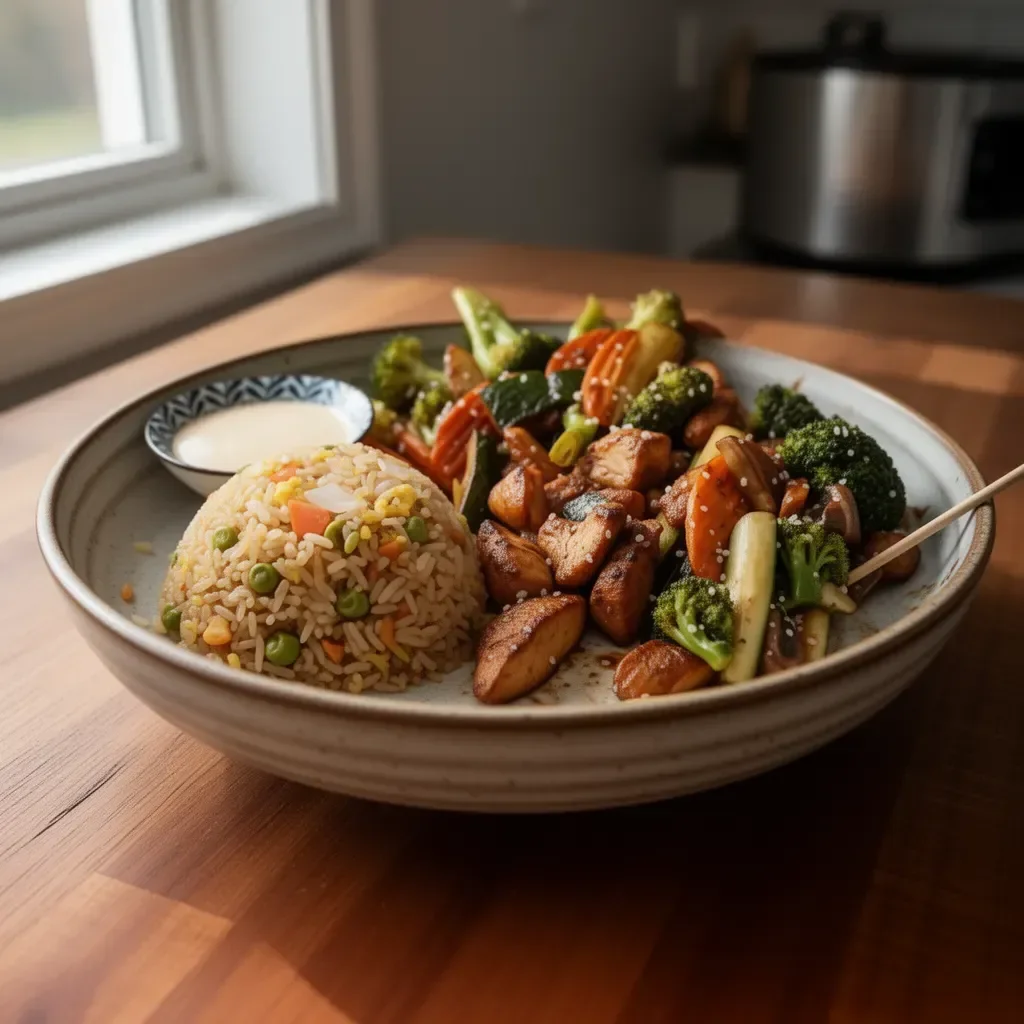
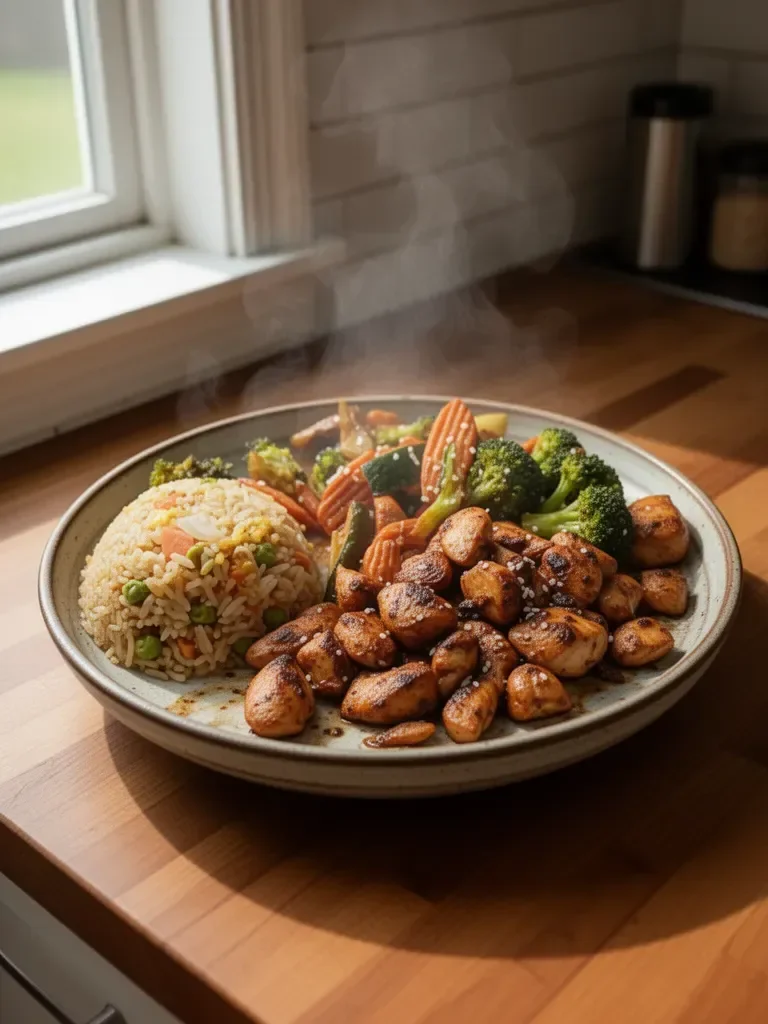
When presenting hibachi chicken, consider serving it in a family-style dish, allowing everyone to help themselves. Placing it alongside a bed of hibachi rice or noodles creates a vibrant display. For extra flair, you can sprinkle sesame seeds or chopped green onions on top for color and texture. The finished dish should evoke the vibrant atmosphere of a hibachi grill.
Pairings/storage
Hibachi chicken pairs beautifully with hibachi rice, hibachi noodles, or a side of sautéed vegetables. These accompaniments complement the chicken’s bold flavors and make for a well-rounded meal. You can also enjoy it cold as a protein-packed addition to salads or wraps the next day.
To store leftover hibachi chicken, place it in an airtight container. It keeps well in the fridge for up to three days. Reheat gently on the stove to maintain the chicken’s moisture, or enjoy it cold for a quick lunch.
Perfecting hibachi chicken at home allows you to indulge in a delightful, restaurant-quality experience, all while being simple to prepare in your kitchen. Enjoy the rich flavors and beautiful presentation it brings to your table.
PrintHibachi Chicken
Cooking hibachi chicken at home brings an amazing restaurant experience right into your kitchen with its flavorful combination of chicken, garlic, and savory sauces.
- Prep Time: 15 minutes
- Cook Time: 15 minutes
- Total Time: 30 minutes
- Yield: 4 servings 1x
- Category: Main Course
- Method: Stir-frying
- Cuisine: Japanese
- Diet: Paleo
Ingredients
- 1 lb. boneless skinless chicken breasts, cut into bite-sized pieces
- 1 tablespoon butter
- 1 teaspoon garlic, minced
- 1/4 teaspoon sesame oil (optional)
- 1 1/2 tablespoons soy sauce
- 1 1/2 tablespoons teriyaki sauce/mirin
- Pepper to taste
Instructions
- Combine the soy sauce and teriyaki sauce in a bowl, stirring well. Set this mixture aside.
- In a skillet over medium-high heat, melt the butter and add the minced garlic. Sauté for about half a minute until fragrant, making sure not to burn the garlic.
- Add the chicken pieces to the skillet and toss to combine with the garlic and butter, ensuring every piece gets coated.
- Pour in the sauce mixture, turning the heat up slightly. Stir to coat the chicken evenly in the sauce.
- Stir-fry the chicken for about 5 minutes, allowing the sauce to cook down and the chicken to sear.
- If using, finish with a drizzle of sesame oil for added flavor. Serve hot with hibachi rice, hibachi noodles, or hibachi vegetables.
Notes
Use a well-heated skillet for proper searing and avoid overcrowding. Consider marinating the chicken briefly for richer flavor.
Nutrition
- Serving Size: 1 serving
- Calories: 400
- Sugar: 4g
- Sodium: 600mg
- Fat: 15g
- Saturated Fat: 5g
- Unsaturated Fat: 7g
- Trans Fat: 0g
- Carbohydrates: 7g
- Fiber: 0g
- Protein: 33g
- Cholesterol: 90mg