
➤ Table of Contents
Hi there! I’m Jasmine, the home cook behind SousVideRecipe.com. Growing up in sunny Florida, I loved grilling fresh fish and the occasional steak, but I never knew what I was missing until I tried sous vide tri-tip steak. My husband brought home a beautiful tri-tip one day, and I wasn’t sure how to cook it evenly without overdoing the ends. That’s when I turned to sous vide—and everything changed.
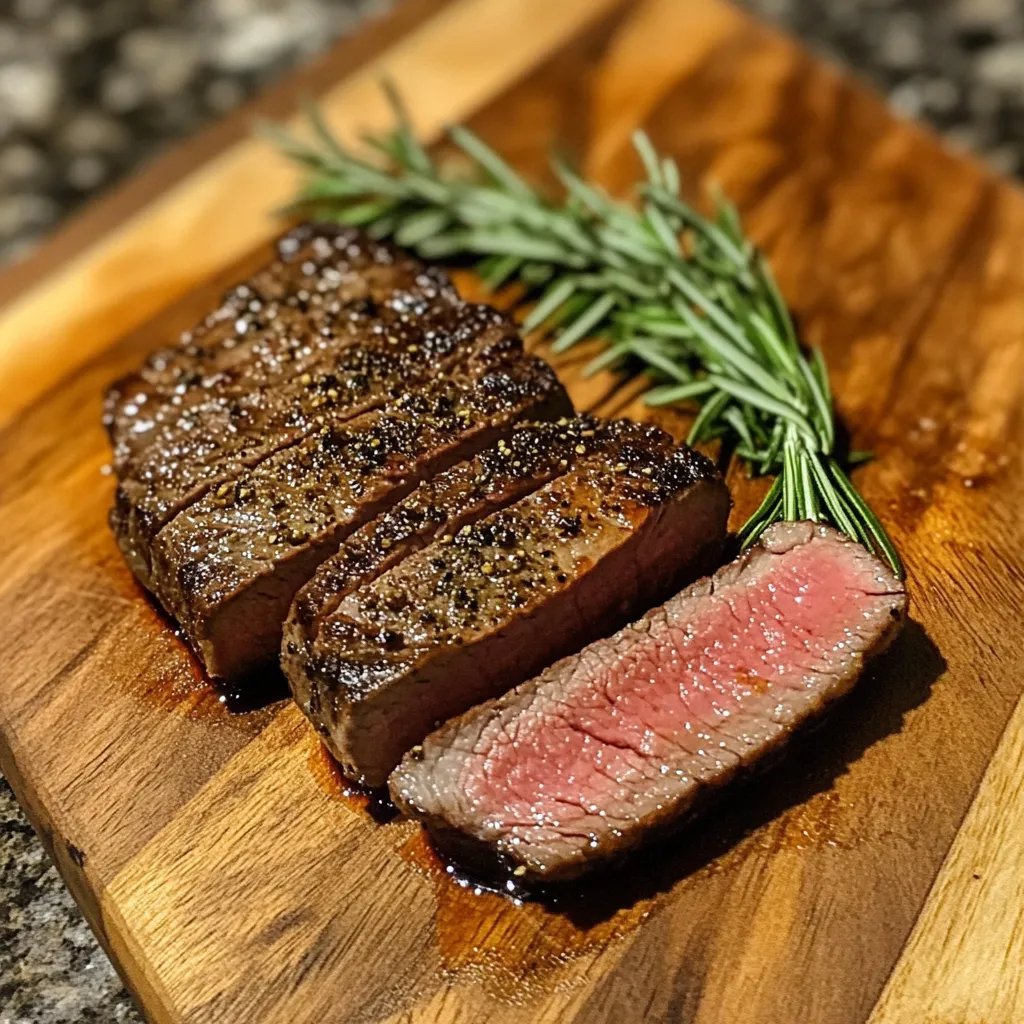
I seasoned the meat simply with kosher salt, black pepper, and a sprig of rosemary, sealed it, and dropped it into a warm water bath. After a few hours at 129°F, the result was unlike anything I’d ever made at home: fork-tender beef with edge-to-edge pink perfection. A quick cast-iron sear brought out a crusty exterior that took it to steakhouse levels. I was hooked—and I’ve never looked back.
Now, I use this method regularly, whether I’m cooking for guests or doing meal prep. Tri-tip has become my go-to steak because it’s affordable, flavorful, and always turns out juicy when cooked sous vide.
Looking for more foolproof steak ideas? this guide on flank steak will have you covered.
PrintSous Vide Tri-Tip Steak Guide
Sous vide tri-tip steak is juicy, flavorful, and perfectly cooked edge to edge with a final sear that adds steakhouse flair.
- Prep Time: 10 minutes
- Cook Time: 2 to 4 hours
- Total Time: 2 hr 10 min to 4 hr 10 min
- Yield: 2 servings 1x
- Category: Main
- Method: Sous Vide
- Cuisine: American
Ingredients
2 6-8 oz tri-tip steaks
Kosher Salt
Freshly cracked black pepper
Rosemary sprigs, optional
1 tbsp butter or ghee
Instructions
1. Preheat water bath to 129°F or desired temperature.
2. Season tri-tip steaks generously with salt and pepper.
3. Place in a vacuum-seal or zip-top bag with rosemary.
4. Seal bag and submerge in water bath for 1 to 4 hours.
5. Remove steak and pat dry thoroughly.
6. Heat a cast iron skillet until smoking hot.
7. Add butter or ghee to pan and sear steak on each side for 30 seconds.
8. Slice against the grain and serve immediately.
Notes
For medium-rare, 129°F is ideal.
You can cook up to 6 hours for added tenderness.
Always slice tri-tip across the grain in two directions.
Nutrition
- Serving Size: 1 steak
- Calories: 380
- Sugar: 0g
- Sodium: 500mg
- Fat: 22g
- Saturated Fat: 9g
- Unsaturated Fat: 12g
- Trans Fat: 0g
- Carbohydrates: 0g
- Fiber: 0g
- Protein: 42g
- Cholesterol: 100mg
Why Sous Vide Tri-Tip Steak Deserves More Love
Tri-tip is a West Coast favorite that deserves national attention. This triangular roast, cut from the bottom sirloin, is packed with flavor and doesn’t cost nearly as much as ribeye or filet. However, its uneven thickness and grain direction make it tricky to cook traditionally. That’s where sous vide saves the day.
By cooking at a precise temperature, sous vide removes the risk of tough, overdone edges. You get full control—plus all the time in the world to prep sides or sip wine while the water bath works its magic.
And the best part? Tri-tip absorbs flavors beautifully. Whether you keep it classic with salt and rosemary or add a pat of compound butter like in our sous vide garlic butter steak, this cut always delivers.
Up next, let’s talk time and temperature—the two factors that make or break your steak. Keep reading for a complete tri-tip sous vide chart.
How Long and What Temperature for Sous Vide Tri-Tip Steak?
Perfect Temperature for Tri-Tip Sous Vide
The magic of sous vide tri-tip steak lies in dialing in the exact temperature that matches your ideal doneness. Unlike grilling, where heat varies wildly, cooking tri-tip steak sous vide gently warms the meat all the way through—no guesswork, no overcooked edges.
Here’s the sweet spot for sous vide tri-tip:
- 129°F (medium-rare): Juicy, pink, and ultra-tender—Jasmine’s personal favorite.
- 132°F: Slightly firmer yet still pink, ideal for most guests who prefer a classic steakhouse finish.
- 135°F (medium): More traditional, still tender but with slightly less juice.
- 137–140°F (medium-well): A good range for those who like less pink but still want a moist and flavorful steak.
For most home cooks, sous vide tri-tip steak turns out best between 129°F and 132°F. This range brings out the beefy richness without making the texture too firm. It’s the exact temp I used in my first successful tri-tip attempt, and it’s now my default setting for consistent, steakhouse-quality results.
Tri-tip steak sous vide behaves similarly to sirloin, so these temps are transferable. If you’re unsure where to start, aim low—you can always finish with a longer sear to adjust the doneness just slightly.d medium.
Time Chart: How Long to Cook Tri-Tip Based on Thickness
Time is just as crucial as temperature when cooking sous vide tri-tip steak. While a tri-tip can technically be “done” in about an hour, the connective tissue benefits greatly from a longer, gentler cook in the water bath. The result? A steak that’s far more tender and flavorful.
Here’s a quick breakdown to help you plan your sous vide tri-tip steak session:
| Thickness | Time Range | Texture Result |
|---|---|---|
| 1 inch | 1–2 hours | Tender, slightly chewy |
| 1.5–2 inches | 2–4 hours | Perfectly juicy and tender |
| 2+ inches | 4–6 hours | Ultra-soft, sliceable like butter |
So, how long does it take to sous vide a tri-tip steak? Ideally, 2 to 4 hours at 129–135°F hits the sweet spot for most cooks. Going longer will make it more tender, but too long (10+ hours) risks mushiness, especially with thinner cuts.
Next, we’ll walk through seasoning, sealing, and whether or not to add butter (spoiler: yes—but there’s a catch).
Prepping and Sealing Like a Pro – Sous Vide Tri-Tip Steak
How to Season and Bag Tri-Tip Steak
Getting perfect sous vide tri-tip steak starts well before the meat hits the water bath. Prep is simple, but those small steps make a big difference in flavor, texture, and final presentation. Let’s walk through the ideal way to season and bag your tri-tip steak sous vide for top-tier results.
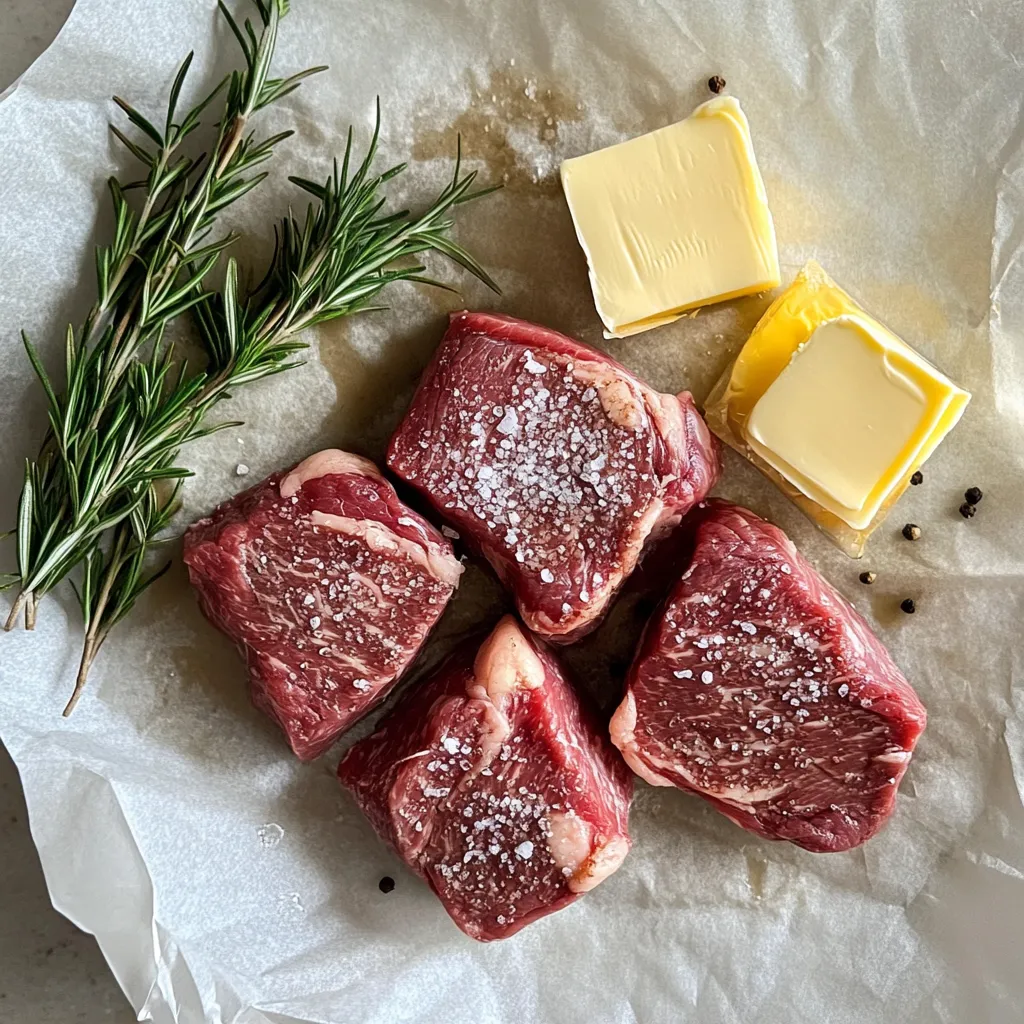
Start with two 6–8 oz tri-tip steaks—a great size for evenly cooked, restaurant-quality portions. Trim off any silver skin or tough fat to help the sous vide tri-tip cook consistently and stay tender. Then, generously season with kosher salt and freshly cracked black pepper. That’s all you need if you want the natural beef flavor of your sous vide tri-tip steak to truly shine.
Next, place the seasoned steaks into a vacuum-seal bag or a durable freezer-safe zip-top bag. Add a sprig or two of fresh rosemary if you enjoy herbal aromas—totally optional, but a nice bonus for elevating the profile of your tri-tip steak sous vide.
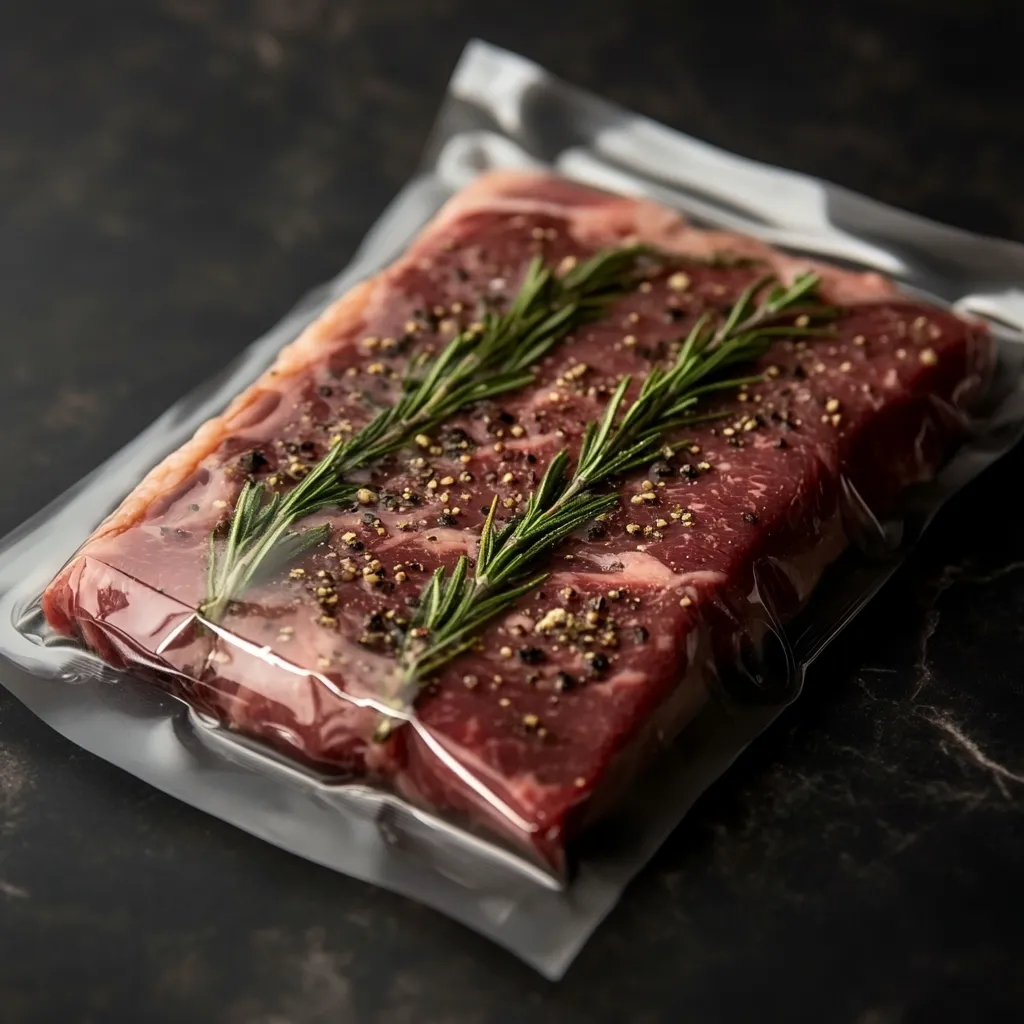
If you’re not using a vacuum sealer, apply the water displacement method: slowly lower the bag into your water bath, letting water pressure push out the air before sealing the top. This creates a tight seal that keeps your steak safe and in full contact with the water.
Want to take your tri-tip to the next level? Try a dry brine overnight in the fridge before cooking—this technique enhances flavor and moisture retention, as explained in our dry brine sous vide steak guide.
Should You Add Butter, Garlic, or Herbs?
Ah, the age-old question: Should you put butter in sous vide steak? The short answer? Not inside the bag. While it sounds tempting, butter has a low smoke point and tends to break down or mute seasoning during long cooks.
Instead, save the butter for the finish. A tablespoon of ghee or butter added to a hot skillet during the sear brings richness and that iconic steakhouse aroma. Garlic cloves and rosemary can also be tossed in at this stage for a flavorful butter baste.
The sous vide process itself intensifies natural flavors. You can experiment with aromatics, but minimalism often wins. For instance, our sous vide filet mignon with compound butter uses zero bagged aromatics and still delivers showstopping results thanks to a buttery post-sear finish.
Remember, sous vide is about control. Keep seasoning light in the bag, then go bold during the sear for maximum impact.
Coming up next, let’s talk about the final step that separates “just OK” from “jaw-dropping”: the perfect sear and the right way to slice.
Searing, Serving, and Storing Leftovers
How to Sear Tri-Tip After Sous Vide for Best Results
You’ve done the hard work—now it’s time to turn that perfectly cooked sous vide tri-tip steak into a showstopper. The final sear is where texture, aroma, and presentation all come together.
Here’s how to get that steakhouse crust at home:
- Remove steaks from the bag and pat them bone-dry with paper towels. Moisture is the enemy of browning.
- Let the steak rest uncovered for 5–10 minutes to cool slightly—this prevents overcooking during searing.
- Heat a cast iron skillet over high heat until it’s just starting to smoke.
- Add 1 tablespoon of ghee or butter. Once melted, carefully lay the steak in the pan.
- Sear each side for 30 seconds or less. You’re aiming for deep color, not more cooking.
- Optional: Baste with butter and rosemary during sear for aromatic finish.
How to Slice and Store Sous Vide Tri-Tip
Tri-tip has unique grain structure, and slicing it properly is critical. The muscle fibers run in two different directions, so take a moment to locate the grain after cooking.
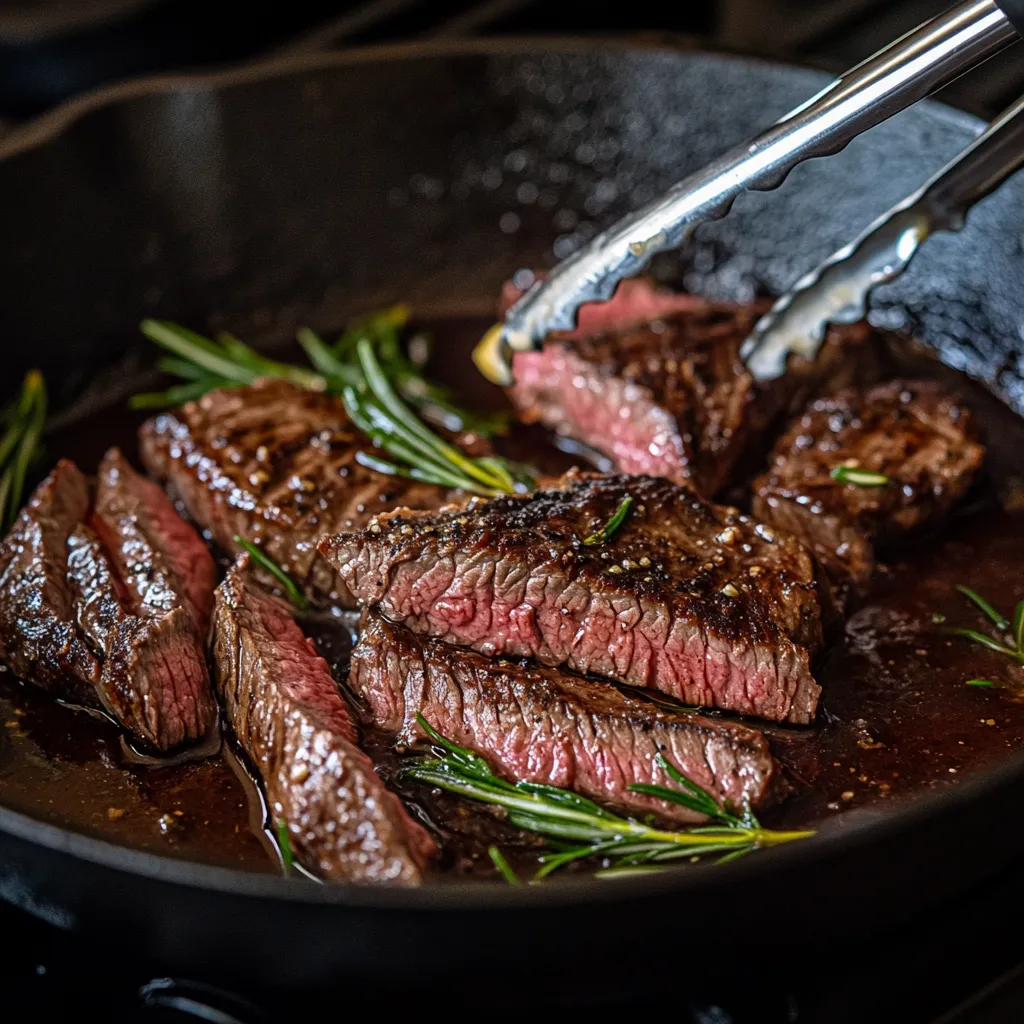
Here’s what to do when slicing your sous vide tri-tip steak for serving:
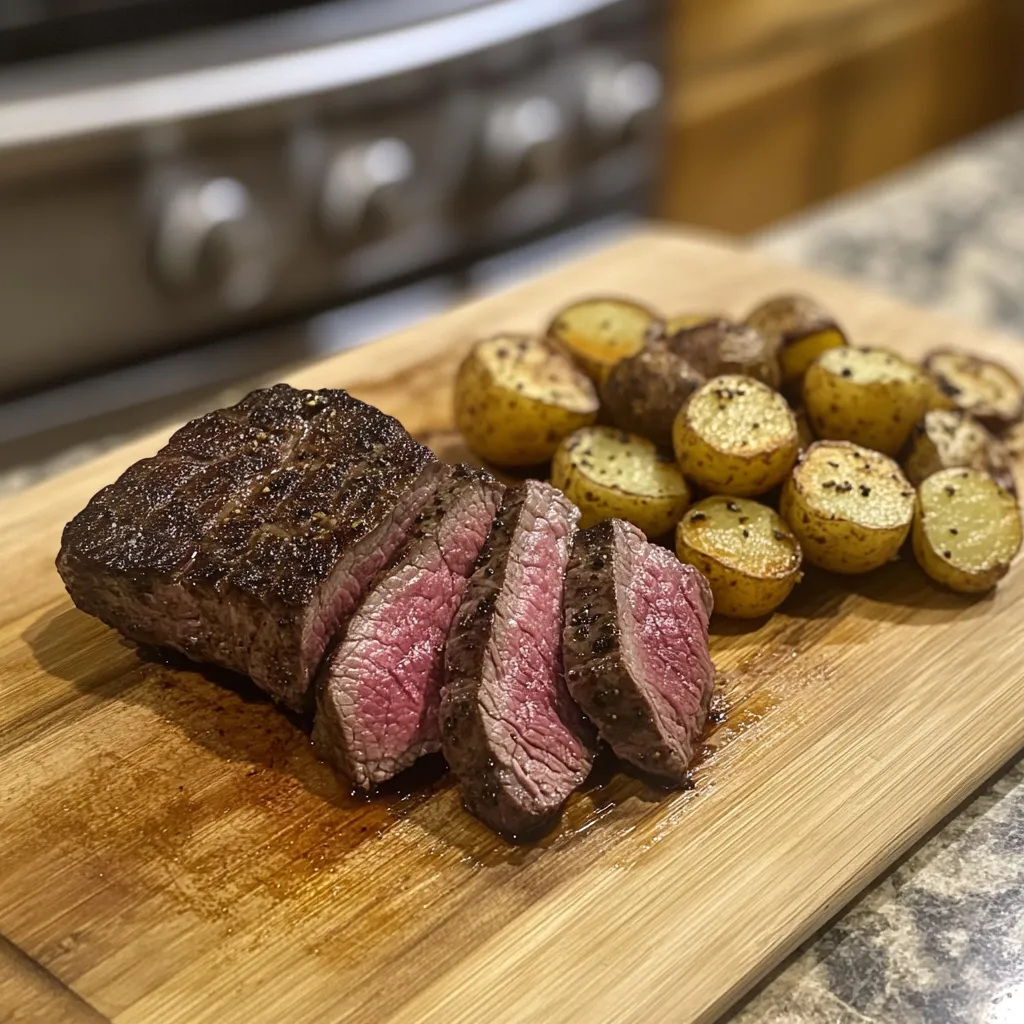
First, slice the steak in half at the center curve where the grain changes direction. Then, turn each half and cut against the grain—this shortens the muscle fibers, ensuring every bite of your tri-tip steak sous vide is as tender as possible.
When it comes to leftovers, sous vide tri-tip is one of the most versatile steaks around. It works beautifully in steak salads, tacos, sandwiches, or even breakfast hash. Because it’s cooked sous vide, the steak retains moisture and reheats better than traditionally cooked cuts.
Store any extra sous vide tri-tip steak in an airtight container for up to 4 days in the refrigerator, or vacuum-seal and freeze it for up to 3 months. Want to reheat without drying it out? Just place it back in a 130°F sous vide water bath for 30–45 minutes, and it’ll be just as juicy as when you first made it.
Conclusion
Cooking sous vide tri-tip steak is a total game-changer for home cooks. With the right water bath temperature, just the right amount of time, and a sizzling final sear, you can transform this affordable cut into a steak that rivals any restaurant. From seasoning and sealing to slicing against the grain, every step in the sous vide tri-tip process plays a role in creating that tender, flavorful result you crave.
Whether you’re brand new to sous vide tri-tip steak or looking to fine-tune your method, this complete guide gives you the confidence to make tri-tip the centerpiece of your next dinner. When done right, sous vide tri-tip steak becomes more than just a meal—it’s your new favorite way to cook steak at home.
Join us on Facebook and Pinterest for even more delicious recipe ideas!
FAQ: Sous Vide Tri-Tip Steak
How long does it take to sous vide a tri-tip steak?
Typically 2 to 4 hours at 129°F to 135°F is ideal. For a more tender texture, you can go up to 6 hours without risk.
What is the best temperature for tri tip steak?
For most people, 129°F–132°F delivers medium-rare perfection with a juicy, pink center.
How long to cook steak in sous vide at 135?
At 135°F, cook for at least 1.5 hours, up to 4 hours depending on thickness. This gives you a medium doneness with balanced tenderness.
Does cooking a steak longer in sous vide make it more tender?
Yes, to a point. Longer cooking times break down connective tissue but going beyond 8–10 hours may result in a mushy texture.
What is a disadvantage of sous vide?
Lack of browning in the sous vide bag means you need to sear afterward. Also, it requires more planning due to long cook times.
Should you put butter in sous vide steak?
Not in the bag. Add butter during the sear instead to develop flavor and create a delicious crust.