
➤ Table of Contents
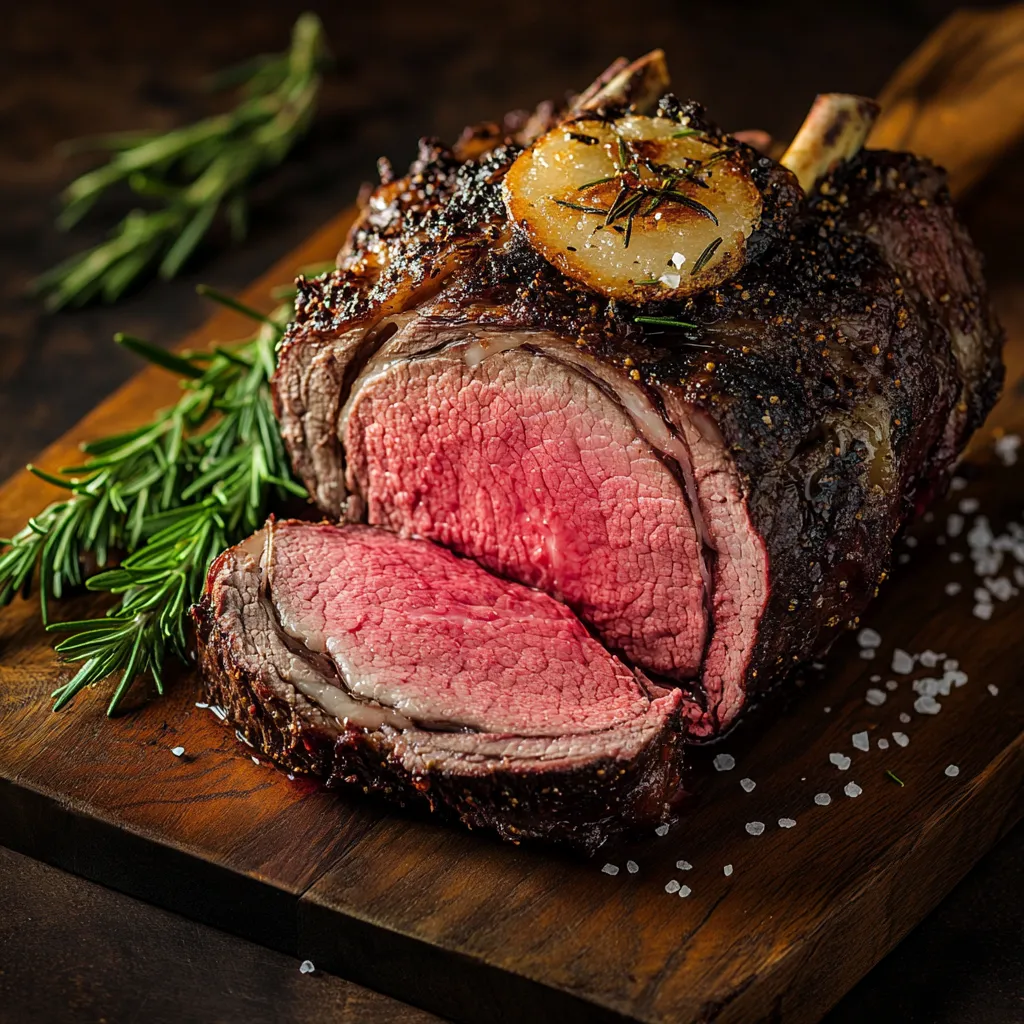
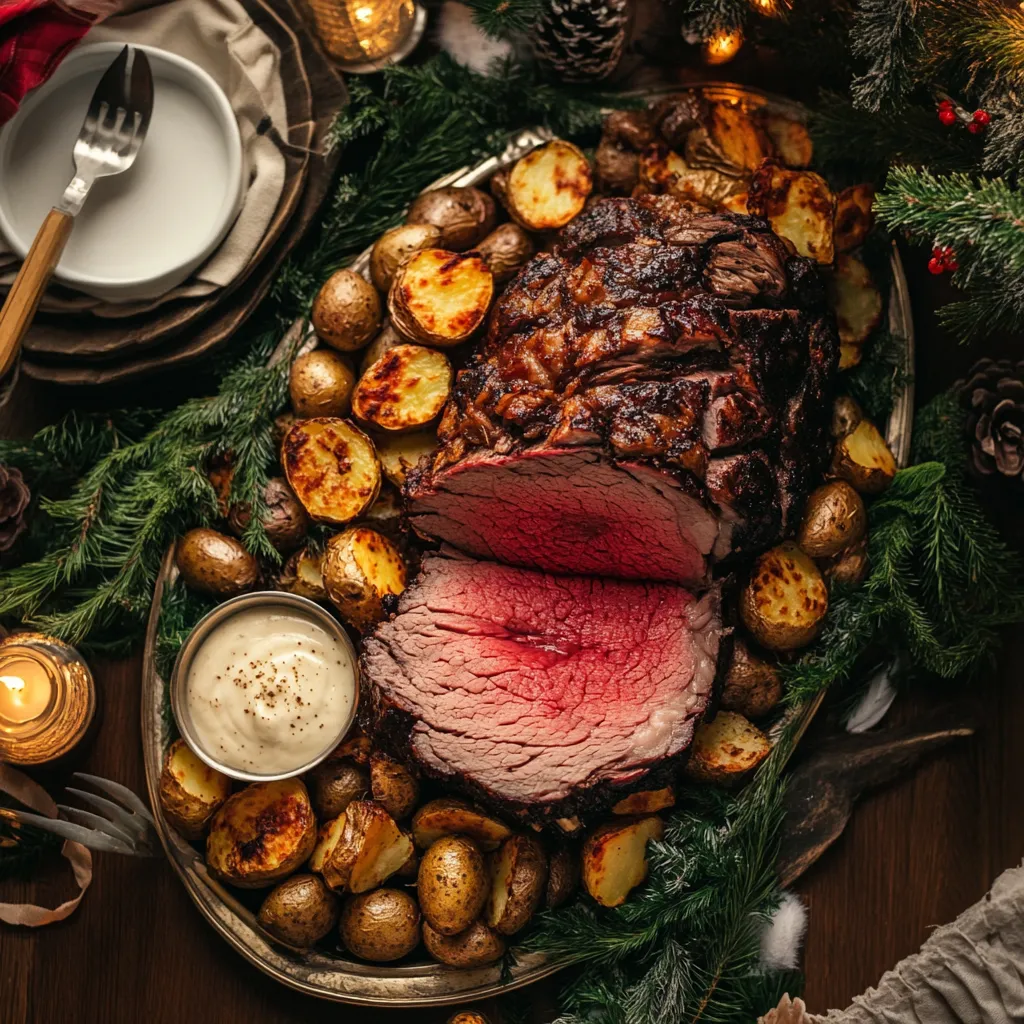
The first time I Reverse Sear Prime Rib Sous Vide – Ultimate 7-Step Guide, I remember slicing into it and being floored by the color—pink from edge to edge. Growing up in Florida, I’d roast prime rib the traditional way, only to end up with a bullseye: gray on the edges, pink in the middle, and often dry. Then I found sous vide. Suddenly, I had control over every degree of doneness. But it wasn’t until I combined it with a reverse sear that I truly got that perfect crispy crust without sacrificing the inside.
The beauty of Reverse Sear Prime Rib Sous Vide is that you’re finishing the roast in high heat after it’s already cooked perfectly inside. That final blast creates the browned, crackling exterior everyone loves—without overcooking the tender center. For a 5-pound rib roast, I sous vide it for 6 hours at 132°F for medium-rare, then finish in a ripping hot oven at 500°F for just 8 minutes.
It’s the method I now use every holiday. And it’s incredibly forgiving. Got guests running late? No problem—just hold the roast in the sous vide bath or let it rest after cooking. You’ll still get that wow moment when you carve it.
If you want to experiment with seasonings, try using compound butter like in this prime rib recipe or explore timing ideas from how long to sous vide a prime rib.
PrintReverse Sear Prime Rib Sous Vide – Perfect 7-Step Method
A showstopping reverse sear prime rib sous vide that’s juicy, pink throughout, and crusted to perfection. Ideal for holidays or anytime you want flawless results.
- Prep Time: 15 minutes
- Cook Time: 6 hours
- Total Time: 6 hours 30 minutes
- Yield: 8 servings 1x
- Category: Main Course
- Method: Sous Vide + Reverse Sear
- Cuisine: American
Ingredients
1 standing rib roast (prime rib), 3 to 12 pounds (1.3 to 5.4 kg)
Kosher salt and freshly ground black pepper
Instructions
1. Preheat sous vide water bath to 132°F for medium-rare.
2. Season roast liberally with salt and pepper. Chill uncovered overnight if possible.
3. Seal in vacuum bag or use water displacement method.
4. Cook in sous vide bath for 5 to 8 hours, depending on roast size.
5. Remove from bag and pat completely dry with paper towels.
6. Preheat oven to 500°F. Let roast rest while oven heats.
7. Roast for 6 to 10 minutes until exterior is crisp and browned.
8. Remove, let rest 10 minutes, then carve and serve.
Notes
For rare, set sous vide to 129°F; for medium, 135°F.
Salting overnight helps with flavor and browning.
You can hold the roast in sous vide up to 90 minutes before finishing.
Nutrition
- Serving Size: 8 oz
- Calories: 850
- Sugar: 0g
- Sodium: 220mg
- Fat: 65g
- Saturated Fat: 25g
- Unsaturated Fat: 35g
- Trans Fat: 0g
- Carbohydrates: 0g
- Fiber: 0g
- Protein: 65g
- Cholesterol: 150mg
Choosing and Seasoning the Right Cut
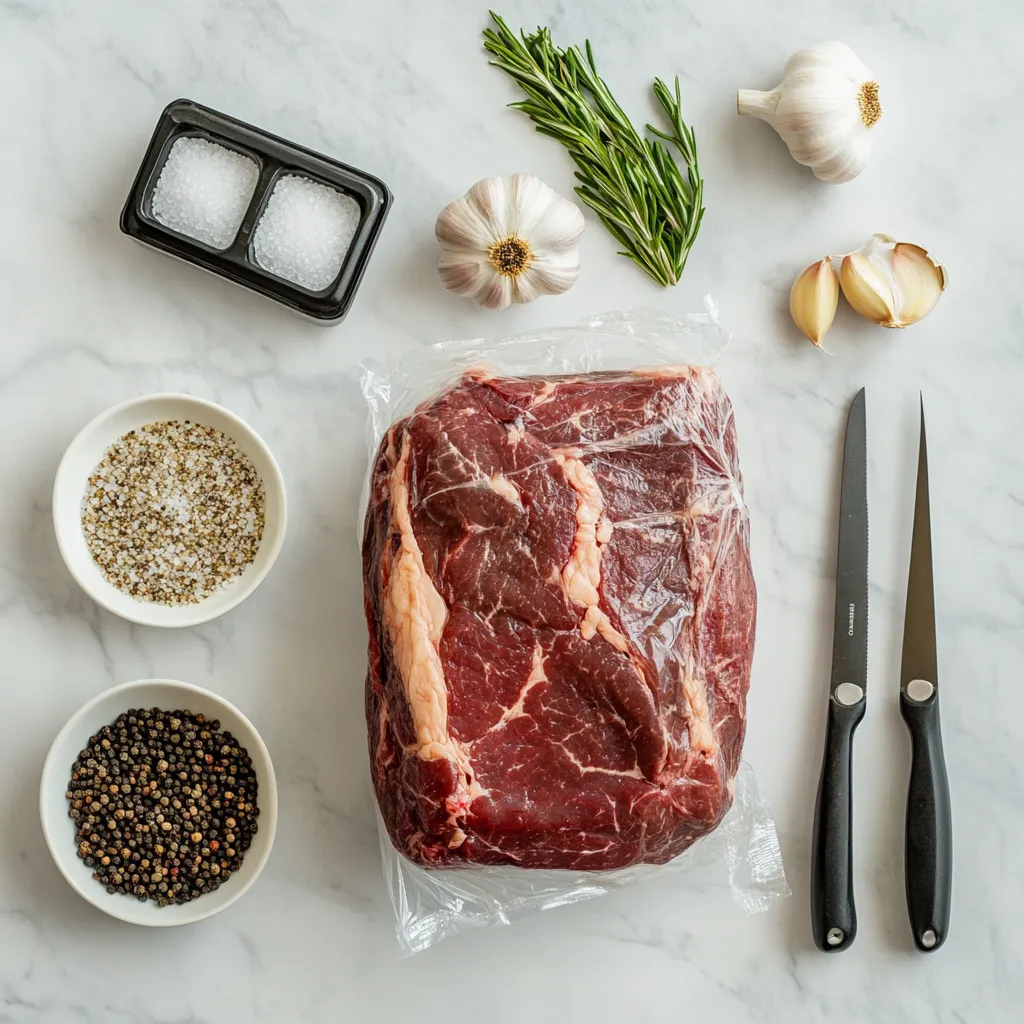
The foundation of a perfect reverse sear prime rib sous vide starts with the right roast. Go for a bone-in standing rib roast—it retains more moisture and flavor during the long cook. Whether you’re cooking a 3-pound mini roast or a full 12-pound centerpiece, the same technique applies with just timing adjustments.
If you’re looking to make the perfect reverse sear prime rib sous vide, this guide has everything you need. No more guesswork—just tender, pink meat edge to edge with a beautifully browned crust that delivers restaurant-level flavor. I’ve broken the process down into seven simple steps that guarantee success every single time. Whether you’re cooking for a holiday, a dinner party, or just because you love prime rib, this foolproof method brings precision, flexibility, and amazing results. Ready to create a juicy roast that steals the show? Let’s walk through the reverse sear prime rib sous vide method step by step.
Once you’ve got your roast, the most important thing you can do is season it ahead of time. Generously coat the meat with kosher salt and freshly ground black pepper, then let it rest in the fridge overnight uncovered. This step dry-brines the meat, helping the salt penetrate and creating a dry exterior that will brown better later. If you’re in a pinch, even a few hours will help.
You can go minimalist or layer on flavor. Add garlic powder, crushed rosemary, or even a smear of Dijon mustard before bagging. If you love compound butters, this garlic herb version for steak works wonders on rib roasts, too.
Bagging, Bathing, and Timing
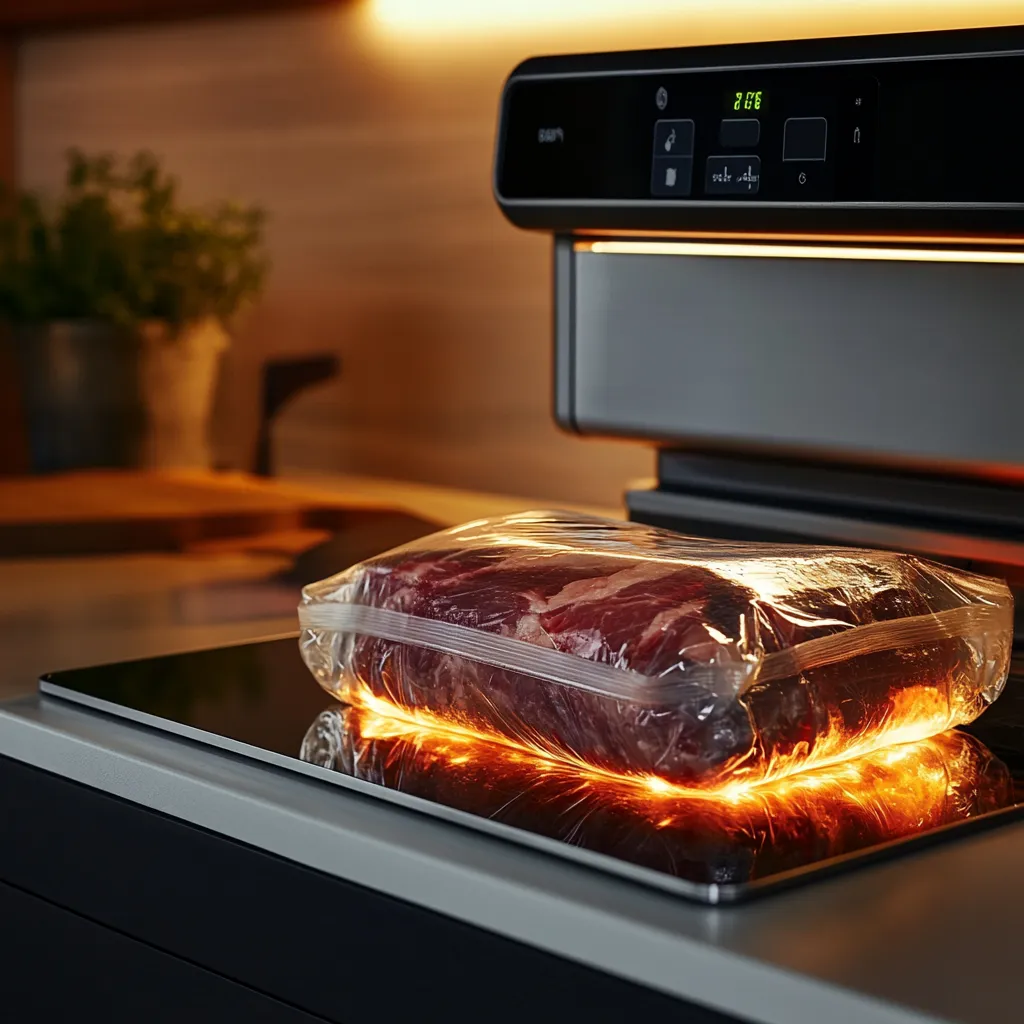
Once seasoned, it’s time to bag your roast. You can use a vacuum sealer or the water displacement method with a heavy-duty freezer bag. Just make sure the bag is airtight—air pockets can mess with the temperature consistency.
For medium-rare, set your sous vide bath to 132°F (55.5°C). Here’s a quick timing guide for reference:
| Weight | Time (132°F) |
|---|---|
| 3–4 lbs | 5 hours |
| 5–6 lbs | 6 hours |
| 7–8 lbs | 7–8 hours |
After the bath, remove the roast and pat it completely dry with paper towels. This step is essential—moisture is the enemy of a crisp sear.
For other great beef options and flavor ideas, check out our sous vide tri-tip and flat iron steak recipes. They use the same principles on a smaller scale.
The Best Way to Get That Perfect Crust
After hours in the sous vide bath, your prime rib is technically ready to eat—but it won’t look the part. That’s where the reverse sear comes in. This is your chance to create that golden-brown crust everyone expects when they see a prime rib.
You’ve got two good options: high-heat oven searing or the cast iron method. For large cuts like this, I recommend the oven. Preheat it to 500°F (260°C) while the roast rests. When ready, pop the rib in for 6–10 minutes, just until the crust crisps and the fat renders slightly. The high dry heat gives an even sear without drying the meat.
Prefer stovetop searing? Go for a cast iron skillet over high heat. Add a neutral oil with a high smoke point (like avocado oil). Sear the roast fat-side down first, then roll it to brown all sides. This method works best for smaller 3–5 lb roasts. For anything bigger, the oven’s easier and less messy.
Whichever way you sear, make sure the roast is bone side down if it’s in the oven. And no need to sear for too long—you’re not cooking it again, just building flavor and texture.
Want to see how searing technique compares? This amazing ribs sous vide guide explores both methods in depth with great visuals.
Resting, Carving & Serving with Style
Now the roast looks as good as it tastes. Let it rest 10 minutes after searing to allow juices to redistribute. Slice between the bones for stunning presentation and serve with your favorite sauce—horseradish cream, jus, or even a flavored butter like the one used in sous vide picanha.
Always slice against the grain for the most tender bites. If you’ve got leftovers, they make incredible sandwiches or tacos.
Timing your meal? Plan backward from sear time. You can hold the roast post-bath up to 90 minutes before finishing. That flexibility is sous vide’s superpower.
Conclusion: Why Reverse Sear Prime Rib Sous Vide Is Your New Go-To Method
Once you try reverse sear prime rib sous vide, you’ll never go back to traditional roasting. This method is stress-free, incredibly consistent, and delivers jaw-dropping results every time. The crust is perfectly crisp, the inside of your prime rib stays juicy and pink edge to edge, and you don’t have to hover over the oven to make it happen.
Whether it’s a cozy dinner or a full holiday feast, reverse sear prime rib sous vide gives you a showstopping centerpiece with zero guesswork. You get precision cooking with sous vide and a crave-worthy sear that wows guests.
This technique has become my gold standard for prime rib sous vide because it blends rich flavor, ease of execution, and total flexibility with timing. From preparation to plating, reverse sear prime rib sous vide makes home cooking feel like a fine-dining experience.
For more sous vide beef inspiration, check out our sous vide corned beef or try something bold like dishwasher sous vide steak if you’re feeling adventurous.
Join us on Facebook and Pinterest for even more delicious recipe ideas!
FAQs
Should you sear prime rib before sous vide?
Not if you’re doing reverse sear prime rib sous vide. Searing after the sous vide bath gives a better crust without drying out the meat. Pre-searing isn’t necessary and can risk overcooking the edges before you even begin the sous vide process.
Can you reverse sear with sous vide?
Absolutely—reverse sear prime rib sous vide is one of the best pairings in modern home cooking. You get precise internal doneness from the sous vide and then finish with a high-heat sear for that golden crust. It’s the ideal method for consistent, stress-free results.
Should you salt a prime rib roast overnight?
Yes! For reverse sear prime rib sous vide, salting the roast the night before allows the seasoning to penetrate deeply and dries the surface for better browning. It’s a simple step that improves flavor and texture.
How long do you cook prime rib at 225°F?
In a conventional oven at 225°F, cooking takes about 30 minutes per pound. But with reverse sear prime rib sous vide, you get exact doneness without watching the clock. Sous vide ensures edge-to-edge perfection every time.
Should I reverse sear my prime rib?
Definitely. When using sous vide, the reverse sear method brings out the best texture and presentation. A proper reverse sear prime rib sous vide has a crisp crust and a juicy, evenly cooked center that’s hard to beat.
Do you sear prime rib fat side up or down?
When finishing your reverse sear prime rib sous vide in the oven, place it fat side up to allow the fat to self-baste. If searing in a pan, start fat side down to render and brown the fat cap. Always sear all sides for maximum flavor.