
📑 Table of Contents ▶
- Sous Vide Venison Time and Temperature
- How to Sous Vide Venison Backstrap
- Sauces That Love Venison
- Sous Vide Venison Backstrap
- Is Sous Vide Venison Safe?
- Sous Vide Venison FAQ
- How do you get the gamey taste out of venison?
- What temperature should venison backstrap be?
- Can I sous vide venison straight from the freezer?
- How long can venison stay in the sous vide?
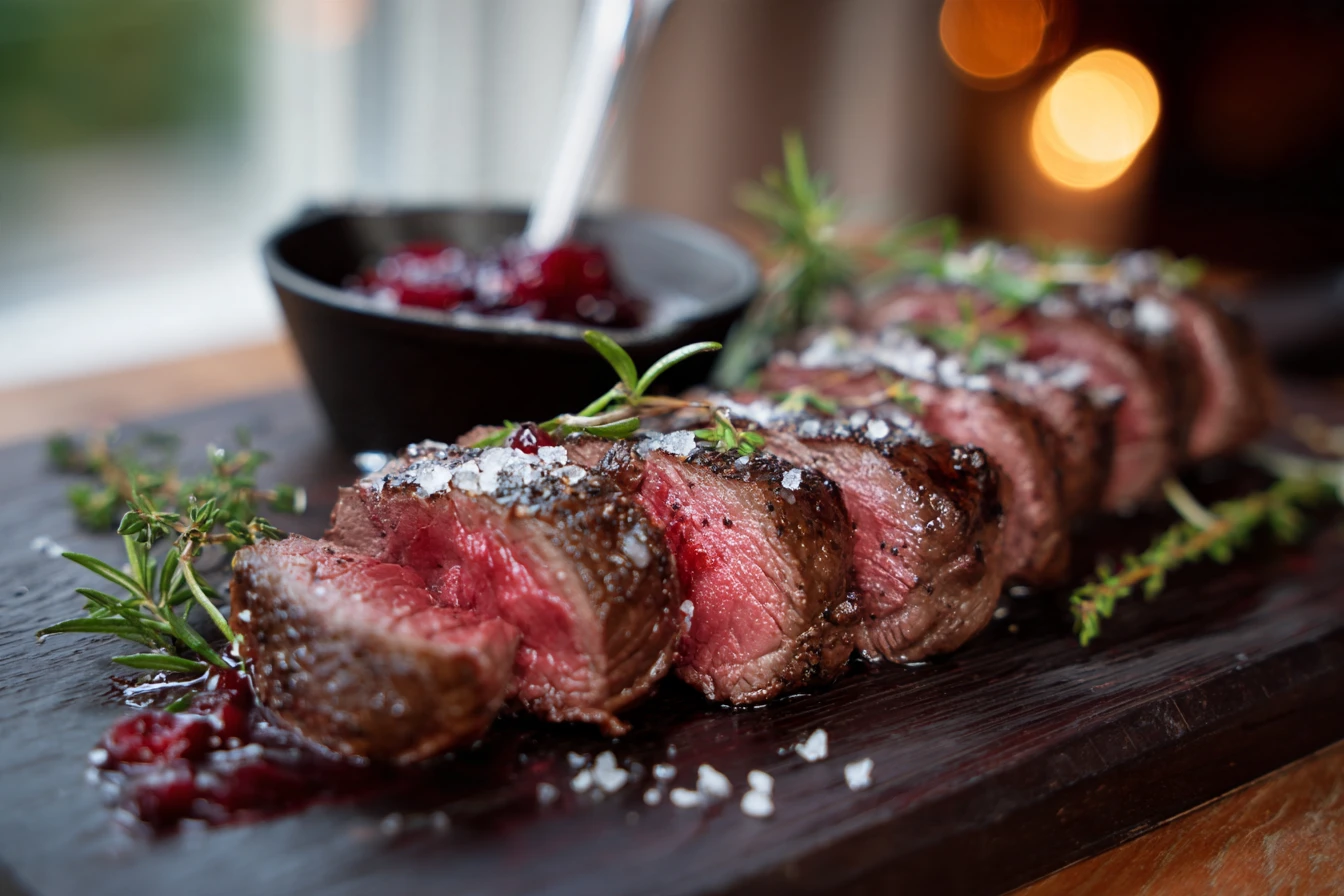
Quick answer: Sous vide venison backstrap at 131°F (55°C) for 2–3 hours for medium-rare, venison tenderloin at 131°F for 1½–2 hours, and a venison roast from the hindquarter at 133°F (56°C) for 8–12 hours. Add a little butter or beef tallow to the bag, then sear it hard for 45 seconds per side. Venison is very lean, so don’t cook it past medium.
Venison has a reputation for being dry and “gamey”, and almost always that comes down to one thing: it was overcooked. Deer meat has hardly any fat, so a few degrees too far and it turns tight and livery. Sous vide takes that risk away. I’m Jasmine, and when hunter friends share their backstrap with me, this is how I cook it: rosy from edge to edge, tender, and tasting clean and rich, not gamey.
Sous Vide Venison Time and Temperature
| Cut | Temperature | Time | Result |
|---|---|---|---|
| Backstrap (loin) | 131°F (55°C) | 2–3 hours | Medium-rare, buttery |
| Tenderloin | 131°F (55°C) | 1½–2 hours | Medium-rare, very tender |
| Steaks from the hindquarter | 131–134°F (55–57°C) | 3–6 hours | Medium-rare, tender |
| Roast (round, rump, sirloin) | 133°F (56°C) | 8–12 hours | Pink, sliceable |
| Shoulder / neck roast | 155°F (68°C) | 24 hours | Fork-tender slices |
| Shanks | 165°F (74°C) | 24–36 hours | Falls off the bone |
| Ground venison patties | 145°F (63°C) | 1½–2 hours | Juicy burgers, fully pasteurized |
Times are for pieces up to about 2 inches thick; add an hour for thicker roasts and about 50% more time from frozen. Elk works the same way, just give the thicker cuts a little longer. For beef and every other food, see my sous vide time and temperature chart.
How to Sous Vide Venison Backstrap
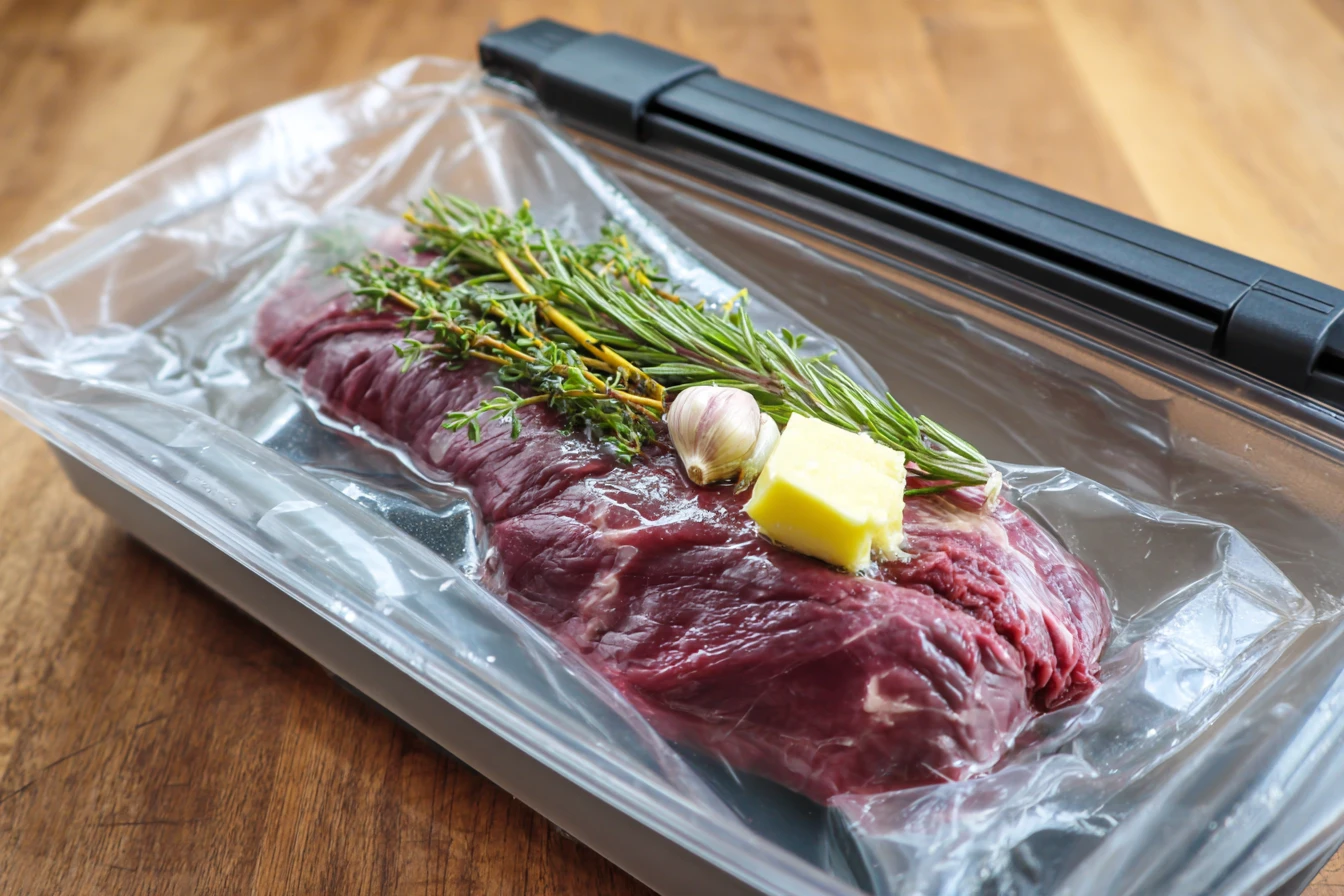
- Trim the silver skin. Slide a thin knife under the shiny membrane and remove it all; it never softens and it’s where much of the “gamey” taste lives. Trim off any fat too, since deer fat tastes waxy.
- Season with salt and coarse black pepper. Cut long backstraps into pieces that fit your bags.
- Add fat and aromatics. Put 1 tablespoon of butter or beef tallow, a smashed garlic clove and a sprig each of rosemary and thyme in each bag, then seal.
- Cook at 131°F (55°C) for 2–3 hours.
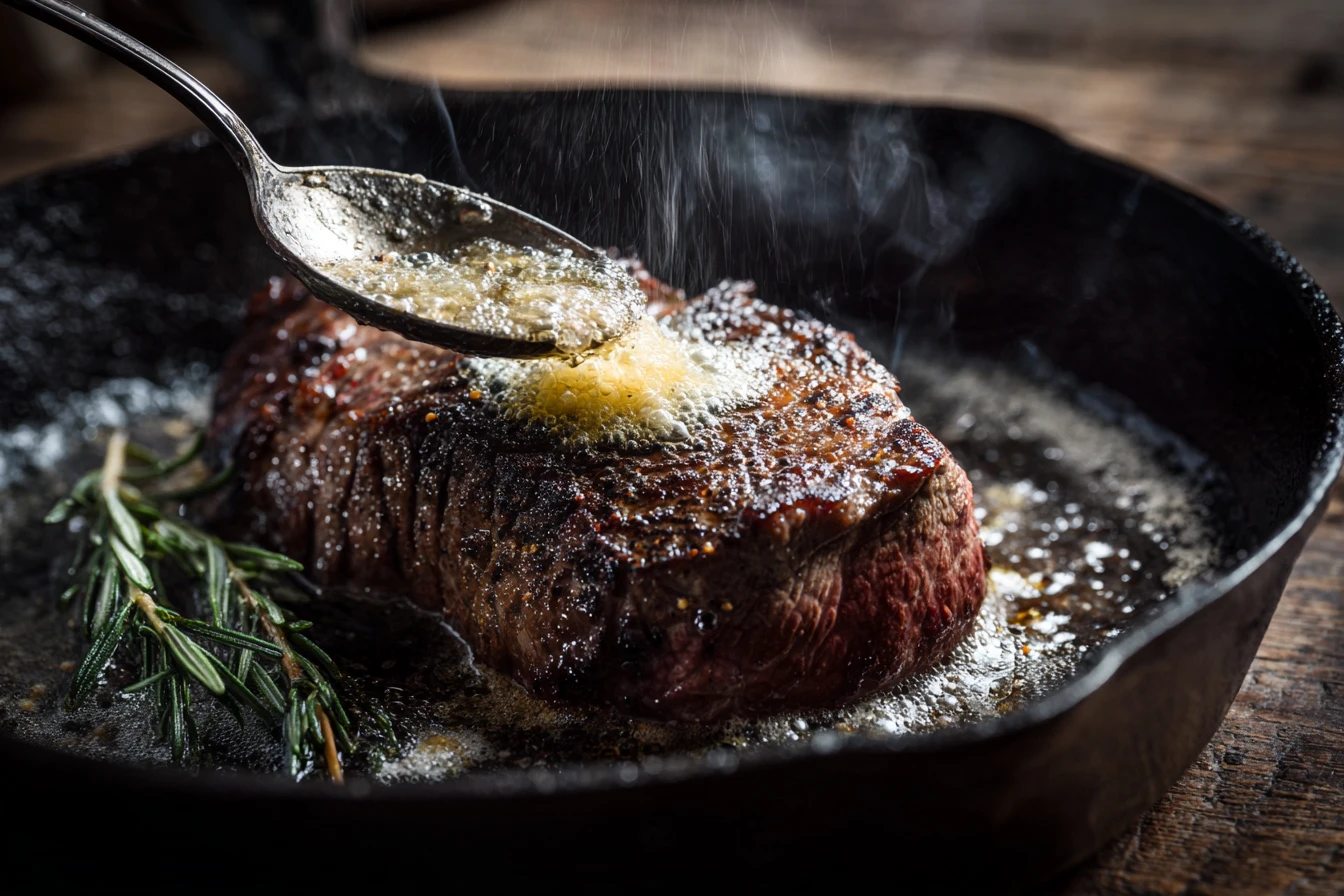
- Dry and sear fast. Pat it very dry and sear it in a smoking-hot cast-iron skillet with a little oil for about 45 seconds per side, basting with a spoonful of butter at the end. Lean venison overcooks quickly, so keep the sear short.
- Slice into medallions and serve right away; it doesn’t need a long rest.
Sauces That Love Venison
- Cranberry balsamic glaze: simmer ½ cup cranberries, ¼ cup orange juice, 2 tablespoons honey and 1 tablespoon balsamic vinegar until jammy, then stir in a knob of butter. Perfect for the holidays.
- Mushroom cream sauce: brown sliced mushrooms and a shallot in the searing pan, add ½ cup beef broth and ½ cup heavy cream, and reduce until it coats a spoon.
- Garlic herb butter: soft butter mashed with garlic, parsley and lemon zest, melted over the hot slices.
- Blackberry or blueberry pan sauce: a handful of berries, a splash of balsamic vinegar and a spoon of honey, cooked down in the same skillet.
Sous Vide Venison Backstrap
Venison backstrap cooked sous vide at 131°F, then seared hard: rosy edge to edge, tender and never gamey.
- Prep Time: 10 minutes
- Cook Time: 2 hours
- Total Time: 2 hours 15 minutes
- Yield: 4 servings 1x
- Category: Main Course
- Method: Sous Vide
- Cuisine: American
Ingredients
1½–2 lb venison backstrap, silver skin removed
1½ tsp kosher salt
1 tsp coarse black pepper
2 tbsp butter or beef tallow, divided
2 garlic cloves, smashed
2 sprigs fresh rosemary
2 sprigs fresh thyme
1 tbsp high-smoke-point oil (avocado or canola)
Instructions
1. Heat the sous vide water bath to 131°F (55°C).
2. Trim all silver skin and fat from the backstrap; cut it to fit your bags.
3. Season with salt and pepper. Add 1 tbsp butter or tallow, the garlic, rosemary and thyme to the bag and seal.
4. Cook for 2 to 3 hours (add 50% if frozen).
5. Remove from the bag and pat very dry.
6. Sear in a smoking-hot cast-iron skillet with the oil for about 45 seconds per side, basting with the remaining butter at the end.
7. Slice into medallions and serve right away.
Notes
Do not cook backstrap above 140°F; it is very lean and dries out fast.
Great with a cranberry balsamic glaze or mushroom cream sauce.
Is Sous Vide Venison Safe?
Yes, when it’s handled well. Whole cuts like backstrap are safe at 131°F because the long hold pasteurizes the meat all the way through, the same way it does for beef. Ground venison is different: bacteria can be mixed through it, so cook burgers at 145°F or higher for the full time. Two wild-game cautions: if your deer comes from an area with chronic wasting disease (CWD), have it tested before eating it, as wildlife agencies advise, and never cook bear or wild boar at low sous vide temperatures; they can carry parasites that need much higher heat. Food safety basics are on the USDA safe temperature chart.
Sous Vide Venison FAQ
How do you get the gamey taste out of venison?
Remove every bit of silver skin and fat, and don’t overcook it. Well-done venison tastes much stronger than medium-rare. Some cooks also soak the meat in buttermilk overnight; with backstrap cooked at 131°F I rarely find it necessary.
What temperature should venison backstrap be?
129°F for rare, 131–134°F for medium-rare (best) and 140°F for medium. Above 140°F the lean meat dries out quickly.
Can I sous vide venison straight from the freezer?
Yes. Most hunters vacuum seal their venison already, so it can go right into the water bath in its original bag (if the bag is intact). Add about 50% to the cooking time.
How long can venison stay in the sous vide?
Backstrap is best within 4 hours; after that the texture turns soft. Tougher roasts and shoulder cuts are the ones that benefit from long cooks of 8–24 hours.
Love lean, tender cuts? Try my sous vide beef tenderloin and filet mignon guides next.