
➤ Table of Contents
The first time I tried what is sous vide chicken?, I didn’t expect much. I figured it was just another cooking trend, but what I discovered was game-changing. What is sous vide chicken? It’s sealing your food in a bag and cooking it gently in a warm water bath. At first, I thought, Why not just bake or boil it? But one bite changed my mind—and showed me what what is sous vide chicken? is really all about.
With what is sous vide chicken?, the results are incredibly consistent. No dry edges. No guessing. Every bite is evenly cooked from edge to center. You’re not just cooking—you’re mastering control. What is sous vide chicken? It’s a method that gives you restaurant-quality results, even if you’re distracted or multitasking. Because it cooks low and slow (typically between 140°F–160°F), the juices stay sealed inside the chicken, keeping it moist and flavorful.
What surprised me most about what is sous vide chicken? was the freedom it offers. I don’t have to stand over a pan or check a thermometer. I seal, drop it in, and move on with my day. What is sous vide chicken? It’s the kitchen’s answer to life getting in the way—reliable, forgiving, and shockingly easy. And if I lose track of time? The chicken doesn’t overcook. That’s the magic of what is sous vide chicken?
If you’re wondering how what is sous vide chicken? compares to traditional methods—boiling, roasting, pan-frying—the difference is night and day. Want proof? I used the same method in this zero-stress sous vide steak and these ground beef stuffed peppers—and the results were always on point.
So… what is sous vide chicken? It’s not just a question—it’s an invitation. One that leads to juicy, fail-proof dinners with minimal effort. And if you’ve ever asked yourself, “What is sous vide chicken?” you’re already on the path to better meals. This article will help you understand what is sous vide chicken?, how it works, and why it’s worth every bit of hype. Whether you’re curious about tools, timing, safety, or flavor, here’s your deep dive into the world of what is sous vide chicken?
PrintHow to Sous Vide Chicken?

A simple step-by-step guide to cooking juicy, tender chicken using the sous vide method. Perfect for meal prep or stress-free dinners.
- Prep Time: 10 minutes
- Cook Time: 1.5–4 hours
- Total Time: 1 hour 40 minutes to 4 hours 10 minutes
- Yield: 2–3 servings 1x
- Category: Dinner
- Method: Sous Vide
- Cuisine: American
Ingredients
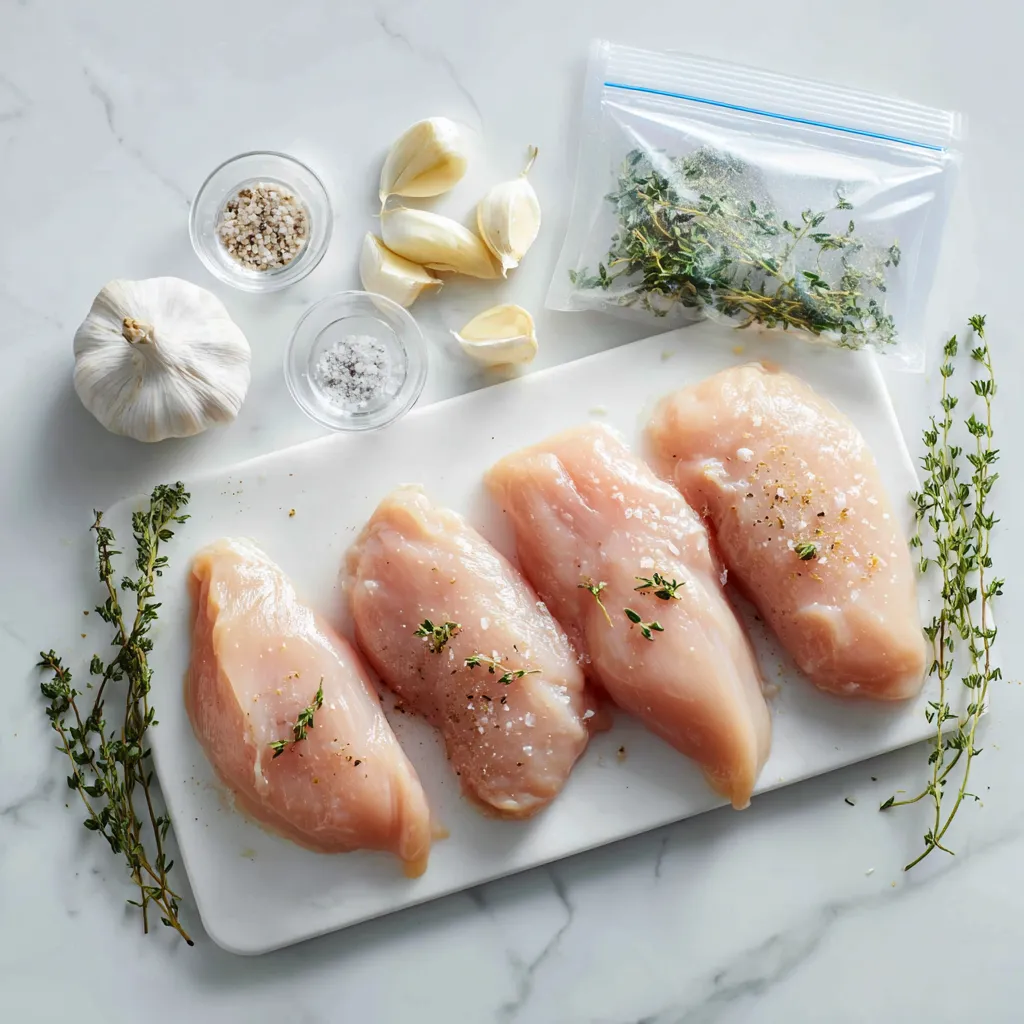
1 pound boneless skinless chicken breasts (2–3 pieces)
Salt and black pepper
Few sprigs fresh thyme (or dried)
Optional: 1–2 tsp. toasted sesame seeds
Optional: 1 sliced green onion
Instructions
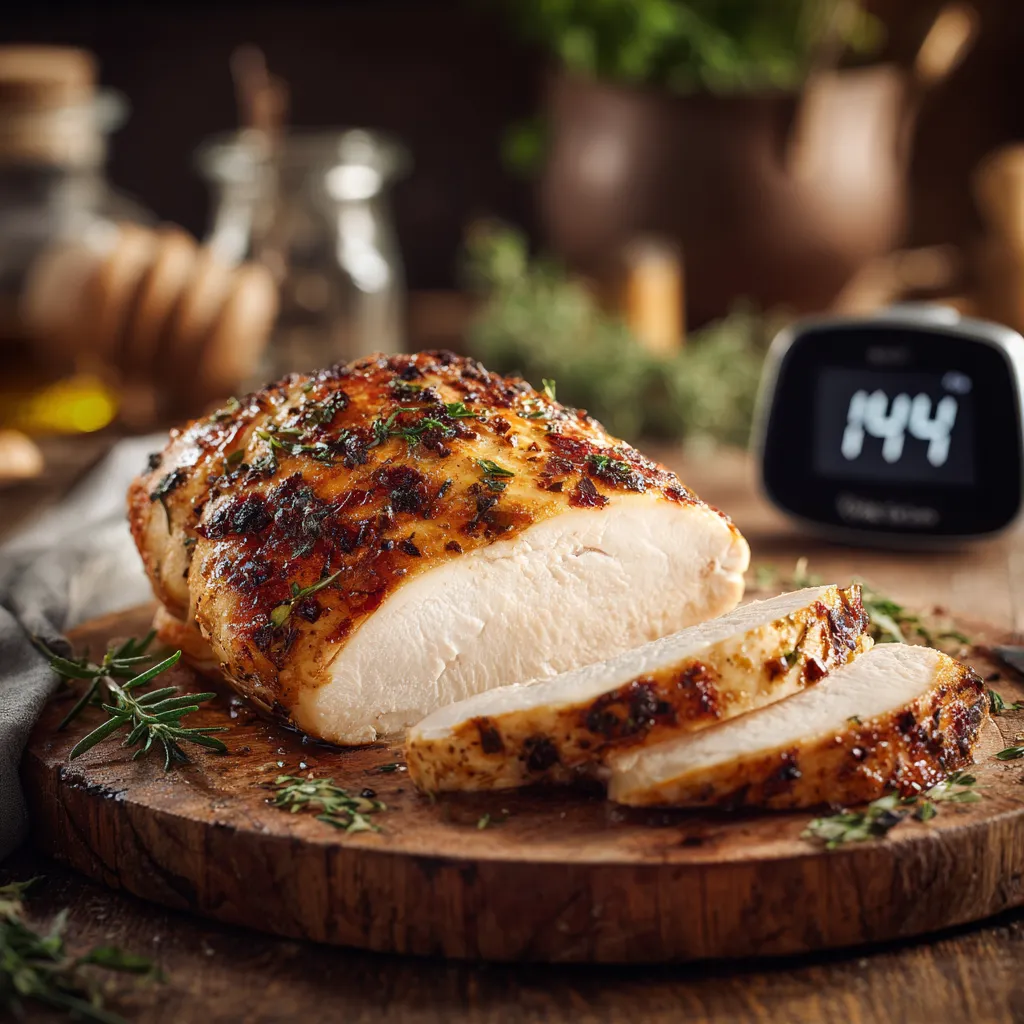
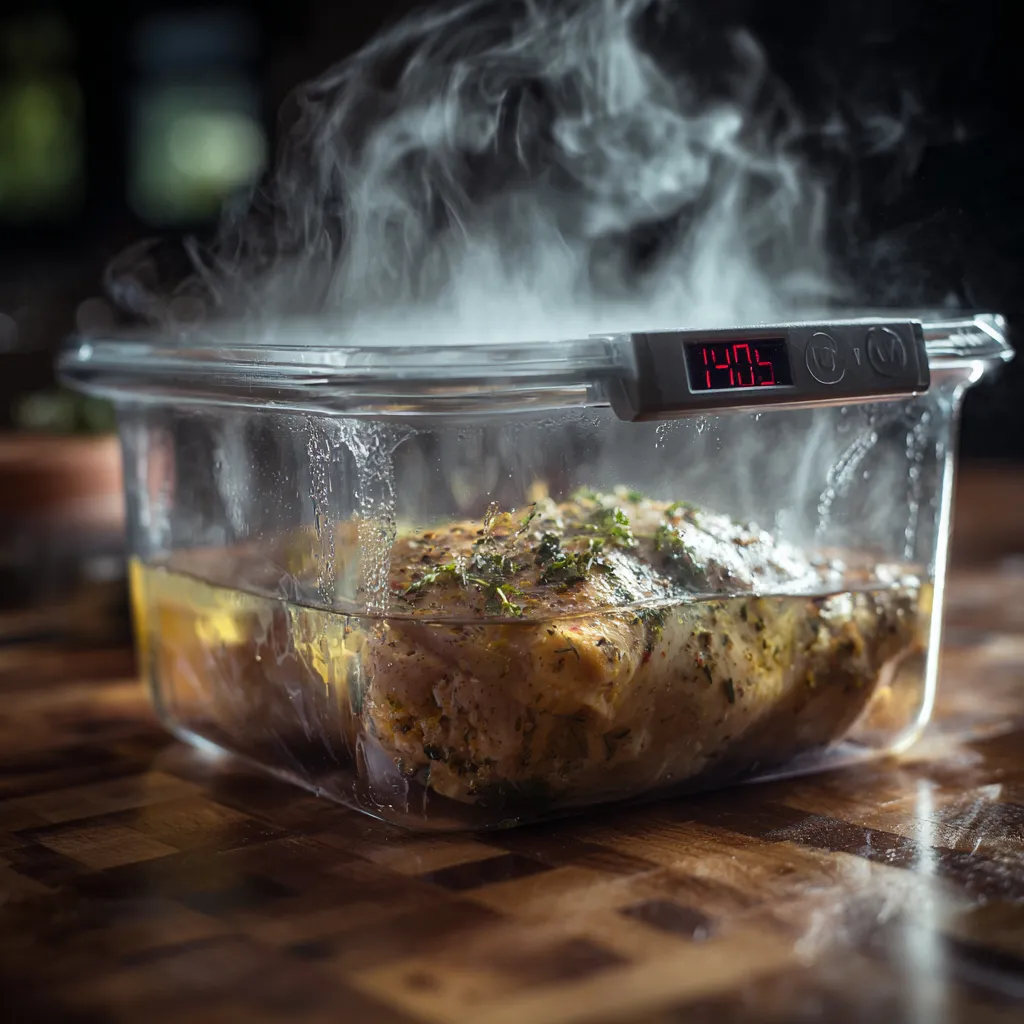
1. Fill your sous vide container with water and set the temperature to 144°F (62°C).
2. Season chicken breasts with salt, pepper, and thyme.
3. Place chicken in a vacuum-seal bag or BPA-free Ziploc using the water displacement method.
4. Once water bath is ready, submerge bag completely and cook for 90 minutes to 4 hours.
5. (Optional) While cooking, prepare a glaze or finishing sauce of choice.
6. Remove the chicken from the bag, pat dry with paper towels.
7. (Optional) For presentation, broil for 2–3 minutes or sear in a hot skillet with oil for 1–2 minutes per side.
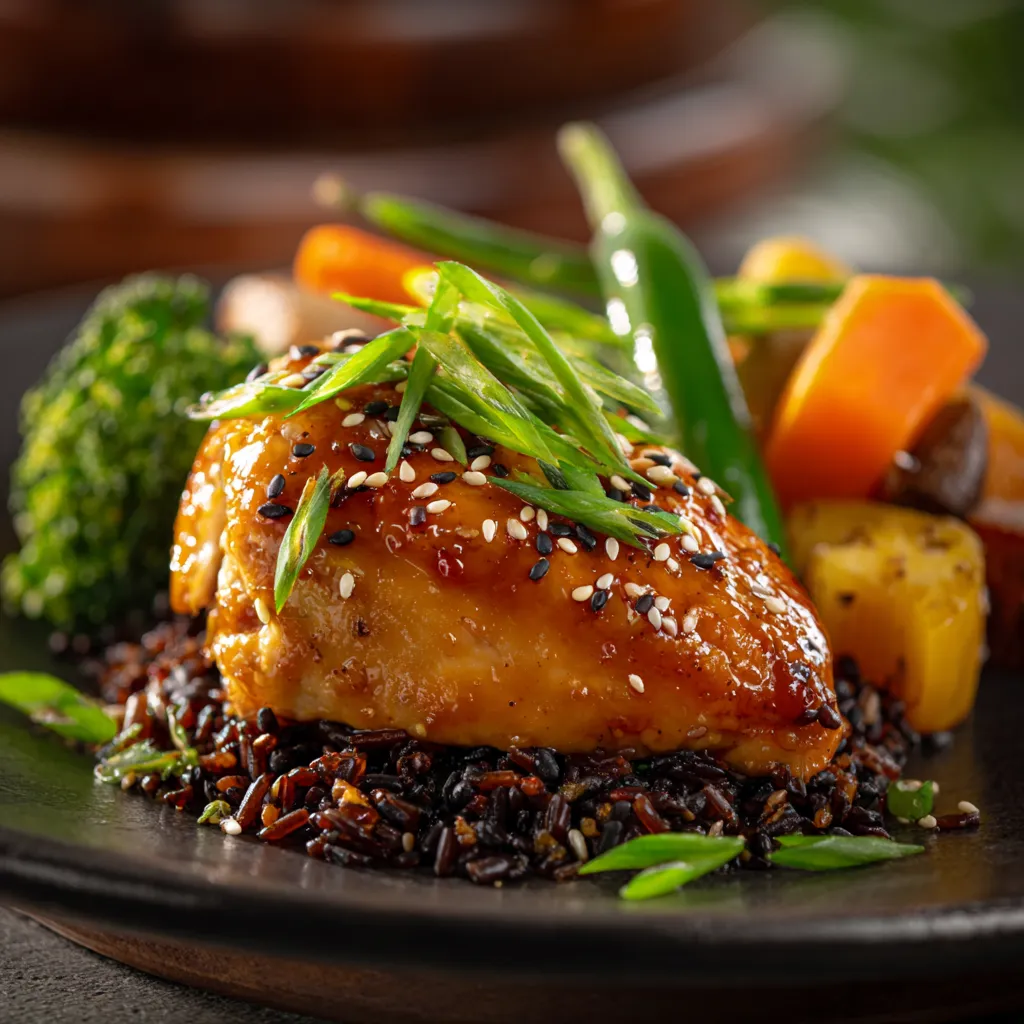
8. Slice at an angle, garnish with sesame seeds and green onion, and serve.
Notes
Cook time is flexible. Chicken won’t overcook within the suggested range.
Great for batch cooking and storing in fridge or freezer.
Pair with rice, vegetables, or serve cold in salads.
Nutrition
- Serving Size: 1 chicken breast
- Calories: 165
- Sugar: 0g
- Sodium: 320mg
- Fat: 4g
- Saturated Fat: 1g
- Unsaturated Fat: 3g
- Trans Fat: 0g
- Carbohydrates: 0g
- Fiber: 0g
- Protein: 28g
- Cholesterol: 85mg
Cooking Sous Vide Chicken the Right Way
How to Cook Chicken in a Sous Vide
What is sous vide chicken? Cooking it is surprisingly simple—and incredibly effective. First, you season the chicken (usually boneless, skinless breasts or thighs) with salt, pepper, and herbs. Then, you seal it in a vacuum or Ziploc bag using either a vacuum sealer or the water displacement method. The magic of what is sous vide chicken? happens when you drop that bag into a preheated water bath. For juicy, tender chicken, set the sous vide to 144°F and let it cook for 90 minutes to 4 hours. That’s the beauty of what is sous vide chicken?—a method that gives you flexibility and consistent results.
If you’re still wondering what is sous vide chicken?, it’s all about controlled low-temperature cooking. This process ensures the chicken is pasteurized and safe to eat—without overcooking. That’s what separates what is sous vide chicken? from methods like boiling or baking. Boiling hits high temps that dry out lean cuts like breasts. In contrast, what is sous vide chicken? preserves the natural moisture while gently cooking the meat edge to edge.
Another reason people ask, “What is sous vide chicken?” is because it sounds technical—but it’s not. You don’t need fancy gear. A simple immersion circulator and a big pot will do. What is sous vide chicken? It’s accessible. You can even use BPA-free Ziploc freezer bags instead of vacuum sealing. That’s one of the many things that makes what is sous vide chicken? so beginner-friendly.
Still unsure what is sous vide chicken? Imagine perfectly cooked chicken—no dry spots, no raw centers, just flawless texture. That’s what you get every time. Whether it’s your first try or your fiftieth, what is sous vide chicken? offers the same consistent promise: moisture, control, and ease.
Once you realize what is sous vide chicken?, you’ll never go back. Ask any home cook who’s tried it—they’ll tell you the same thing. What is sous vide chicken? It’s the smarter, tastier way to cook
Marinating vs. Dry Rubs Before Sous Vide
One question that often comes up is: Should you marinate chicken before sous vide? You can—but it’s better to think of seasoning in terms of flavor layering. Because sous vide chicken won’t lose moisture during cooking, even basic seasonings like salt and pepper deliver deep, lasting flavor. The low, controlled heat gives spices and herbs time to infuse into the meat more effectively than high-heat methods ever could.
Fresh thyme, rosemary, or a garlic rub works wonders, especially if you’re sealing the chicken right before cooking. These aromatics release essential oils that flavor the meat as it slowly cooks in its own juices. And since sous vide traps everything in the bag, you’re not losing flavor to evaporation or steam. That’s one of the big advantages sous vide has over roasting or grilling.
If you like bolder flavors—like citrus, soy sauce, or vinegar-based marinades—you can still marinate before cooking sous vide. Just be cautious with highly acidic ingredients. When left too long on raw chicken, acids like lemon juice or vinegar can start breaking down the proteins, almost “cooking” the chicken before it hits the water bath. This can lead to a mushy or off texture, especially if the marinating period exceeds a few hours. For those flavor-forward marinades, either go light or reduce marinating time before sealing and cooking.
Another great approach? Post-cook flavor layering. Once your sous vide chicken is done and out of the bag, brush on a glaze, sear it with a spice rub, or toss it in a finishing sauce. Since the chicken is already perfectly cooked, this step is all about enhancing surface flavor and presentation. One of my go-to combos is a miso glaze finished with a quick sear in a hot cast iron pan. That caramelized exterior layered over tender, juicy chicken? Unbeatable.
Sous vide also gives you the opportunity to portion and season ahead of time. You can prep and freeze multiple vacuum-sealed bags of chicken, each with different herbs, spices, or marinades. Want a Mexican-style flavor one night and garlic herb the next? Just drop whichever pre-seasoned bag fits your mood into the bath—no thawing, no fuss.
And if you’re ready to explore beyond chicken, you’ll love how seasoning techniques carry over to other proteins. Try marinating a steak before following this guide to sous vide sirloin, or create your own blend for a juicy sous vide hamburger patty that turns out perfect every single time.
In the end, seasoning sous vide chicken is all about balance and intention. You control how intense or subtle the flavors are—and when you apply them. Whether you’re keeping it simple or going bold, sous vide rewards you with chicken that’s packed with flavor inside and out.
Troubleshooting & Texture Tips for Sous Vide Chicken
Why Is My Sous Vide Chicken Rubbery or Soft?
If your sous vide chicken turns out rubbery, you’re not alone—but don’t blame the method. Texture issues usually come down to temperature or time. Chicken cooked sous vide at too high a temp (over 160°F) can firm up and lose that signature tenderness. Likewise, undercooked chicken can feel a little too soft or spongy. For the best balance, stick to the sweet spot: 144°F to 150°F for 90 minutes to 3 hours.
Overcooking isn’t common with sous vide, but long cook times (beyond 4 hours) can break down the meat’s structure too far. That might be great for pulled chicken, but if you’re going for sliceable, juicy meat, shorter times at precise temperatures work best.
When you’re experimenting, remember this: temperature defines the texture, not the doneness. At 144°F, you’ll get delicate, juicy chicken. At 155°F, you’ll get a firmer bite that’s great for salads or sandwiches.
If you’re interested in other proteins where temperature matters just as much, try our guide on how to sous vide beef stew meat or explore the technique with boneless prime rib.
What to Serve with Sous Vide Chicken
Now for the fun part—serving your sous vide chicken! Because the texture is so clean and the flavors are locked in, you can go in just about any direction. Drizzle with a honey glaze or sesame soy sauce for an Asian twist. Toss slices over fresh greens for a protein-packed salad. Or go classic with mashed potatoes, roasted vegetables, or wild rice.
Leftovers store beautifully, too. Just seal them and refrigerate for up to 4 days—or freeze for future quick meals. To reheat, bring the chicken back up to temp in the sous vide bath at 140°F for about 30 minutes.
Sous vide makes weekday meals feel gourmet—without the stress or effort.
Finishing Touches & Why Sous Vide Is Worth It
To Sear or Not to Sear (and How to Do It Right)
Once your sous vide chicken is fully cooked, it’s time to decide how you want to finish it. While chicken doesn’t require searing the same way steak does, adding a golden crust boosts both flavor and appearance. Think of it as the final step—not a requirement, but a flavor upgrade.
To sear properly, pat your chicken dry after removing it from the sous vide bag. Moisture is the enemy of a good crust. Then, heat a pan over medium-high heat, add a splash of oil, and sear the chicken for 1–2 minutes per side. You’re not trying to cook it further—just add a bit of caramelization.
If you’ve glazed your chicken (like in a soy-honey glaze), you can broil it instead. A few minutes under the broiler gives it a gorgeous finish without sticking to a skillet. Or, if you prefer to skip searing entirely, slice the chicken thinly and serve it cold or warm—it’s equally delicious.
Whether you’re preparing a quick lunch or plating for guests, sous vide chicken gives you options.
Is Sous Vide Worth It for Chicken? Absolutely.
Some people wonder: Is it really worth it to sous vide chicken? After all, chicken seems simple enough. But once you taste chicken that’s been precisely cooked to the exact degree you like, you’ll realize just how forgiving—and rewarding—this method is.
You’ll never have to deal with dry, stringy chicken breasts again. And you won’t need to constantly check internal temps or slice into the thickest part to “make sure.” The sous vide chicken method removes guesswork. It’s a game-changer for meal prep, special dinners, or busy weeknights.
Once you’ve mastered it, you’ll start branching out—trying sous vide steak for next-level results or playing with bold marinades, as shown in our garlic-glazed sous vide steak or hamburger-style beef recipes like sous vide burger patties. The consistency of sous vide is addicting.
In short, sous vide isn’t just a trend. It’s a smart, reliable, and downright fun way to cook—and chicken is the perfect place to start.
Conclusion: Sous Vide Chicken Is the Simple Secret to Juicy, Reliable Meals
If you’ve ever struggled with dry or unpredictable chicken, now you know why sous vide chicken is a total game changer. It’s not just about perfectly cooked poultry—it’s about freedom. No more guesswork. No more rushing. With sous vide, you cook on your time. Whether you’re seasoning simply or glazing boldly, the method holds up and delivers every time.
Start with salt, pepper, and fresh thyme—or explore new glazes like sesame-soy or lemon-garlic. Your chicken cooks evenly from edge to center, and you control the final texture. Plus, with options to broil, pan-sear, or slice and serve, sous vide chicken fits right into your lifestyle.
So if you’ve been wondering, What is sous vide chicken, and is it really worth it?—the answer is yes. It’s an easy, consistent, and downright delicious way to cook. And once you try it, it might just become your new go-to.
Join us on Facebook and Pinterest for even more delicious recipe ideas!
FAQs
How do you cook chicken in a sous vide?
To cook chicken sous vide, season it, seal it in a vacuum or Ziploc bag, and submerge it in a water bath set to your preferred temperature (typically 144°F–150°F). Cook for 90 minutes to 4 hours.
Do you marinate chicken before sous vide?
You can! Marinate before sealing, but avoid strong acids for long durations. Dry seasonings or short marinades work best to avoid changing the meat’s texture before cooking.
Why is my sous vide chicken rubbery?
Rubbery sous vide chicken is usually caused by cooking at too high a temperature or too long. Stick to 144°F–150°F for juicy, tender results.
What to serve with sous vide chicken?
Pair it with roasted veggies, mashed potatoes, fresh salads, or rice. You can also add sauces or glazes like teriyaki, BBQ, or garlic butter for variety.
Can you use Ziploc bags for sous vide?
Yes! As long as they’re BPA-free freezer-safe bags, you can use the water displacement method instead of a vacuum sealer.
Is it better to boil or sous vide chicken?
Sous vide is better for texture and moisture retention. Boiling can overcook the outer layers before the center is done, while sous vide cooks evenly and gently.
Is sous vide worth it?
Absolutely. Sous vide delivers consistent, restaurant-quality results at home with very little effort, making it ideal for beginners and busy cooks alike.