
➤ Table of Contents
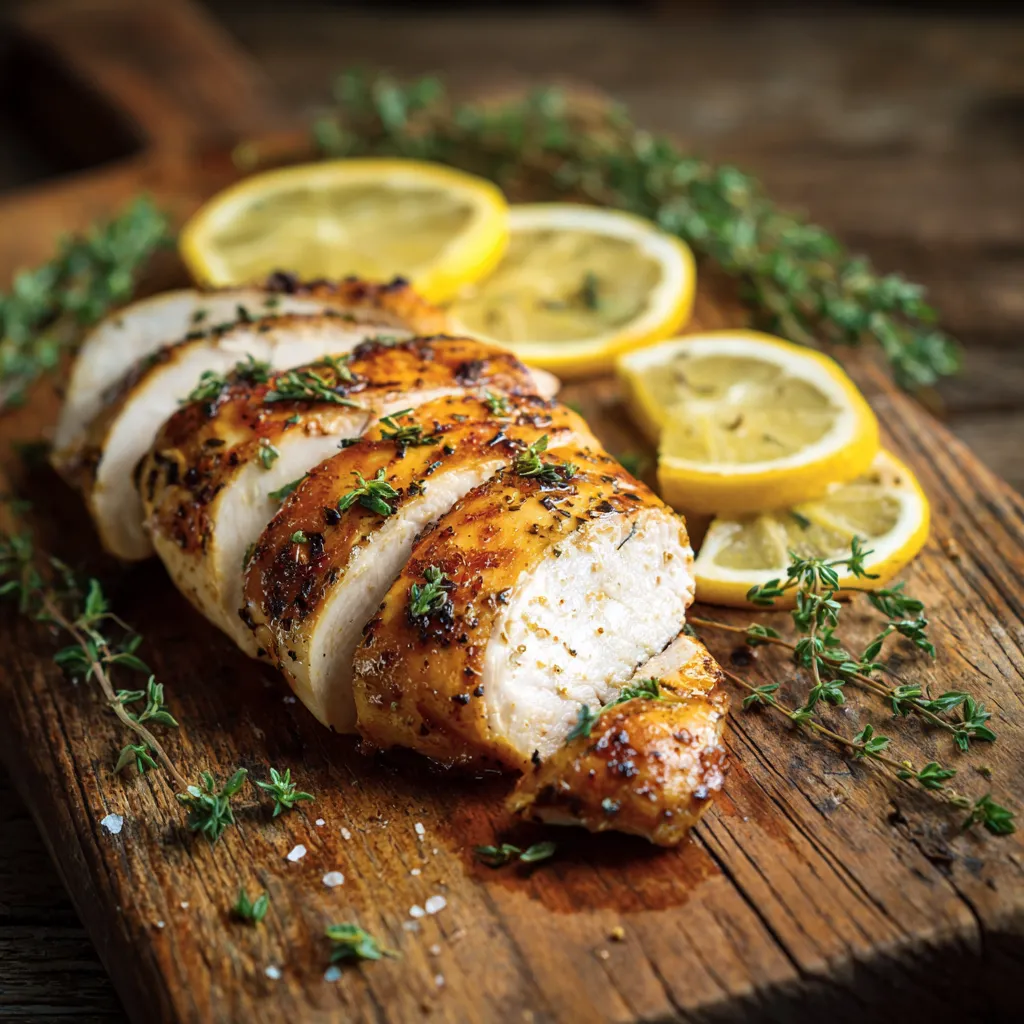
I still remember the first time I made sous vide chicken. I’d tried everything—brining, baking, pan-searing—but the results were always a gamble. Either dry and tough or barely cooked. That all changed the day I sealed a bone-in chicken breast, dropped it into a 150°F water bath, and waited. The result? Chicken so juicy it glistened, skin so crisp it cracked under my knife, and flavor that had me wondering why I hadn’t done this sooner. Right then, I finally understood what is sous vide chicken really all about.
As a Florida girl used to grilling everything under the sun, this slow, gentle method felt almost lazy—but it worked like magic. With sous vide, I could go from weekday rush to dinner perfection without hovering over the stove. It reminded me of the zero-stress sous vide steak I’d recently mastered, only now I was channeling those same effortless results into chicken. When people ask me what is sous vide chicken, I tell them it’s how I finally stopped overcooking chicken forever.
So what is sous vide chicken, really? It’s chicken cooked slowly in a precisely controlled water bath. Unlike grilling or roasting, which blast meat with direct heat, sous vide gently brings it to the perfect temperature from edge to center. That means every bite is evenly cooked, incredibly tender, and packed with flavor. You want to know what is sous vide chicken at its core? It’s control, flavor, and juicy perfection wrapped in one method.
You seal your seasoned chicken in a vacuum or zip-top bag, set your water bath to the right temp (say 145°F for tender and juicy or 150°F for firmer and shreddable), and let time do the work. It’s almost like slow-cooking—but with surgical precision. You can even add aromatics like herbs or lemon to infuse subtle flavor as it cooks. That’s what is sous vide chicken for anyone craving convenience and flavor in one.
After cooking, you quickly sear the chicken to get that golden, crackly skin. Or, if you’re planning a cold salad or meal prep, skip the sear and chill it for later. It’s flexible, forgiving, and foolproof. Just like my sous vide ground beef stuffed peppers, it’s one of those recipes that make you look like a pro—even if you’re just winging it in the kitchen. The magic of what is sous vide chicken is that it delivers restaurant-level results with minimal effort.
Friends constantly ask me: what is sous vide chicken good for? I tell them it’s perfect for anyone who’s tired of dry chicken and wants a consistent win. Whether I’m prepping weekday meals or serving guests, I rely on what is sous vide chicken to save the day. Every time I use this technique, I’m amazed at how easy it is to explain what is sous vide chicken because the results speak for themselves.
Once you taste it, you’ll never ask what is sous vide chicken again—you’ll just want more. It’s that powerful. You get consistent texture, retained moisture, and flavors that feel deeper and more complete. If you’ve ever wondered what is sous vide chicken compared to pan-fried or baked chicken, let me tell you—it’s in another league entirely. And that’s not hype; that’s just reality. For weeknight cooking or weekend meal prep, what is sous vide chicken delivers unbeatable results every single time. What is sous vide chicken? It’s the best thing to ever happen to your kitchen.
PrintWhat Is Sous Vide Chicken

Learn how to make juicy, flavorful sous vide chicken breasts with this foolproof method that uses precise temperature control for perfect doneness.
- Prep Time: 10 min
- Cook Time: 2 hrs
- Total Time: 2 hrs 10 min
- Yield: 4 servings 1x
- Category: Dinner
- Method: Sous Vide
- Cuisine: American
Ingredients
Bone-in, skin-on chicken breast
Salt
Pepper
Fresh herbs (optional)
Lemon (optional)
1 tbsp / 15 ml Vegetable, canola, or rice bran oil
Instructions
1. Pre-heat your sous vide to 145–150°F depending on preferred texture.
2. Season chicken breasts with salt and pepper.
3. Place in vacuum-seal or Ziploc bag with aromatics if using.
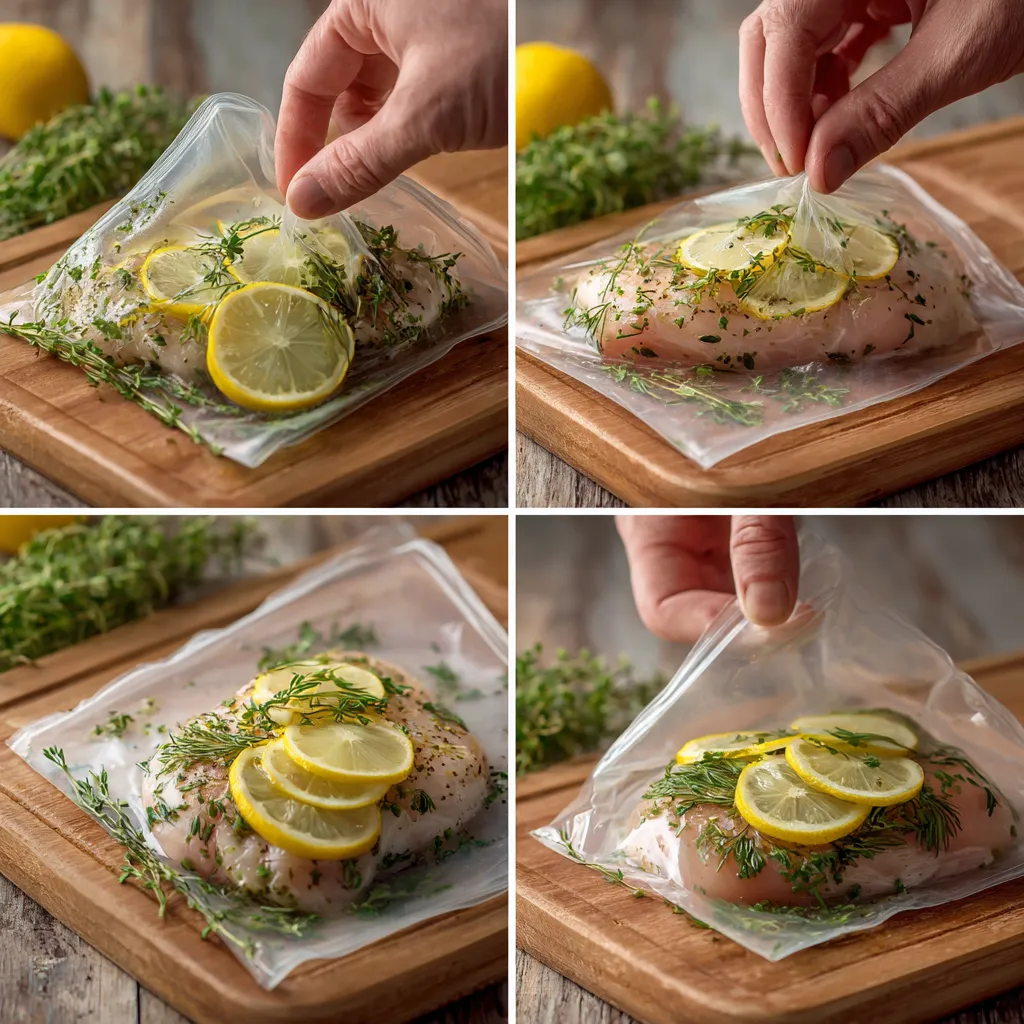
4. Use vacuum sealer or water displacement method to seal.
5. Place bag in water bath for 1.5–4 hours depending on size.
6. Remove chicken and pat dry with paper towels.
7. For stovetop finish: heat oil and sear skin side down until golden and crispy, about 2 mins.
8. For grill finish: preheat grill and cook skin side down until browned, about 5 mins.
9. For cold salad: chill in ice bath, peel skin, dice chicken for salad.
10. Carve and serve hot or cold as preferred.
Notes
Avoid overcooking by staying within the 4-hour window. Always pat chicken dry before searing for best texture.
Nutrition
- Serving Size: 6 oz
- Calories: 220
- Sugar: 0g
- Sodium: 480mg
- Fat: 10g
- Saturated Fat: 2g
- Unsaturated Fat: 7g
- Trans Fat: 0g
- Carbohydrates: 1g
- Fiber: 0g
- Protein: 28g
- Cholesterol: 85mg
How Sous Vide Chicken Actually Works
What Is Sous Vide Chicken and Why It’s a Game-Changer
To start sous viding chicken, you only need a few tools: a sous vide precision cooker, a large pot or container, and sealable bags (vacuum or freezer-grade Ziploc work just fine). Most beginners worry whether Ziploc bags are safe to use, but yes—you absolutely can use them with the water displacement method. Just be sure they’re BPA-free and made for freezer use to withstand the heat safely. One of the first things I explain when people ask what is sous vide chicken is that you don’t need fancy gear—just a little precision and patience.
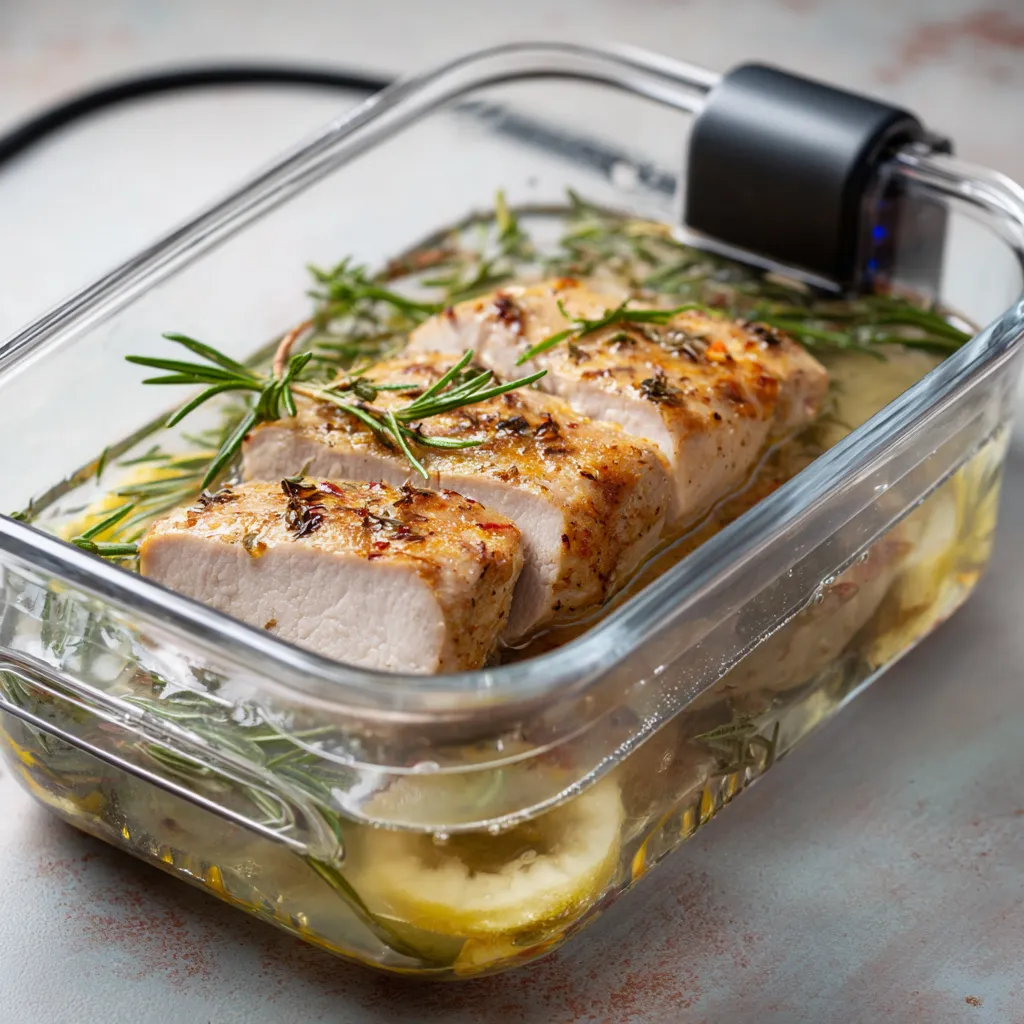
So, what is sous vide chicken preparation really like? It’s shockingly simple. Here’s the basic workflow: attach your sous vide device to a container filled with water and preheat it. For bone-in, skin-on chicken breasts, 150°F (65.6°C) is a reliable sweet spot—giving you meat that’s fully cooked yet still juicy. Let the water reach the target temp before adding your chicken. This temperature control is the heart of what is sous vide chicken, and why it delivers perfect results time after time.
Then comes the fun part—seasoning. A simple mix of salt, pepper, and aromatics like lemon slices or thyme goes a long way. Slide everything into the bag, seal it, and gently lower it into the water. If you’re not using a vacuum sealer, use the water displacement trick: lower the bag slowly until the water pressure pushes air out, then zip it shut just above the waterline. That’s it—you’re in business. And yes, what is sous vide chicken at this stage is just science meeting flavor.
You don’t have to be a chef to get it right. I often compare it to the first time I learned what is sous vide chicken while working on steaks—it reminded me of the precision and ease I found in the sous vide sirloin steak process. Once the bag’s in the bath, the sous vide device keeps the water steady—no boiling, no flipping, no guesswork. It’s stress-free cooking at its best. Anyone asking “what is sous vide chicken” just needs to try this part once to understand its magic.
What is sous vide chicken? It’s control, it’s confidence, it’s repeatable success. It’s knowing that even on a busy Tuesday night, you can season a chicken breast, drop it in the water, walk away, and still enjoy a meal that tastes like it took hours of active work. People constantly ask me what is sous vide chicken good for, and honestly, the answer is everything: weekly meal prep, family dinners, picky eaters, even dinner parties.
Another underrated part of what is sous vide chicken is how consistent it is. You don’t have to cut into the chicken to check if it’s done. You already know it is—because time and temp did the work for you. That’s what makes what is sous vide chicken such a reliable method for beginners and pros alike.
From sealing the bag to removing it from the bath, the process doesn’t just work—it builds confidence in the kitchen. Once you grasp what is sous vide chicken, you unlock a path to better flavor with zero stress. No more guessing. Just precision. Just delicious results. That’s exactly what is sous vide chicken at its core.
Timing and Finishing Options
Cooking time can vary based on thickness, but typically, 1.5 to 4 hours at 145–150°F gives amazing results for chicken breasts. Don’t worry about overcooking—sous vide keeps the temp constant, so you won’t dry out the meat if you leave it in a little longer. That said, don’t go beyond 4 hours for breast meat, or the texture can get mushy.
After cooking, how you finish the chicken depends on your plan. Want a crispy skin? Pat the chicken dry and sear skin-side down in hot oil for about two minutes. This stovetop method gives you beautiful golden skin and the kind of flavor boost you’d expect from roasting. You can also grill it if you’re in the mood for smoky notes—similar to the sear used in sous vide London broil for that final char.
If you’re meal prepping or making a cold chicken salad, skip the sear and chill the meat in an ice bath. It’s a great protein base for salads, wraps, or even sandwiches throughout the week. Either way, sous vide gives you full control over texture and flavor without needing to babysit a pan or oven timer.
Making It Delicious – Seasoning and Serving Ideas
Best Seasonings for Sous Vide Chicken
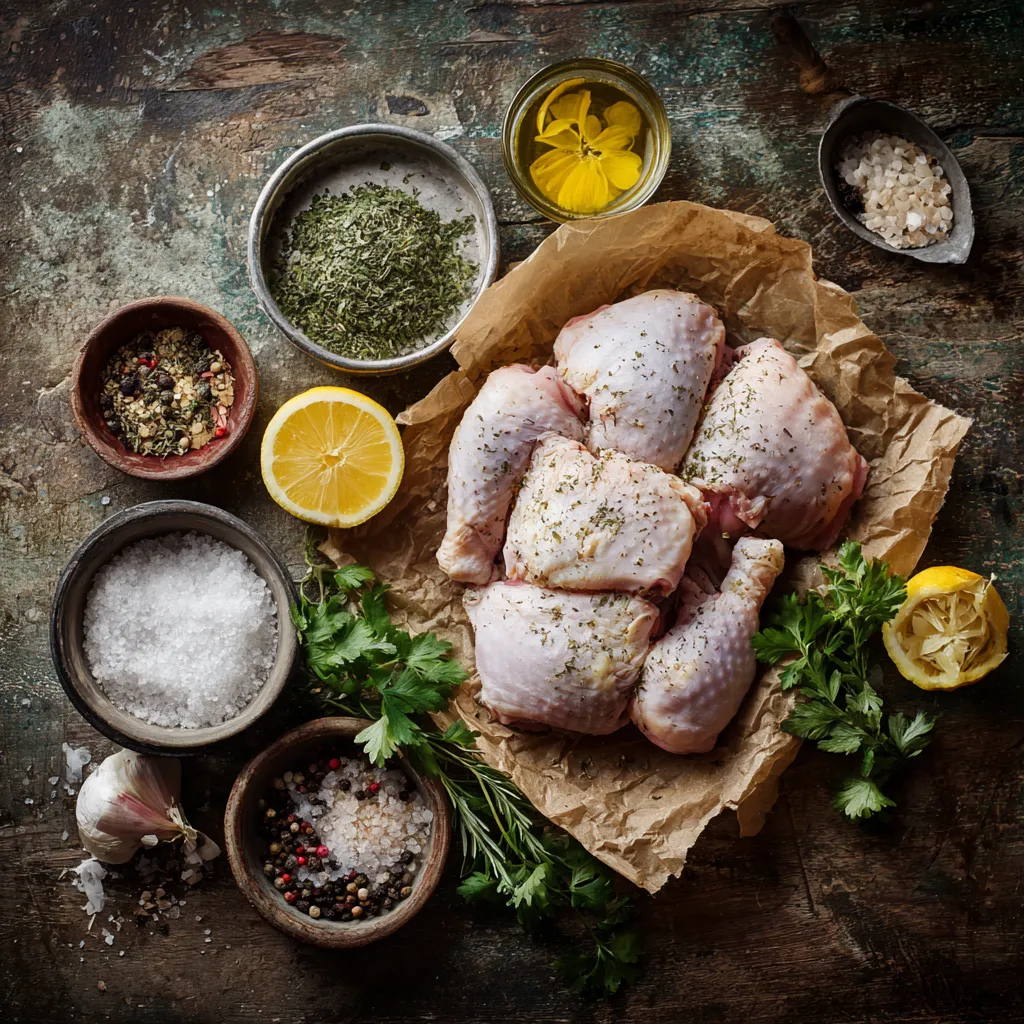
When it comes to seasoning sous vide chicken, simplicity wins. Because the chicken cooks sealed in its own juices, even minimal seasoning penetrates deeply. I like starting with kosher salt, cracked black pepper, and lemon slices—it’s clean and vibrant. Fresh herbs like thyme or rosemary are optional but elevate the aroma during cooking.
If you want to get more adventurous, try adding a spoonful of garlic confit, a splash of soy sauce for umami, or smoked paprika for depth. Keep in mind that powerful spices—like cayenne or cumin—intensify more than they would with grilling, so a light hand goes a long way.
For a warm twist, toss in a sprig of rosemary like I do with my sous vide beef stew meat. And if you’re planning to slice it into a cold salad later, a dash of mustard powder or a honey vinaigrette adds a punch of flavor after the fact.
What to Serve with Sous Vide Chicken
The beauty of sous vide chicken is that it goes with everything. Fresh off the sear? Pair it with roasted potatoes or a crisp arugula salad. Making lunch for the week? Chill, dice, and fold it into your favorite chicken salad recipe—it’s ultra-juicy and never stringy.
One of my go-to dinners is sliced sous vide chicken over warm grains, drizzled with a garlicky lemon dressing. Add steamed veggies and you’ve got a balanced plate that rivals any restaurant dish. For something a bit more indulgent, serve it with mashed cauliflower and pan sauce made right in the same skillet you used to sear the chicken.
I’ve even layered it into wraps with tzatziki or added it to lettuce cups like I do with my sous vide ground beef lettuce wraps. It’s this flexibility that makes sous vide chicken my default prep for everything from weeknight dinners to fancy Sunday meals.
And if you’re asking, “Is sous vide chicken already cooked?”—yes! Once it comes out of the water bath, it’s fully cooked and safe to eat. You’re just adding texture with a sear or serving it cold depending on your dish.
Answers to Your Sous Vide Chicken Questions
Is It Better to Boil or Sous Vide Chicken?
Boiling chicken might be quick, but it’s also one of the easiest ways to strip it of flavor and moisture. The high temperature pulls moisture from the meat, and unless you’re constantly checking doneness, you’re likely to end up with rubbery results. On the flip side, sous vide uses controlled temperature to cook chicken evenly and gently—edge to center—without overcooking.
With sous vide, you’re not guessing. The meat comes out juicy, not waterlogged. And unlike boiling, it retains its seasoning and any aromatics added to the bag. You get tender meat that’s still loaded with flavor—something no boiled chicken can match. It’s the same level of control I rely on for delicate recipes like reheating prime rib with sous vide without drying it out.
Is Sous Vide Chicken Safe and Fully Cooked?
Yes—sous vide chicken is absolutely safe when cooked at the right temperature for the right time. For example, cooking chicken at 145°F for 1.5 to 2 hours fully pasteurizes it, killing any harmful bacteria. It’s just as safe as oven-roasted chicken—sometimes safer because the temp is so consistent.
Unlike baking, where hot spots or timing issues can leave undercooked sections, sous vide ensures the entire chicken reaches the target temperature uniformly. That’s why when you pull it from the bag, it may look pale but is fully cooked. The searing step is just for texture and visual appeal, not food safety.
Sous vide chicken also makes meal prep simpler. Chill it in an ice bath, store it sealed, and reheat gently when needed. It’s ready to serve cold in salads or warm in pasta and grain bowls—just like my favorite sous vide prime rib with horseradish sauce which reheats perfectly days later without losing tenderness.
Conclusion
Sous vide chicken takes something as basic as a chicken breast and turns it into something spectacular—juicy, flavorful, and never overcooked. Whether you’re new to sous vide or already experimenting with recipes like sous vide sirloin or ground beef peppers, chicken is where the technique truly shines. Now that you know how to do it right, the only question left is: stovetop, grill, or chilled salad?
Let’s move on to the FAQ section, Rank Math SEO meta, and recipe card in the next step. Ready?
Join us on Facebook and Pinterest for even more delicious recipe ideas!
FAQs
How do you sous vide chicken?
Sous vide chicken involves seasoning the meat, sealing it in a vacuum or Ziploc bag, and cooking it in a water bath at a precise temperature using a sous vide circulator. It’s then optionally seared for crispy skin or served chilled for salads.
What is the sous vide cooking method?
Sous vide is a cooking technique where food is sealed and submerged in a precisely heated water bath. It delivers consistent, juicy, and evenly cooked results—perfect for proteins like chicken, beef, and even eggs.
What to serve with sous vide chicken?
Sous vide chicken pairs beautifully with roasted vegetables, fresh salads, or grains like quinoa. It’s also perfect diced into chicken salad or wrapped in lettuce with vinaigrette for a light meal.
What is the best seasoning for sous vide chicken breast?
Kosher salt, black pepper, lemon slices, and fresh herbs like rosemary or thyme are ideal for sous vide chicken. Aromatics infuse gently while cooking, and you can add sauces afterward for extra flavor.
Can you use Ziploc bags for sous vide?
Yes. Freezer-safe Ziploc bags are safe for sous vide. Use the water displacement method to remove air if you don’t have a vacuum sealer.
Is it better to boil or sous vide chicken?
Sous vide yields juicier, more flavorful chicken. Boiling often results in dry or rubbery meat, while sous vide preserves moisture and allows for perfect doneness.
Is sous vide chicken already cooked?
Yes. After the sous vide water bath, chicken is fully cooked and safe to eat. Searing is optional for texture and appearance, not for doneness.