
📑 Table of Contents ▶
Thai Peanut Chicken
Welcome to SousVideRecipe! I’m Jasmine, a home cook who fell in love with sous vide the moment I realized it could turn everyday meals into restaurant-quality dishes with perfect consistency. My goal is to make sous vide cooking approachable and fun for real home kitchens — no complicated steps, just flavorful, reliable recipes anyone can master. Whether you’re a beginner or a seasoned pro, I’m here to inspire you to enjoy cooking and create unforgettable meals one perfectly cooked bite at a time.
The first time I tried Thai peanut chicken, I was captivated by the creamy, nutty sauce and tender chicken that just melted in my mouth. I remember thinking how easy it was to whip up this delightful dish, transforming simple ingredients into a meal bursting with flavor. This experience ignited my passion for cooking globally inspired dishes right in my kitchen.
As I started experimenting with different techniques, I quickly realized that making Thai peanut chicken could be a weeknight staple for anyone. With just a few essential ingredients, you can create a wholesome dish that is sure to impress friends and family. Let’s dive into the world of Thai peanut chicken and get cooking!
Thai Peanut Chicken: The Basics
Fundamentals
Thai peanut chicken combines a rich blend of flavors and textures, making it a satisfying choice for any dinner table. The mild flavor of the chicken balances the nutty and creamy sauce, while the garlic adds depth. This dish captures the essence of Thai cuisine, where each ingredient plays a role in creating a cohesive meal.
The heart of this dish lies in its sauce, composed primarily of peanut butter, soy sauce, and coconut milk. Together, these ingredients form a creamy, decadent coating for the chicken that elevates it to new heights.
Preparation/Setup
Start with gathering all your ingredients to make cooking smoother. You’ll need 4 boneless, skinless chicken breasts, garlic, low-sodium soy sauce, creamy natural peanut butter, and full-fat coconut milk. Equip yourself with a large skillet and a sharp knife for cutting the chicken into bite-sized pieces.
Preparing the chicken is essential for flavor. Wash your hands thoroughly after handling raw chicken to prevent cross-contamination. With everything at hand, you’ll streamline the cooking process.
Ingredients
- 4 boneless, skinless chicken breasts (about 1.5 lbs)
- 2 cloves fresh garlic, minced
- 1/4 cup low-sodium soy sauce
- 1/3 cup creamy natural peanut butter
- 1/2 cup full-fat coconut milk
- Salt and pepper to taste
- 1 tablespoon vegetable oil
Directions
- Cut the chicken breasts into bite-sized pieces and season with salt and pepper.
- In a large skillet over medium-high heat, add vegetable oil. Cook the chicken until browned and cooked through, about 5-7 minutes. Remove from the skillet and set aside.
- In the same skillet, reduce heat to medium, add minced garlic, and sauté for about one minute until fragrant.
- Stir in soy sauce, peanut butter, and coconut milk; mix well.
- Return the chicken to the skillet, stirring until coated in the sauce. Let simmer for a few minutes until heated through.
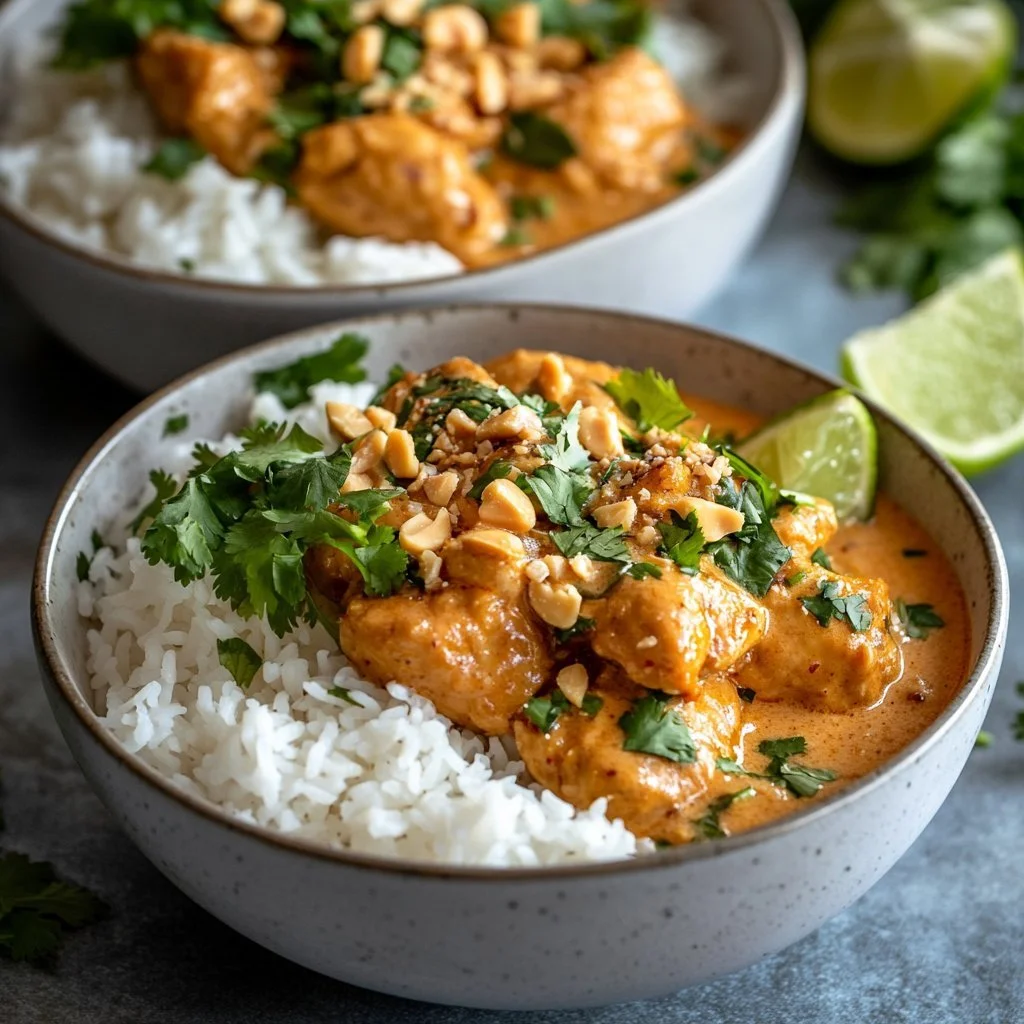
- Serve warm, garnished with chopped peanuts or cilantro if desired.
Thai Peanut Chicken Techniques
Technique
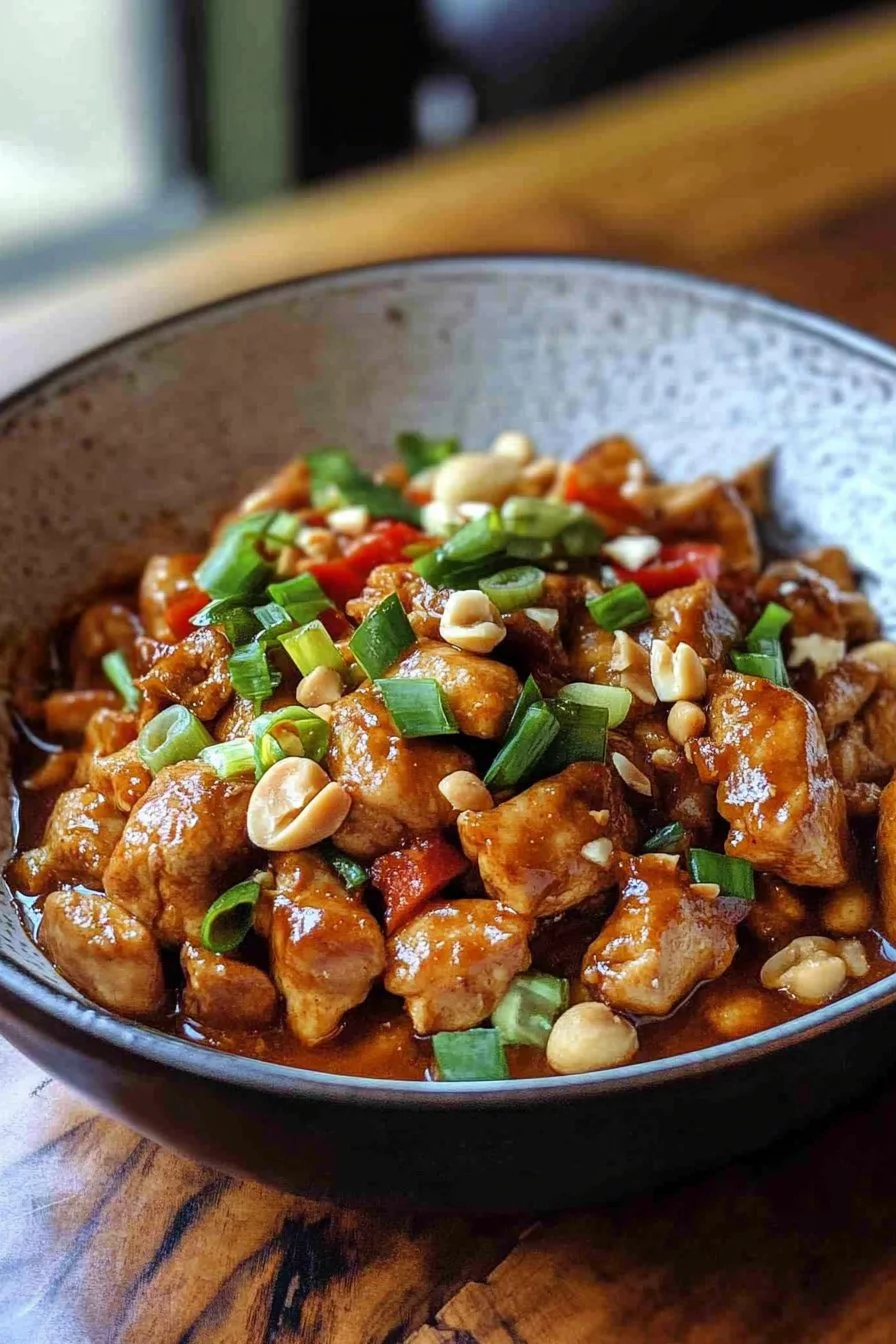
Mastering Thai peanut chicken requires understanding the balance of flavors in the dish. By cooking the chicken until it’s browned, you create a delicious foundation for the sauce. The caramelization adds a rich, savory taste that complements the creamy peanut sauce.
When preparing the sauce, careful attention to the order of adding ingredients can enhance the flavors. Sauté the minced garlic first to release its essential oils, ensuring that the sauce has a fragrant base. Mixing in the peanut butter, soy sauce, and coconut milk after helps create a smooth texture.
Tips/Tricks
- Let the chicken rest after cooking for an even juicier texture. This simple step keeps the meat tender.
- Adjust the thickness of the sauce by adding more or less coconut milk. A thicker sauce coats the chicken brilliantly, while a thinner one offers a lighter dish.
- Experiment with the heat level by adding a dash of chili sauce or red pepper flakes for an extra kick.
Thai Peanut Chicken: Perfecting Your Results
Perfecting Results
To achieve the perfect Thai peanut chicken, timing is crucial. Monitor the chicken closely while it cooks, ensuring it reaches a safe internal temperature of 165°F. This will guarantee it’s tender and juicy, free from dryness.
Simmering the chicken in the sauce for a few extra minutes allows it to absorb all the rich flavors, making each bite more exhilarating. The sauce should be glossy and thick enough to cling to every piece of chicken, creating a mouthwatering experience.
Troubleshooting/Variations
If your sauce turns out too thick, don’t fret! Add a splash of water or more coconut milk to adjust the consistency. On the other hand, if it feels too runny, simmer it longer to help it thicken.
You can experiment with this recipe by adding your favorite vegetables. Bell peppers, broccoli, or snap peas can enhance both nutrition and texture. Toss them into the skillet when you’re adding the garlic for vibrant colors and added crunch.
Thai Peanut Chicken Serving Suggestions
Serving/Presentation
When serving Thai peanut chicken, presentation can elevate the dining experience. Serve the dish over a bed of steamed rice or quinoa, allowing the grains to soak up the delectable sauce. A sprinkle of chopped peanuts or cilantro on top adds both flavor and a pop of color that entices anyone at the table.
Using a shallow bowl or a plate can create an inviting display. Sometimes, simple garnishes make all the difference in serving a dish that looks as good as it tastes.
Pairings/Storage
Pair this Thai peanut chicken with a side of jasmine rice or an Asian-inspired cucumber salad for a satisfying meal. Fresh vegetables balance the richness of the sauce, creating a harmonious plate.
If you’re fortunate enough to have leftovers, store them in an airtight container in the refrigerator. Enjoy them within three days for maximum freshness. Reheat gently on the stovetop or in the microwave to preserve the chicken’s texture and the sauce’s creaminess.
Conclusion
The wonderful layers of flavor and creamy texture in Thai peanut chicken can transform any weeknight dinner into an extraordinary culinary experience. With a few simple steps and ingredients, you can create a dish rich in taste, inviting both family and friends to the table. This dish makes cooking enjoyable, allowing you to shine in your home kitchen while mastering a beloved recipe from Thai cuisine.
PrintThai Peanut Chicken

A creamy and nutty Thai dish featuring tender chicken cooked in a rich peanut sauce.
- Prep Time: 10 minutes
- Cook Time: 15 minutes
- Total Time: 25 minutes
- Yield: 4 servings 1x
- Category: Main Course
- Method: Sautéing
- Cuisine: Thai
- Diet: Gluten-Free
Ingredients
- 4 boneless, skinless chicken breasts (about 1.5 lbs)
- 2 cloves fresh garlic, minced
- 1/4 cup low-sodium soy sauce
- 1/3 cup creamy natural peanut butter
- 1/2 cup full-fat coconut milk
- Salt and pepper to taste
- 1 tablespoon vegetable oil
Instructions
- Cut the chicken breasts into bite-sized pieces and season with salt and pepper.
- In a large skillet over medium-high heat, add vegetable oil. Cook the chicken until browned and cooked through, about 5-7 minutes. Remove from the skillet and set aside.
- In the same skillet, reduce heat to medium, add minced garlic, and sauté for about one minute until fragrant.
- Stir in soy sauce, peanut butter, and coconut milk; mix well.
- Return the chicken to the skillet, stirring until coated in the sauce. Let simmer for a few minutes until heated through.
- Serve warm, garnished with chopped peanuts or cilantro if desired.
Notes
Let the chicken rest after cooking for an even juicier texture. Adjust the thickness of the sauce by adding more or less coconut milk.
Nutrition
- Serving Size: 1 serving
- Calories: 400
- Sugar: 4g
- Sodium: 600mg
- Fat: 20g
- Saturated Fat: 10g
- Unsaturated Fat: 8g
- Trans Fat: 0g
- Carbohydrates: 28g
- Fiber: 2g
- Protein: 30g
- Cholesterol: 80mg