
➤ Table of Contents
Hi there! I’m Jasmine, the home cook behind SousVideRecipe.com. Growing up in Florida, I was all about fast grilling and seafood feasts—until I met sous vide. One rainy Sunday, I tried it on a chuck roast. I sealed the beef, dropped it into a warm water bath at 155°F, and left it alone for 36 hours. When I opened the bag, the aroma alone had me hooked. What came out wasn’t just dinner—it was an experience. That’s the magic of sous vide. Even cheap cuts like chuck get the VIP treatment with consistent heat and time.
What makes sous vide beef chuck roast so special is its predictability. There’s no guesswork. Unlike roasting, which often dries out the edges before the middle is done, sous vide gently breaks down the tough connective tissue throughout the entire roast. That means every bite is juicy and tender. And you don’t need to fuss over your stove to get there.
Recipes like this sous vide roast beef and beef sirloin tip roast sous vide are perfect examples of how slow cooking at precise temps can totally change how we think about weeknight dinners.
PrintSous Vide Beef Chuck Roast – Ultimate 36-Hour Juicy Success Recipe
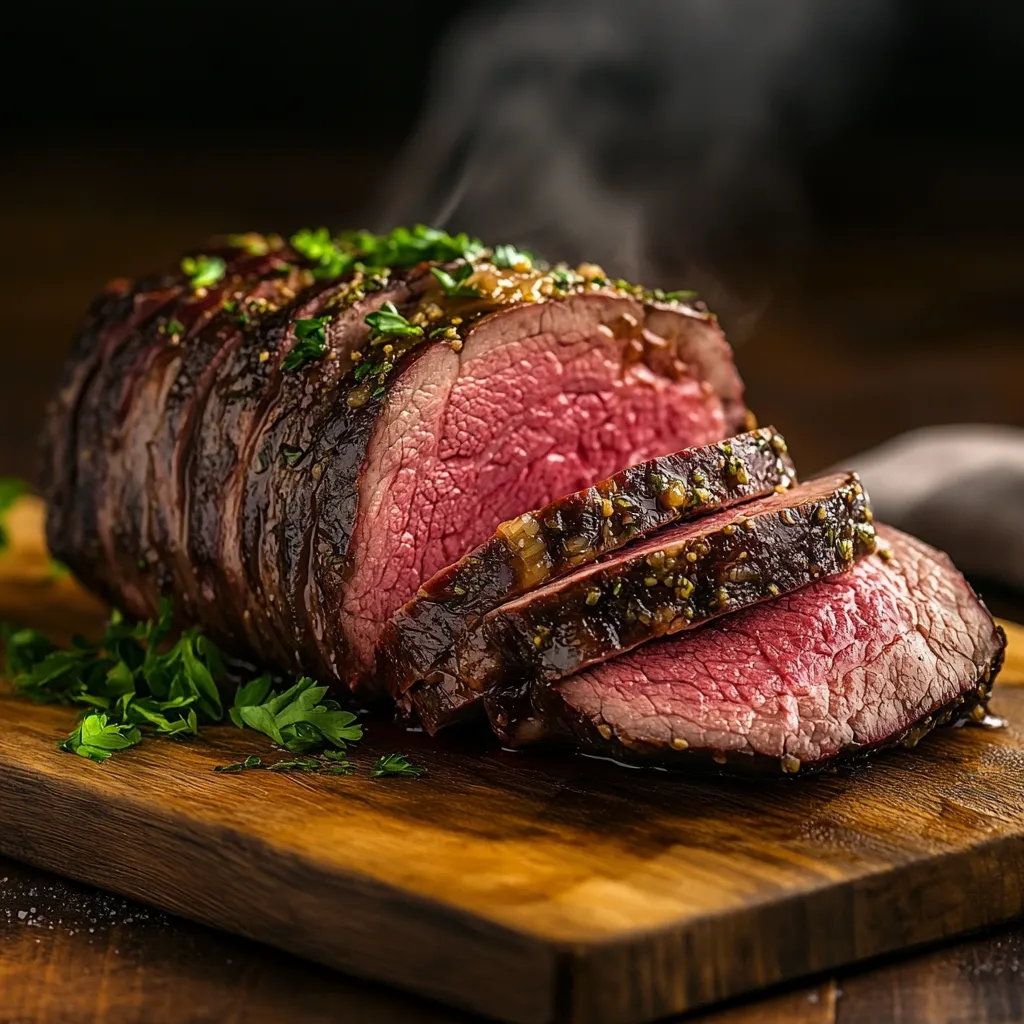
A rich and tender sous vide beef chuck roast cooked low and slow for 36 hours, then finished on the grill or in the oven for the perfect bark and deep beefy flavor.
- Prep Time: 20 minutes
- Cook Time: 36 hours
- Total Time: 36 hours 20 minutes
- Yield: 8 servings 1x
- Category: Dinner
- Method: Sous Vide
- Cuisine: American
Ingredients
1 ounce coarsely ground black peppercorns (about 1/4 cup; 28 g)
1/2 ounce Diamond Crystal kosher salt (about 2 tablespoons; 18 g)
1/4 ounce (10 g) pink salt, such as Prague Powder #1 (optional)
1 (4- to 5-pound) piece beef chuck roll
1/4 teaspoon liquid smoke, such as Wright’s Liquid Smoke (optional)
Dill pickles, sliced yellow onion, and white bread, for serving
Instructions
1. Combine pepper, salt, and pink salt (if using). Rub 2/3 of mix over the chuck roast. Reserve 1/3.
2. Tie roast with twine at 1- to 1.5-inch intervals.
3. Place in vacuum bag, add liquid smoke if using. Seal and refrigerate for 2–3 hours.
4. Preheat sous vide to 155°F (68°C). Submerge roast in water bath for 36 hours.
5. Cool roast to room temp, or chill in ice bath to speed up.
6. (Optional) Store up to 1 week in fridge before finishing.
7. To grill: Light charcoal, preheat grill. Add wood chunks. Smoke roast over indirect heat at 250–275°F for 2 hours.
8. To oven: Preheat oven to 275°F (or 250°F convection). Roast for 2 hours until bark forms.
9. Remove from heat, tent with foil, and rest 15 minutes.
10. Slice roast into its two major muscle groups. Discard twine.
11. Slice thinly against the grain. Serve with pickles, onions, and white bread.
Notes
Pink salt is optional but adds classic cured flavor.
Letting meat rest after sous vide improves juiciness.
Liquid from the sous vide bag can be simmered into BBQ sauce.
Nutrition
- Serving Size: 6 oz
- Calories: 390
- Sugar: 0g
- Sodium: 870mg
- Fat: 28g
- Saturated Fat: 11g
- Unsaturated Fat: 15g
- Trans Fat: 0g
- Carbohydrates: 1g
- Fiber: 0g
- Protein: 35g
- Cholesterol: 95mg
The Science Behind the Texture
Chuck roast is full of collagen and connective tissue—that’s why it’s so tough when braised quickly. But with sous vide, cooking it at 155°F for 36 hours lets the collagen convert into gelatin slowly, creating a rich, succulent texture. The result? Slices that are fork-tender but still juicy, with a meaty flavor that rivals brisket.
We’ve even tested this method across other recipes like how to sous vide beef stew meat and how long to sous vide a sirloin tip roast—and the transformation is always incredible.
Time and Temp Secrets for Tender Beef
When cooking sous vide beef chuck roast, your two key variables are time and temperature. Each unlocks a different texture. Want a sliceable, brisket-style result? Go higher on the temp. Prefer shreddable beef for sandwiches or tacos? Keep it low and slow. Here’s a clear breakdown:
| Temperature | Time | Result |
|---|---|---|
| 135°F (57°C) | 36–48 hours | Medium-rare, steak-like, sliceable |
| 145°F (63°C) | 24–36 hours | Tender and juicy, slightly pink center |
| 155°F (68°C) | 24–36 hours | Fall-apart tender, roast-like |
| 165°F (74°C) | 18–24 hours | Ultra-tender, shreddable |
For our featured recipe, we recommend 155°F for 36 hours. This hits the sweet spot—juicy, rich beef with just the right bite. You’ll find similar insights in our guide on how long to sous vide ground beef for maximum safety and flavor.
Can You Overcook Sous Vide Roast?
Technically, no—your sous vide beef chuck roast won’t “overcook” in the traditional sense. Because sous vide cooking holds the water at a precise temperature, the internal temperature of the meat never exceeds that target. That means you won’t dry out or burn the roast, even if it stays in the bath longer than planned.
However, that doesn’t mean you can’t go too far. If your sous vide beef chuck roast sits in the water bath for too long—say, more than 48 hours at 155°F—you may start to notice a mushy, overly soft texture. At that point, collagen and connective tissues begin to break down excessively, leaving you with beef that lacks bite. That’s why it’s important to follow tested time guidelines, like the 36-hour cook used in this recipe. Our 18hr sous vide corned beef uses a similar principle—balancing collagen breakdown with meaty structure.
Now, if you’re wondering “Can I sous vide a roast in 8 hours?” the answer is yes—but it won’t be the same. The beef will be cooked to a safe temperature, but it won’t be tender enough to deliver that fall-apart texture you’re after. Chuck roast is a hardworking muscle, and it rewards time. To get the full magic of a sous vide beef chuck roast, you need to let the water bath do its work over the long haul. Trust the process—it’s worth the wait.

Seasoning for Deep, Savory Flavor
A good roast starts with great seasoning—and when you’re making a sous vide beef chuck roast, bold flavor from the beginning is essential. Unlike traditional roasting where moisture can escape, sous vide locks everything in. That means your seasoning won’t evaporate or intensify—it needs to be strong enough to carry through a 36-hour cook.
Start by combining coarsely ground black pepper, Diamond Crystal kosher salt, and pink curing salt like Prague Powder #1 (if using). Rub two-thirds of this spice blend all over the exterior of your sous vide beef chuck roast, pressing it into every surface for maximum flavor adhesion. The remaining one-third will be saved for later, right before finishing the roast.
The pink salt is optional, but it adds that signature cured beef flavor you find in deli classics like pastrami or roast beef. It also gives the meat a rich, reddish hue—purely for visual and flavor effect. If you’re looking to mimic outdoor barbecue vibes, just a touch of liquid smoke—about 1/4 teaspoon—is all it takes to bring that smoky depth.
Once seasoned, tie the sous vide beef chuck roast with butcher’s twine at 1- to 1.5-inch intervals. This helps it maintain a compact, uniform shape throughout the long cook. It also ensures even doneness, especially if you’re planning to finish it on the grill like we do in our sous vide brisket recipe or serve up clean, picture-perfect slices.
By investing just a few extra minutes in seasoning and prep, you’ll set your sous vide beef chuck roast up for rich, layered flavor that runs deep in every bite.
Vacuum Sealing and Resting for Maximum Impact
Place the seasoned sous vide beef chuck roast into a vacuum-sealable bag, folding the top edge over while filling it to keep the seal area clean. This little trick helps ensure a solid, leak-proof seal later on. If you’re using liquid smoke to boost that barbecue-like flavor, now’s the time to add it—just a small amount goes a long way. Once everything’s inside, seal the bag tightly using your vacuum sealer.
Next, let the sealed sous vide beef chuck roast rest in the refrigerator for 2 to 3 hours. This resting period allows the salt and spices to start working their way into the meat fibers, enhancing flavor from the inside out. It’s a simple but essential step that makes a real difference in taste and texture.
Vacuum sealing does more than keep the roast airtight—it creates a tight bond between the meat and the seasoning, helping lock in every layer of flavor during the long sous vide cook. For large cuts like a chuck roast or our sous vide prime rib for two, this method ensures consistency in every bite.
Once your sous vide beef chuck roast is sealed and fully rested, it’s ready for the water bath. You’ve packed it with flavor and set the stage for transformation. Now, it’s time to let the magic of sous vide take over—and bring out the best in this deeply marbled, slow-cooking cut.

Grill or Oven: Building the Crust
After 36 hours in the water bath at 155°F, your sous vide beef chuck roast reaches an unmatched level of tenderness—but it’s not quite finished yet. To take it from simply tender to truly unforgettable, you need a finishing step that adds texture, depth, and that crave-worthy crust. That’s where searing comes in. Whether you use a hot grill or your oven, the goal is to build a rich, dark bark on the outside of the roast—just like the crust you’d expect from a properly smoked barbecue brisket.
Grilling your sous vide beef chuck roast over indirect heat with wood chunks adds smoky character and that signature barbecue finish. On the other hand, using a convection oven gives you consistent heat control while forming a beautiful bark that holds in all those juices. Both methods work beautifully; the choice depends on your tools and taste. What matters most is giving your sous vide beef chuck roast that final blast of dry heat to contrast with its fork-tender interior.
This stage transforms your slow-cooked chuck into something that tastes like it came from a backyard smoker—but with far less effort. And if you’re after the best of both worlds—smoky bark outside, buttery texture inside—the finishing sear is non-negotiable. Trust the process: your sous vide beef chuck roast deserves it.
Grill Finish (Recommended):
Light half a chimney of charcoal and set up your grill for indirect heat. Add wood chunks like hickory or oak to infuse smoke flavor. Place the roast on the cooler side of the grill, cover, and maintain temps around 250–275°F for 2 hours. Flip halfway through to develop even bark.
Oven Finish:
Preheat to 275°F (or 250°F convection). Place the roast on a wire rack set inside a rimmed baking sheet. Roast for 2 hours or until a deep crust forms. For extra flavor, rub the surface with the reserved salt-pepper mix from prep.
Just like our reverse sear prime rib sous vide, this stage is where the magic happens—the crust adds contrast to that melt-in-your-mouth interior.
Resting, Slicing & Serving Right
Once your sous vide beef chuck roast has finished its final sear on the grill or in the oven, transfer it carefully to a cutting board. Tent it loosely with foil and let it rest for at least 15 minutes. This short resting period allows the juices to redistribute throughout the meat, preventing dryness and ensuring every bite is juicy and full of flavor. Once rested, locate the two main muscle groups within the chuck roast and slice between them. Discard the twine, then lay each half flat and cut thinly against the grain to maximize tenderness and mouthfeel.
For a classic Southern presentation, serve your sous vide beef chuck roast with sliced dill pickles, thin yellow onion, and soft white bread—it’s a tribute to old-school Texas barbecue. The balance of smoky, tender beef with tangy sides is simply unbeatable. Whether you’re feeding a crowd or meal-prepping for the week, this roast delivers bold flavor and lasting satisfaction.
Leftovers? No problem. Wrap your extra sous vide beef chuck roast tightly in foil and store it in the fridge for up to 7 days. When you’re ready to reheat, place the foil-wrapped slices in a 275°F oven for about an hour. This low-and-slow reheat method keeps the beef moist and just as satisfying as the day you cooked it—just like we suggest in our reheating prime rib with sous vide guide.
Still hungry for beef? Try our sous vide steak with garlic herb butter or dive into our smoky sous vide picanha steaks for more delicious ways to use your water bath.

Conclusion
From sealing the meat with bold seasoning to finishing with a perfect bark in the oven or on the grill, the process of preparing a sous vide beef chuck roast proves that patience pays off. Each step—seasoning, vacuum sealing, cooking, resting, and searing—works together to create a roast that’s not just good, but unforgettable. The long cook time allows deep flavors to develop, and that final crust adds the kind of texture you’d expect from a high-end barbecue joint. This is why making a sous vide beef chuck roast is more than just cooking—it’s a commitment to quality. And yes, every slow-cooked minute is worth it.
Cooking a sous vide beef chuck roast isn’t just a clever kitchen trick—it’s a complete game changer for transforming inexpensive, tough cuts into tender, flavor-packed masterpieces. Unlike traditional roasting or braising, sous vide gives you precise control over temperature and texture, eliminating the risk of overcooking. With the right combination of sous vide time, temperature, seasoning, and finishing method, your sous vide beef chuck roast will have all the juiciness and flavor of a slow-smoked brisket—without needing a smoker or hours of active supervision. It’s one of the most reliable ways to cook beef perfectly every time.
Whether you’re making roast beef sandwiches with pickles and onions, plating the meat with classic Southern sides, or serving it sliced for a special dinner, the sous vide beef chuck roast will be the highlight of your table. This roast is incredibly versatile, surprisingly forgiving, and always delivers impressive results. If you want to master one beef recipe that always works, make it the sous vide beef chuck roast—a true staple for anyone serious about flavor.
Join us on Facebook and Pinterest for even more delicious recipe ideas!
FAQs
How long should I sous vide a chuck roast?
For the most tender and flavorful result, sous vide your chuck roast at 155°F (68°C) for 36 hours. This allows collagen to fully break down while keeping the meat juicy and sliceable.
At what temp is beef chuck roast most tender?
The sweet spot for tenderness is between 145°F and 155°F. At 155°F for 36 hours, you’ll get that fall-apart texture with deep beefy flavor and a roast-like consistency.
How long to sous vide 1kg of beef?
Time is based on thickness, not weight. Whether it’s 1kg or 3kg, cook it for 24–36 hours at 145°F–155°F. Thickness determines how heat penetrates, not overall weight.
Is it safe to sous vide beef at 135?
Yes, 135°F (57°C) is safe for sous vide as long as you cook the beef for at least 36 hours. Extended time ensures pasteurization while keeping the meat medium-rare.
Can you overcook a roast in sous vide?
Not in the traditional sense—but cooking too long (48+ hours) at high temps may create a mushy texture. Stick to 24–36 hours for chuck to maintain a meaty bite.
Is 3 hours enough for slow cooking beef chuck?
Not for sous vide. Chuck roast requires 24+ hours to become tender. Three hours won’t break down the tough collagen in this cut—your result will still be chewy.
Can I sous vide a roast in 8 hours?
You can, but it won’t reach the full tenderness potential. For chuck, 8 hours is better suited for leaner cuts. Expect a firmer, steak-like result, not a fall-apart roast.