
➤ Table of Contents
The first time I tried cooking asparagus sous vide, I was skeptical. I’d ruined asparagus before—either undercooked and stringy, or so overboiled it turned dull and lifeless. But this time was different. I seasoned it lightly, added a few pats of butter, sealed it up, and set the water bath to 180°F. Just 12 minutes later, I pulled out the bag and was met with tender, vibrant stalks that practically melted in my mouth. That was it—I was hooked.
From that day on, sous vide asparagus became a regular at our table. Whether it was a weeknight dinner or a weekend brunch, it fit in everywhere. Plus, it’s a dream for meal prepping—no last-minute sautéing, no timing stress, and definitely no mushy stalks. I started experimenting with garlic, lemon zest, and even shaved Parmesan right in the bag. Every variation turned out perfectly, because the method never fails.
What amazed me most was the consistency. With oven roasting or pan sautéing, even a slight distraction can turn asparagus into a sad, wilted mess. But this sous vide asparagus recipe? It’s set-it-and-forget-it cooking at its best. Once it’s sealed and submerged in that precisely heated bath, I know I’ll get tender, flavorful spears every time—no matter what else is going on in my kitchen.
That’s the beauty of sous vide asparagus: it’s not just for foodies or restaurant chefs. Anyone with a water circulator and a few basic ingredients can make asparagus that looks and tastes gourmet. I’ve even prepped it ahead for dinner parties, sealed in the fridge, and reheated it quickly for a stress-free side dish.
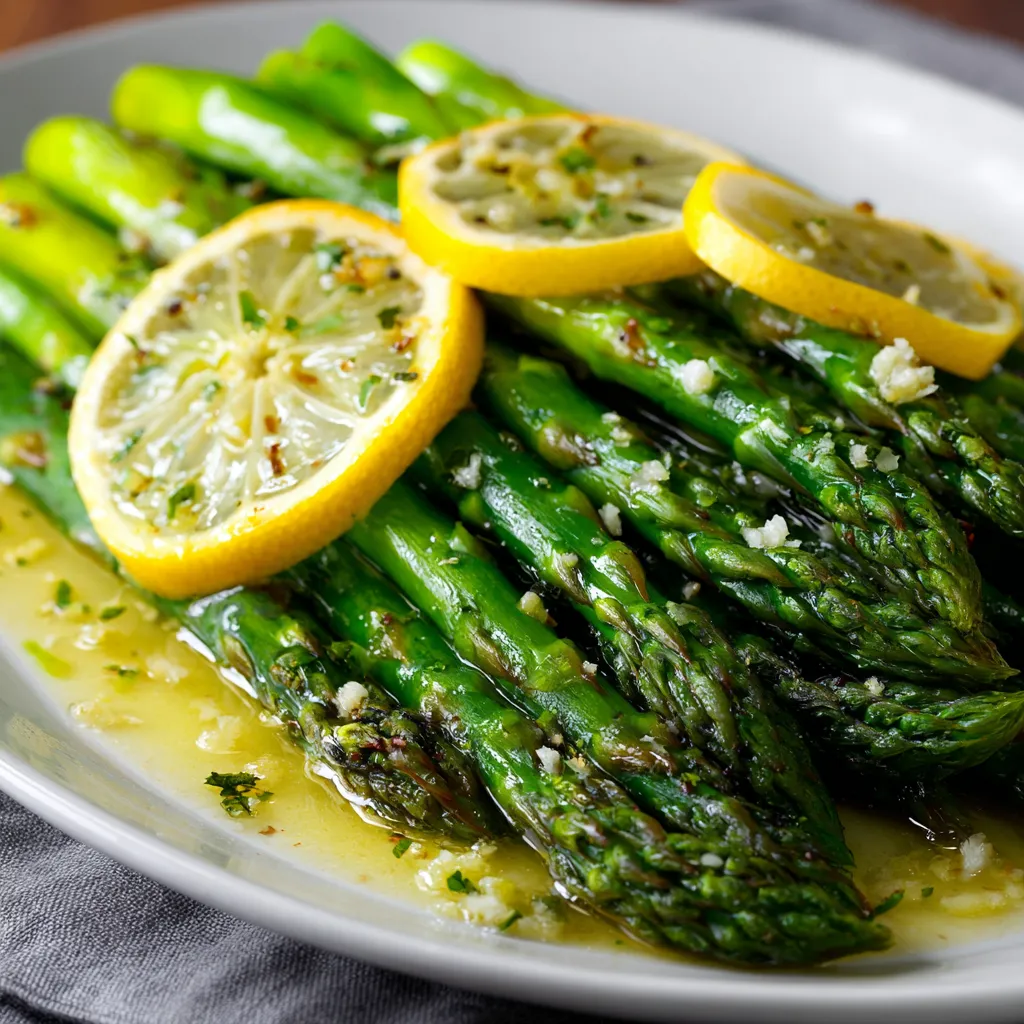
Sous vide asparagus is one of those side dishes that turns out so perfect, you’ll wonder why you ever cooked it another way. No mush, no guesswork—just tender, bright-green spears with a buttery finish and a pop of lemon. It’s the kind of side that elevates a meal without stealing the spotlight.
This guide shows you exactly how to get it right every time. Whether you’re serving it next to salmon, steak, or as a light lunch with poached eggs, sous vide asparagus delivers consistent flavor and texture without babysitting a pan. You’ll also find answers to common questions like How long should you sous vide asparagus? and What temperature should you cook it at?
If you’re curious about other vegetables that benefit from the sous vide method, check out our full vegetable sous vide recipe guide or try our sous vide broccoli for another crisp-tender success.
PrintSous Vide Asparagus
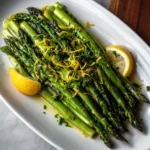
Sous vide asparagus with lemon, garlic, and butter is crisp-tender and full of flavor. Ready in 12 minutes with no guesswork.
- Prep Time: 5 minutes
- Cook Time: 12 minutes
- Total Time: 17 minutes
- Yield: 2 servings 1x
- Category: Side Dish
- Method: Sous Vide
- Cuisine: American
- Diet: Vegetarian
Ingredients
1 bunch of asparagus
2 tbsp butter, cut into 4 pieces
1/2 tsp salt
1/4 tsp black pepper
1/2 tsp garlic powder
1/2 lemon
Instructions
1. Preheat water bath (I like Everie containers) using immersion circulator to 180 degrees F.
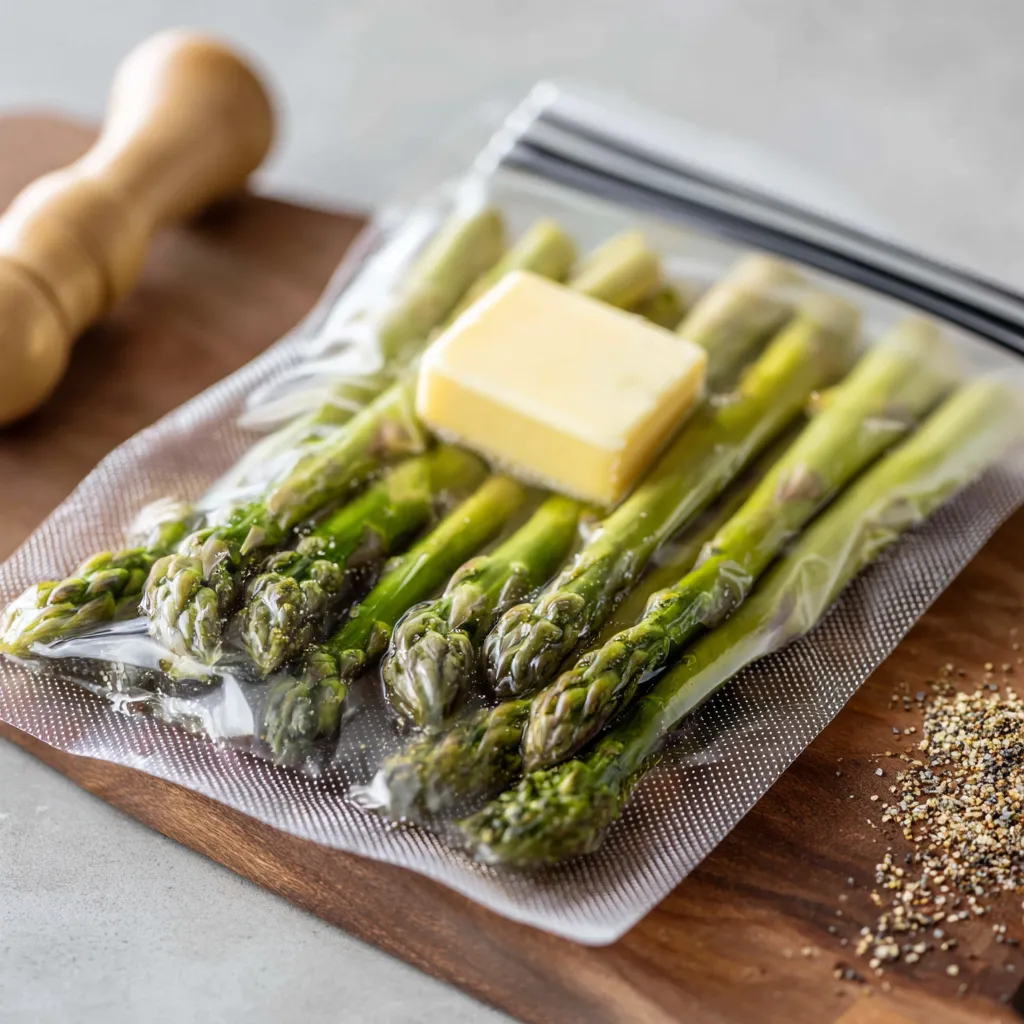
2. Add asparagus, salt, pepper, and garlic powder to a vacuum seal bag. Shake it to disperse seasoning. Add butter to the bag and spread evenly. Vacuum seal, doing your best to keep the asparagus in a single layer.
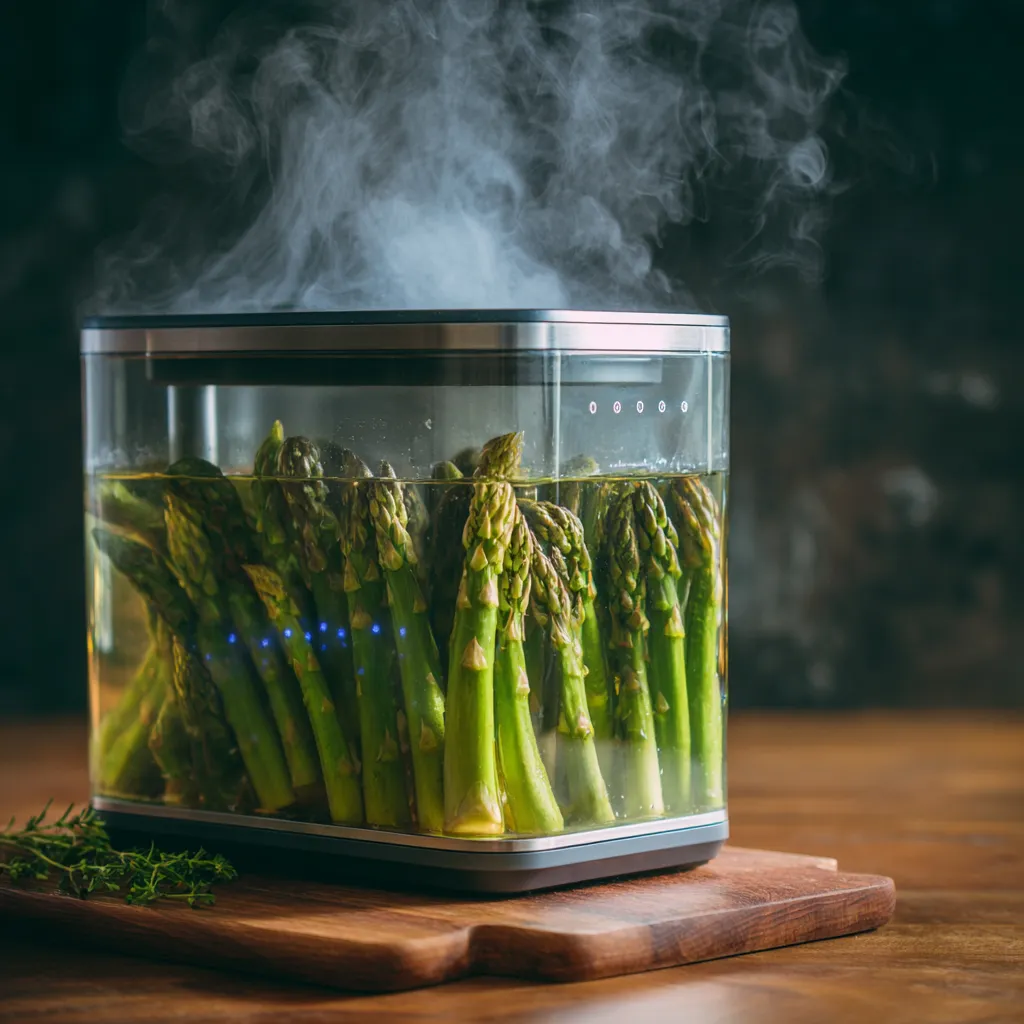
3. Add the vacuum sealed asparagus to a water bath preheated to 180 degrees F and cook for 12 minutes.
4. Once done, open the bag and shake around to evenly coat stalks in seasoning and butter. Squeeze lemon over the asparagus and toss again.
Notes
To keep asparagus in a single layer, don’t overfill the bag. If stalks are very thick, cook for 14–15 minutes. For thinner stalks, reduce to 10 minutes.
Nutrition
- Serving Size: 1 cup
- Calories: 80
- Sugar: 2g
- Sodium: 270mg
- Fat: 6g
- Saturated Fat: 3.5g
- Unsaturated Fat: 2.5g
- Trans Fat: 0g
- Carbohydrates: 4g
- Fiber: 2g
- Protein: 2g
- Cholesterol: 12mg
Why This Sous Vide Asparagus Recipe Just Works
What makes this method shine is precision. You’re not throwing it in a hot oven and hoping for the best. You’re cooking at exactly the right temperature, for exactly the right time. This sous vide asparagus recipe uses 180°F for 12 minutes, which gives you crisp-tender asparagus every time—never raw in the center or mushy at the tips. And thanks to the vacuum seal, the butter and garlic infuse the spears evenly, from root to tip.
That kind of precision is what sets sous vide asparagus apart from any other cooking method. When you roast or sauté, the asparagus is exposed to uneven heat—often scorching the outside while leaving the inside too firm. But with sous vide, every stalk is surrounded by a water bath that delivers heat consistently. That means your results aren’t just good once—they’re reliably great every single time.
Another benefit of cooking asparagus sous vide is the flavor retention. Since the spears are sealed, none of the natural juices escape, and you don’t lose flavor or nutrients to boiling water or hot pans. The garlic, salt, pepper, and lemon stay right where they should—inside the asparagus. You’ll notice the difference in the first bite. It’s delicate, buttery, slightly tangy, and perfectly seasoned throughout.
This method also gives you flexibility. Want to add rosemary, thyme, or chili flakes to your sous vide asparagus recipe? Just toss them into the bag before sealing. You can also add lemon zest or a pinch of Parmesan for more depth. Because everything is sealed in and gently heated, the flavors meld without overpowering the asparagus itself.
Whether you’re serving this as a side dish for weeknight dinners or plating it with a fancy protein like sous vide filet mignon, sous vide asparagus holds its own. It complements rich mains like sous vide steak and adds a fresh, vibrant contrast to buttery sous vide salmon. You can even chop it and toss it into a grain bowl or frittata for extra greens without cooking anything new.
Because it’s so consistent, sous vide asparagus is also fantastic for meal prep. Make a few batches at the start of the week, chill the sealed bags, and reheat gently before serving. No reheating in the oven, no drying out in the microwave. Just toss it in a 130°F water bath for 5–7 minutes and it’s ready to serve—good as fresh.
At the end of the day, sous vide asparagus doesn’t just save time. It gives you control. It gives you flavor. And once you’ve tasted that perfect bite, there’s really no going back to steaming or roasting.

Dialing in Time and Temp for Perfect Sous Vide Asparagus
What Temperature Should Asparagus Be Cooked At?
The ideal temperature for sous vide asparagus is 180°F (82°C). This level of heat breaks down the fibrous parts of the stalk just enough to create a tender, crisp bite while preserving the vegetable’s natural snap, bright green color, and mild, grassy flavor. Anything lower can leave you with stringy, undercooked spears—especially toward the base. On the flip side, setting your water bath too high can lead to overly soft tips or a mushy texture, which defeats the purpose of precision cooking.
With sous vide asparagus, it’s not just about tenderness—it’s about getting that perfect middle ground where the stalks retain their identity but taste elevated. That’s why this recipe’s sweet spot—180°F for 12 minutes—has been tested and retested in real kitchens. It hits that magical point where the asparagus becomes buttery yet structured, flavorful but still fresh-tasting.
Want your asparagus sous vide to be even softer? No problem. Just increase the cook time to 15–18 minutes for ultra-tender stalks that work beautifully in risottos, omelets, or as a soft side to hearty proteins. Prefer a firmer, more al dente finish that holds up well in salads or grain bowls? Reduce the time to 10 minutes—but keep the temperature steady at 180°F to avoid raw centers.
One of the best parts about sous vide asparagus is how adaptable it is. The method allows you to fine-tune doneness without ever compromising on texture or flavor. And because everything is cooked in a sealed environment, you’re also preserving more nutrients than you would by boiling or steaming.
Consistency is the reason so many home cooks fall in love with sous vide asparagus. Once you dial in your ideal time, it becomes your go-to veggie side for everything from sous vide chicken to sous vide lamb. It’s also a great base for experimenting with different aromatics—try infusing with tarragon, crushed garlic cloves, or even orange zest for variety.
In short, if you’re aiming for perfection on the plate, temperature and time matter. And with sous vide asparagus, once you find your preference, you can repeat it effortlessly—every single time.
Here’s a helpful guide:
| Texture | Temp (°F) | Time |
|---|---|---|
| Firm | 180°F | 10 minutes |
| Tender-Crisp | 180°F | 12 minutes |
| Soft | 180°F | 15–18 minutes |
For best results, keep the spears in a single layer inside the bag. This ensures even cooking, especially when you’re working with thicker stalks.
How Many Minutes to Cook Asparagus for Sous Vide?
In most sous vide asparagus recipes, 12 minutes at 180°F is the gold standard. But thickness matters. Thinner spears will soften faster, while thick asparagus may need a couple of extra minutes. Either way, the beauty of sous vide is that you’re never guessing. You know exactly how long to cook—and the results are repeatable every time.
Looking to branch out? You can apply the same technique to other vegetables too. Our vegetable sous vide recipe explains how to handle carrots, beets, and more with similar precision. And if you’re curious about timing other greens, our sous vide broccoli guide walks you through it.
Why Sous Vide Asparagus is Worth It (And What to Avoid)
Is It Worth It to Sous Vide Vegetables?
Absolutely. The number one reason to use sous vide for asparagus is precision. Unlike boiling, steaming, or roasting—which often overcook the tips while leaving stalks raw—sous vide ensures even, edge-to-edge cooking. With just a few ingredients and a reliable time/temp combo, this method consistently produces tender, flavorful asparagus without losing nutrients, texture, or color.
Another major perk is hands-off cooking. No stirring, no flipping, no babysitting. You can prep this sous vide asparagus while focusing on the main course—like a sous vide ribeye steak or sous vide chicken breast—and know your side dish will be perfectly done when you are.
Sous vide also makes vegetables more meal-prep friendly. You can cook and chill asparagus in the sealed bag, then reheat gently in a 130°F water bath for a quick side later in the week.
What Not to Put in Sous Vide?
While sous vide asparagus turns out beautifully, not every vegetable or ingredient plays nice in a water bath. Avoid very delicate veggies like spinach, thin zucchini slices, or soft mushrooms—they tend to become mushy or overly watery. Leafy greens don’t hold up well in the sealed, moist environment and often break down too fast.
In terms of safety, sous vide is a low-risk method when used correctly. Always cook above the food safety threshold (130°F minimum), and never leave sealed food in lukewarm water. This sous vide asparagus recipe, at 180°F, is well above that zone, meaning bacteria won’t survive the process. For more food safety guidance, check out our sous vide safety guide.
In short, stick to sturdy vegetables, cook at the right temp, and you’ll have no trouble creating perfectly safe and delicious dishes every time.
Batch Cooking & Final Tips for Sous Vide Asparagus Success
How Long Should I Sous Vide For?
Time is your best friend when cooking sous vide asparagus—and flexibility is built in. While 12 minutes at 180°F is the sweet spot for crisp-tender results, you can adjust based on stalk thickness and preference. Firmer asparagus? Try 10 minutes. Want softer tips for pairing with pasta or risotto? Go up to 15–18 minutes. The beauty of sous vide is that a few extra minutes won’t ruin the dish.
This flexibility also makes batch cooking vegetables sous vide incredibly simple. You can prep multiple vegetables in one session by adjusting their start times. For instance, toss in carrots first (they take longer), then add asparagus 10–15 minutes before serving. The water bath keeps everything at a steady temp, which makes juggling multiple components totally stress-free.
You’ll find more batch-friendly ideas in our sous vide vegetables roundup, where we cover root veggies, cruciferous options, and meal-prep strategies that actually work.
What Are the Best Vegetables to Sous Vide?
While this sous vide asparagus recipe is one of my top picks, other great vegetables for sous vide include:
- Carrots (try our glazed sous vide carrots)
- Broccoli
- Beets
- Brussels sprouts
- Sweet potatoes
- Green beans
These vegetables hold their shape well, absorb flavors beautifully, and benefit most from precise temperature control. In short, anything you’d typically roast or steam is a great candidate for sous vide. Asparagus especially shines because it’s so easy to overcook by other methods—but sous vide gives you exact control, down to the degree.
Add a squeeze of lemon, a touch of garlic, or even a sprinkle of Parmesan before sealing, and this simple vegetable becomes a standout on any plate.
Conclusion
If you’ve struggled with uneven, overcooked asparagus before, this sous vide asparagus recipe is your solution. With just 12 minutes in a precisely heated water bath, you’ll get buttery, lemon-kissed spears that are tender but never mushy—and full of flavor. No guesswork, no soggy tips, and no nutrient loss. It’s a restaurant-quality result made right in your kitchen.
Whether you’re prepping a weeknight dinner or hosting brunch, this method delivers. The real magic of sous vide asparagus lies in its consistency. Once you try it, you won’t go back to boiling or roasting.
Ready to explore more vegetables? Don’t miss our sous vide broccoli or vegetable sous vide recipe guide for even more inspiration.
Join us on Facebook and Pinterest for even more delicious recipe ideas!
FAQs
How long should you sous vide asparagus?
Typically, 12 minutes at 180°F gives you crisp-tender asparagus. For a firmer bite, reduce to 10 minutes. For a softer texture, cook for up to 15–18 minutes depending on stalk thickness.
What not to put in sous vide?
Avoid delicate vegetables like spinach or thin zucchini slices, which break down too easily. Also avoid using sharp ingredients that can pierce the bag or dairy sauces that may separate.
What temperature does asparagus need to be cooked at?
180°F (82°C) is the ideal temperature for asparagus. It allows the stalks to soften just enough while keeping their vibrant color and structure.
What are the best vegetables to sous vide?
Asparagus, carrots, broccoli, beets, Brussels sprouts, and green beans are great choices for sous vide. These vegetables retain flavor, nutrients, and texture in a water bath.
Is it worth it to sous vide vegetables?
Yes. Sous vide locks in flavor, color, and nutrients while delivering perfect texture every time. It’s hands-off and repeatable, making it ideal for busy cooks.
How many minutes to cook asparagus for?
12 minutes is the standard, but you can cook anywhere from 10–18 minutes depending on desired texture and stalk size.
How long should I sous vide for?
Timing varies by vegetable and cut. For asparagus, 12 minutes at 180°F. Root vegetables often take 1–3 hours. Always refer to a time and temp chart for accuracy.