
➤ Table of Contents
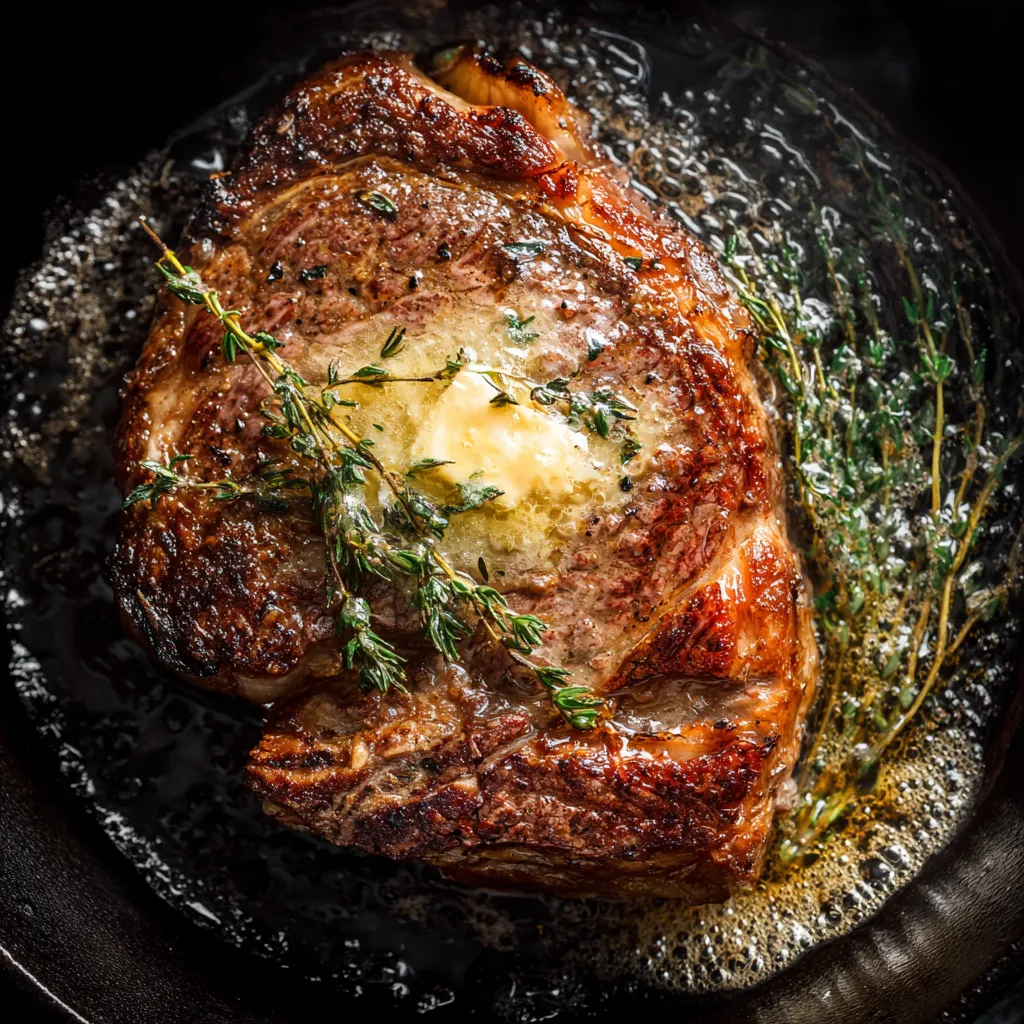
There’s something special about hearing that sizzle when butter hits a hot pan. I still remember the first time I added thyme and butter to a cast-iron skillet, spooning that golden richness over a ribeye fresh from the sous vide bath. It smelled like every great steakhouse I’ve ever visited. That moment was when I realized: sous vide takes the stress out, and butter basting brings the flavor in. And the result? A perfect butter basted sous vide steak—the kind that melts in your mouth and leaves you speechless.
Growing up in Florida, I was always surrounded by grilled seafood and citrus-marinated meats. But once I discovered sous vide, I fell in love with how it made steak foolproof. And when I paired it with butter basting? Game over. The steak turned out so tender I could slice it with a butter knife—and the finish? A golden crust that made every bite taste like it came from a high-end restaurant. That first butter basted sous vide steak opened the door to a whole new world of easy gourmet meals.
The beauty of butter basted sous vide steak lies in its simplicity. Just a perfectly cooked ribeye, a hot pan, and a little butter love. Unlike traditional pan-searing from raw, you get unmatched control over doneness and texture. Whether you’re prepping a date night dinner or just treating yourself, this method delivers every time. I’ve made butter basted sous vide steak for birthdays, holidays, and just-because days—and it never disappoints.
If you’re still wondering whether you can sous vide steak with butter—yes, you absolutely can. In fact, there’s a whole post dedicated to butter basted sous vide steak that answers exactly that. While some folks argue butter isn’t needed in the bag, the truth is, the magic happens in the pan. That’s why I’ll walk you through both the sous vide and finishing steps here, so your butter basted sous vide steak turns out juicy, flavorful, and truly unforgettable.
And if you’re just starting your sous vide journey, check out my go-to zero-stress butter basted sous vide steak method—it’s where I send all beginners to get confident. The beauty of butter basted sous vide steak is that it lets home cooks feel like chefs, no matter their skill level.
Whether you’re new to sous vide or a seasoned enthusiast, this article will guide you through crafting the most succulent butter basted sous vide steak. We’ll start with the heart of the recipe—why butter basted sous vide steak is a game-changer and how it connects to a home cook’s journey. Then we’ll cover techniques, timing, finishing options, and tackle some of the most common questions people ask about butter basted sous vide steak. From cooking temps to oil-free options, you’ll leave with clear, simple answers and reliable methods that make your next butter basted sous vide steak an absolute success.
By the end of this, you won’t just know how to make a great butter basted sous vide steak—you’ll crave it every time you want steak done right. Because once you experience that fork-tender bite, that rich aroma of browning butter, and that golden crust kissed by thyme… nothing else compares.
PrintButter-Basted Sous Vide Steak
This butter-basted sous vide steak is juicy, tender, and finished with a golden crust in a hot pan with thyme-infused butter.
- Prep Time: 10 minutes
- Cook Time: 1 hour
- Total Time: 1 hour 10 minutes
- Yield: 2 servings 1x
- Category: Dinner
- Method: Sous Vide
- Cuisine: American
- Diet: Gluten Free
Ingredients
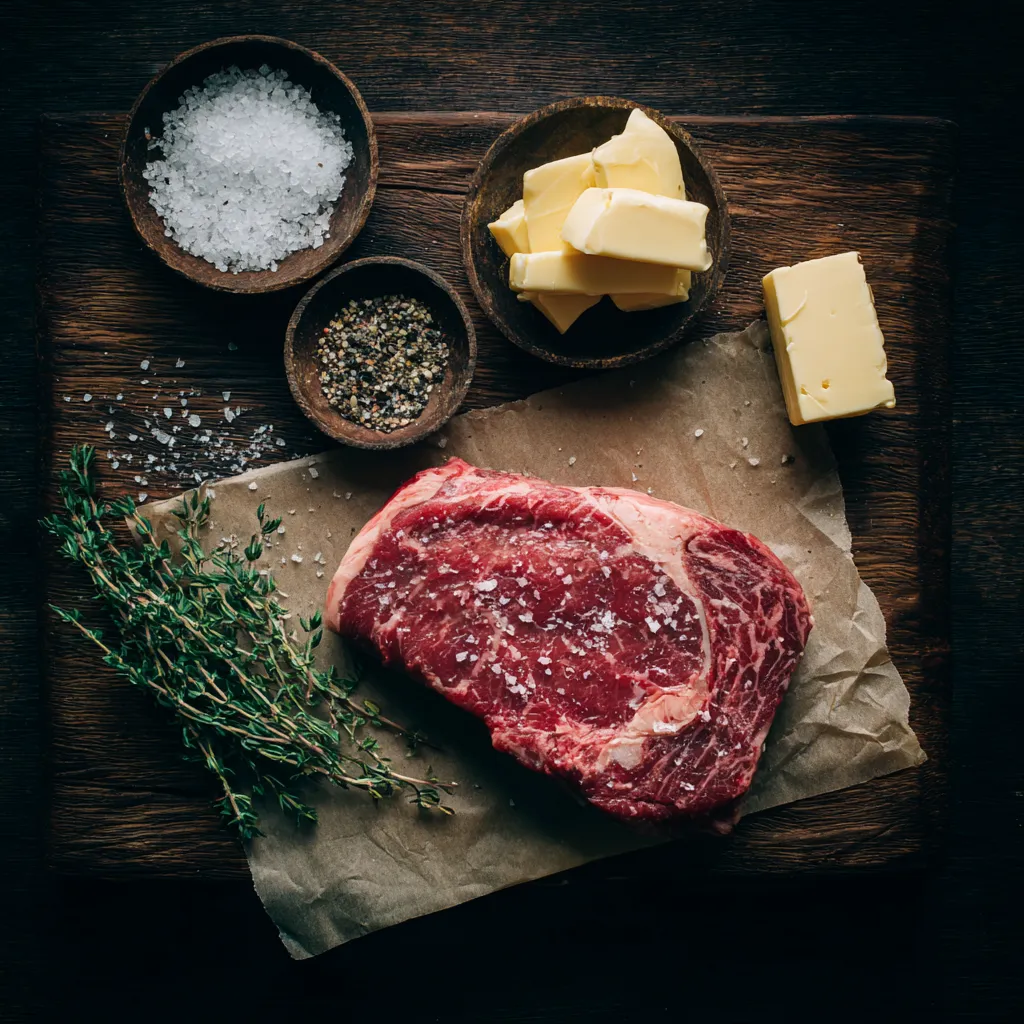
1 (16-ounce) boneless ribeye steak
Kosher salt and freshly ground black pepper
4 tablespoons unsalted butter
4 sprigs fresh thyme
Instructions
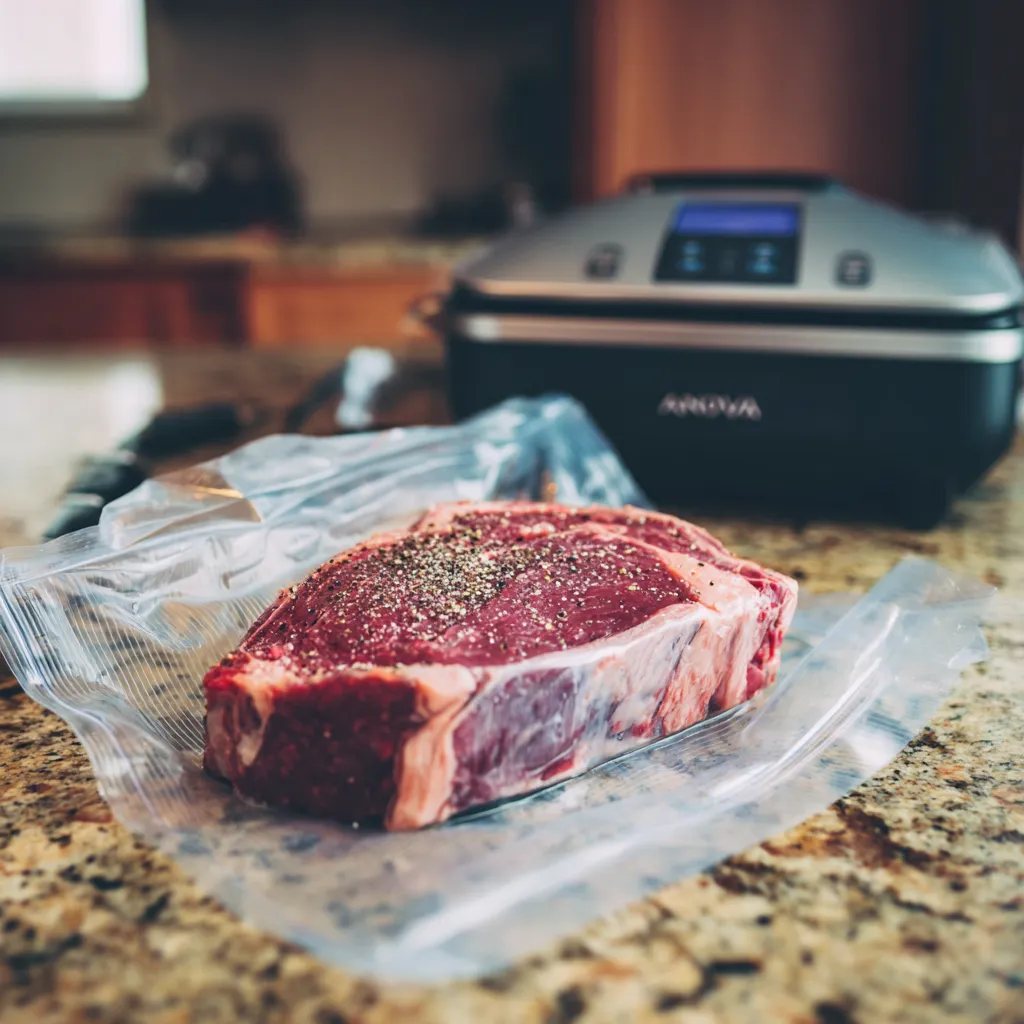
1. Set the Anova Sous Vide Precision Cooker to 130°F (54°C).
2. Season the steak with salt and pepper and place in a large zipper lock or vacuum seal bag. Seal the bag using the water immersion technique or a vacuum sealer on the dry setting. Place in the water bath and set the timer for 1 hour.
3. When the timer goes off, remove the bag from the water bath. Remove the steak from the bag, pat dry, and season with additional salt and pepper.
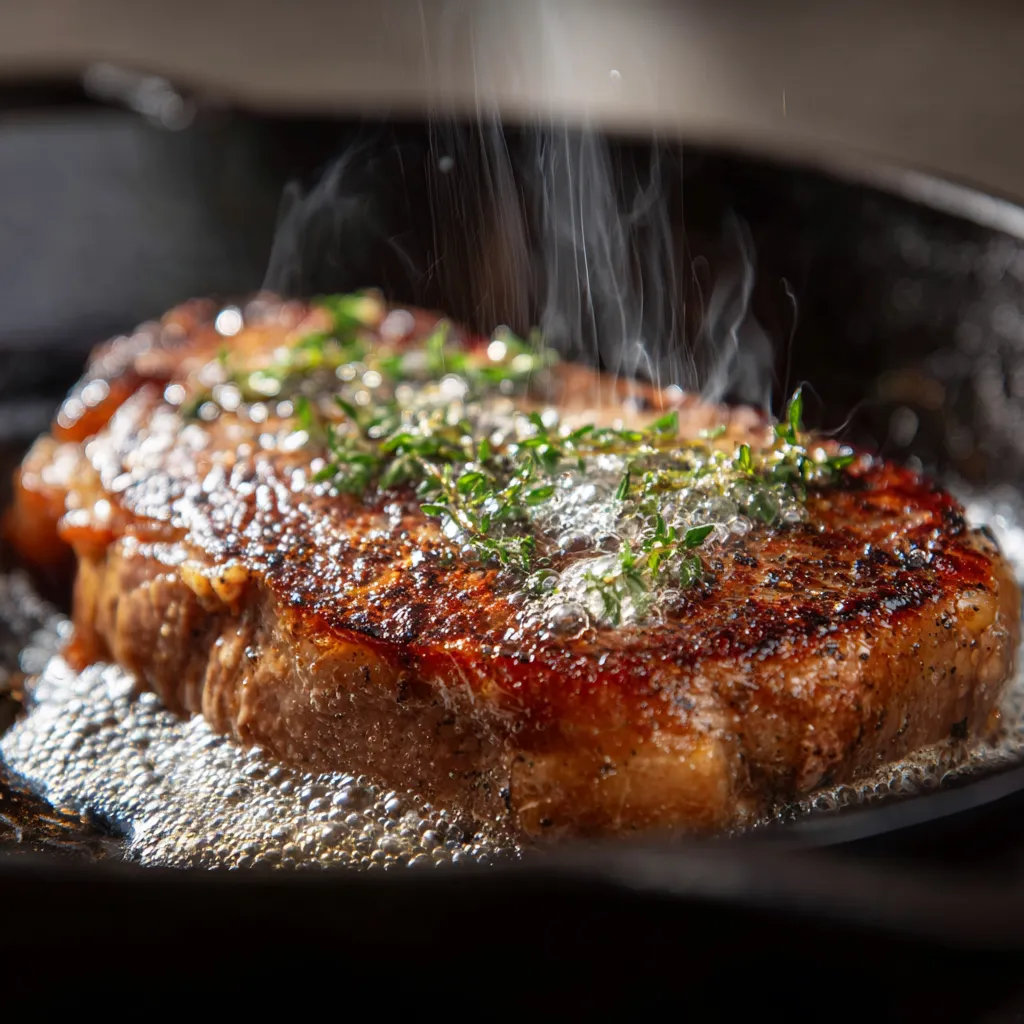
4. Heat a cast-iron or stainless-steel skillet over medium-high heat for 5 minutes. Add the steak and sear on the first side until golden brown, about 1 minute. Flip the steak and add the butter and thyme to the pan. As the butter melts, tilt the pan and spoon the butter over the steak until the steak is well-browned on both sides, about 1 minute.
5. Transfer the steak to a cutting board and let rest for 5 minutes. Slice and serve.
Notes
Avoid adding butter to the sous vide bag—it’s more effective during the finishing sear. Always rest the steak for 5 minutes after searing.
Nutrition
- Serving Size: 8 oz
- Calories: 520
- Sugar: 0g
- Sodium: 600mg
- Fat: 42g
- Saturated Fat: 20g
- Unsaturated Fat: 18g
- Trans Fat: 0g
- Carbohydrates: 0g
- Fiber: 0g
- Protein: 38g
- Cholesterol: 140mg
Sous Vide Cooking Time and Temperature for Butter Basted Steak
Mastering the Sous Vide Cook for Steak
The foundation of any great butter basted sous vide steak is precision—especially when it comes to time and temperature. That’s where sous vide truly shines. It takes the uncertainty out of cooking steak and gives you full control over texture, flavor, and finish. Whether you’re new to the technique or already confident with your water bath, mastering the cook is the first key to unforgettable butter basted sous vide steak.
For a classic ribeye, cooking your butter basted sous vide steak at 130°F (54°C) for 1 hour results in a flawless medium-rare—deep pink center, buttery texture, and edge-to-edge doneness. This is the sweet spot for that perfect bite. Want your butter basted sous vide steak a little more done? Go for 135°F for medium or 140°F for medium-well. Just remember: the higher you go, the more fat melts away, and the texture begins to shift. For most, 130°F remains the gold standard for rich, juicy results.
You can cook your butter basted sous vide steak for up to 2.5 hours without sacrificing quality, which gives you plenty of timing flexibility. One hour works well for a 1–1.5 inch steak, while thicker cuts—like a 2-inch ribeye—require more time. Refer to this helpful 2-inch ribeye sous vide guide for the right adjustments.
Curious how a few degrees make a difference? The 137°F ribeye sous vide walkthrough breaks it down beautifully. You’ll see how even small temperature changes impact the juiciness and tenderness of your butter basted sous vide steak. The more you understand these variables, the easier it is to tailor your next butter basted sous vide steak to your exact liking—and trust me, it only gets more delicious from here.
Here’s a quick table to reference:
| Doneness | Temperature | Cook Time (1–1.5 inch) |
|---|---|---|
| Rare | 125°F / 51.6°C | 1–2 hours |
| Medium-Rare | 130°F / 54°C | 1–2 hours |
| Medium | 135°F / 57°C | 1–2 hours |
| Medium-Well | 140°F / 60°C | 1–2 hours |
Why Sous Vide Steak Doesn’t Need Butter in the Bag
Let’s clear up one of the biggest sous vide questions: should you add butter to the bag? When making a proper butter basted sous vide steak, the short and simple answer is—no.
While it might seem like butter would enhance the steak during the water bath, it actually doesn’t do much. Butter in the bag won’t cling to the meat, can’t brown in the low-temp environment, and won’t infuse much flavor. Instead, it just floats in the bag, often making cleanup messier than necessary. That’s why for a true butter basted sous vide steak, the butter comes in at the end—where it can truly shine.
The beauty of sous vide is precision cooking. But the beauty of a butter basted sous vide steak is the final sear in a hot pan, where the butter meets high heat and unlocks its full potential. Recipes like our sous vide steak with garlic herb butter highlight this perfectly. By waiting until the steak is out of the bag and ready to be seared, the butter becomes a key player in flavor, texture, and aroma.
Once the steak hits the skillet, that’s where the magic begins. You baste your butter basted sous vide steak with melted butter, swirling it around the pan with fresh thyme or garlic, letting it foam and sizzle. This step creates that rich, golden crust while deepening the beefy flavor in a way that the sous vide bath simply can’t replicate.
It’s the same approach we take in our classic sous vide steak recipe, which gets the fundamentals right. Skip the butter in the bag—save it for where it matters most. That’s the real secret to nailing a perfect butter basted sous vide steak every single time.
How to Finish a Butter‑Basted Sous Vide Steak Like a Pro
Perfecting the Butter Baste for Maximum Flavor
The sous vide part ensures doneness. But it’s that final butter sear that creates magic.
Once your steak comes out of the water bath, pat it completely dry. Moisture is the enemy of a good sear—it’ll steam instead of brown. Then season it again with salt and pepper. Even though you seasoned before cooking, this post-bath seasoning refreshes flavor after the steak’s been in a sealed bag.
Now it’s time to finish. Heat a heavy pan—cast iron is best—until it’s just shy of smoking. You want that steak to sizzle the moment it hits the surface. Add the steak and sear for about 60 seconds on the first side. Then flip, add your butter (we use 4 tablespoons), and toss in a few sprigs of thyme.
Here’s where things get real: tilt the pan and baste continuously with the foaming butter. Spoon it over the steak, again and again, letting it soak into every crevice. This not only adds richness but also deepens the crust and aromas. You’ll know it’s done when both sides are golden brown with crispy edges, and your kitchen smells like a high-end bistro.
The method is similar to the technique used in our sous vide steak with cowboy butter—an absolute flavor bomb that’s worth trying next.
Oil vs Butter for Sous Vide Steak—Which Wins?
You might wonder, should I oil the steak before sous vide? Honestly, there’s no need. Oils don’t do much in a sealed water bath, and some can even turn rancid over long cooks. Since the steak is sealed in its own juices, it stays juicy all on its own. That’s why most pros don’t add oil to the bag.
That said, oil can be useful for searing. A high smoke point oil like grapeseed or avocado oil can help start the browning process. But for butter basting? It’s all about timing. Add the butter only after your first flip—this prevents it from burning before the steak finishes browning.
If you’re interested in finishing alternatives, check out our broiler method for sous vide steak, which is great for high-heat lovers or when you’re cooking multiple steaks at once.
The bottom line: butter belongs in the pan, not the bag. And oil? Save it for searing if needed—but it’s not essential.
Serving, Resting & FAQs for Butter Basted Sous Vide Steak
The Right Way to Rest and Serve Steak After Sous Vide
Once your butter basted steak is beautifully seared and fragrant with thyme, don’t slice it right away. Rest it for 5 minutes. Yes, even after sous vide. While the sous vide process keeps juices in check better than traditional methods, that post-sear rest lets the fibers relax, ensuring each bite stays juicy.
Set the steak on a cutting board, tent it loosely with foil, and resist the urge to cut too soon. After five minutes, slice against the grain—this shortens the muscle fibers and makes every bite more tender.
Now serve. Whether it’s a side of roasted garlic mash or just a glass of red wine, your butter basted sous vide steak is going to be the star. And if you’re feeling extra, try pairing it with a spoonful of compound butter—like in our prime rib with compound butter, which brings out the best in any beef cut.
Can You Sous Vide Without Butter, Oil, or Even a Pan?
Absolutely—and this is where sous vide shines. Steak can be cooked with nothing but salt and pepper, sealed in a bag, and dropped into the bath. No oil, no butter. Then you choose how to finish it.
But if you want that signature sear without using the stove, try alternatives like a torch or broiler. They work well and still allow you to add butter at the end. Just remember: butter in the water bath won’t help the steak much, and it can even dull the beef’s natural flavor over long cooks.
For an in-depth look, this guide on sous vide steak with butter clears up common myths about oils and fats in sous vide bags.
And if you’re wondering how all this compares to classic sous vide-only steak? Our dishwasher sous vide steak experiment proves that sous vide works even in surprising settings—but let’s be honest, nothing beats that final buttery sear in a cast iron pan.
Conclusion
Butter basted sous vide steak is where ease meets indulgence. You get steakhouse-level results without any stress, whether you’re cooking for yourself or someone special. Remember: skip the butter in the bag, use it in the pan, and sear like you mean it. With just a few ingredients and the right timing, you’ll make a steak that’s deeply flavorful, tender, and repeat-worthy.
Hungry for more steak inspiration? Don’t miss our guides on 137°F ribeye sous vide and the zero-stress method that started it all.
Join us on Facebook and Pinterest for even more delicious recipe ideas!
FAQs
Should you sous vide steak with butter?
No, butter isn’t necessary in the sous vide bag. It doesn’t cling to the meat or contribute much flavor. Instead, save your butter for the finishing sear.
How long do you cook a butter basted steak?
Sous vide the steak for 1–2 hours depending on thickness, then finish with a 1–2 minute butter baste in a hot pan.
Why no butter with sous vide?
Butter won’t brown in the bag and can go rancid during long cooks. It’s far more effective when used for pan basting after sous vide.
How long should I sous vide steak?
For a 1–1.5 inch ribeye, 1 hour at 130°F is ideal. You can safely extend to 2.5 hours if needed without overcooking.
Do you oil steak before sous vide?
No need. Oil doesn’t improve flavor in the sealed bag and can be skipped. Dry seasoning is all you need.
Why not cook steak in butter?
Butter burns easily at high temperatures. Add it after flipping the steak to get flavor without bitterness.
Can you sous vide without oil?
Yes. Sous vide works without oil. Just season and seal the steak—oil is only helpful for pan searing if needed.