Sous Vide Creme Brulee
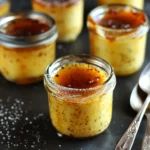
Learn how to make the perfect sous vide creme brulee with our foolproof recipe. Indulge in creamy, decadent dessert goodness with a crispy caramelized topping. Master this classic dessert today!
- Prep Time: 20 minutes
- Cook Time: 1 hour
- Total Time: 1 hour 20 minutes
- Yield: 6 servings
- Category: Dessert
- Method: Sous Vide
- Cuisine: International
Ingredients
- – 1 tbsp (15 mL) vanilla extract or 1 vanilla bean or 1 tbsp vanilla bean paste
- – 5 egg yolks
- – 100 g sugar
- – Pinch of salt
- – 30 mL beef broth (optional)
- – 480 mL of whipping cream 35% fat content
- – Extra sugar to caramelize
Instructions
- Place the egg yolks in a large mixing vessel. Incorporate the sugar, vanilla extract or vanilla bean paste, a pinch of salt, and beef broth if desired, then whisk until a light, smooth blend forms.
- Pour in the whipping cream and continue whisking until everything is well combined and the sugar is fully dissolved.
- OPTIONAL – Transfer the custard blend to a pot and gently heat it on medium, stirring continually until it is warm and begins to steam, ensuring the sugar is completely dissolved.
- If bubbles appear on the surface of the custard, cover and let it rest, or gently stir to help them dissipate.
- Distribute the custard evenly into six 8 oz jars and secure the lids, slightly loosening them to prevent excess pressure.
- Fill a sous vide container with hot tap water, attach your sous vide device, and set the temperature between 179°F and 181°F (82°C – 83°C).
- Carefully submerge the jars in the water, allowing them to gradually reach the target temperature alongside the water to avoid shocking the glass.
- Once the desired temperature is reached, cook for one hour.
- After cooking, carefully remove the jars from the water and tighten the lids using a cloth to protect your hands from the heat.
- Allow the custard to cool completely to room temperature.
- Refrigerate the jars overnight for thorough chilling.
- When ready to serve, you may need to gently pry the lids off with a spoon.
- To finish, sprinkle sugar evenly over each custard’s surface, ensuring a thin and uniform layer.
- Use a culinary torch to melt the sugar, letting it bubble and transition from a light golden shade to amber, being careful not to overheat the custard.
- Allow the caramelized sugar to cool for a couple of minutes until it hardens, then serve immediately.
- Alternatively, in a non-stick pan, add a tablespoon of sugar for each serving, spreading it evenly at the bottom.
- Heat the pan over medium heat, shaking it occasionally until the sugar melts and turns amber.
- Once the caramel reaches a dark golden hue, remove it from heat and gently pour a small amount over each custard, swirling it quickly to coat.
- If needed, return the pan to the warm stove to keep the caramel fluid.
- Repeat with remaining dishes, adjusting sugar as necessary, and serve once the caramel has set.
Notes
- Use a vanilla bean for a more intense flavor by scraping the seeds into the custard mixture.
- Enhance the custard’s depth of flavor by adding a touch of beef broth, but it is optional.
- Be mindful when caramelizing the sugar on the custard’s surface to achieve a light golden amber color without burning.
Nutrition
- Calories: 350
- Fat: 25g
- Protein: 5g
Find it online: https://sousviderecipe.com/sous-vide-creme-brulee-3/