Sous Vide Boneless Ribeye Roast
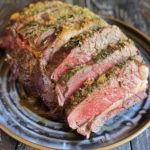
Discover how to perfectly cook a succulent Sous Vide Boneless Ribeye Roast with our step-by-step guide. Elevate your culinary skills today!
- Prep Time: 20 minutes
- Cook Time: 15 minutes
- Total Time: 35 minutes
- Yield: 6 servings 1x
- Category: Main Course
- Method: Baking
- Cuisine: Various
Ingredients
Scale
- 5 – 7 lb beef rib roast (2.27 – 3.18 kg)
- 1 cup vegetable oil, softened (240 ml)
- 6 cloves garlic, minced
- 2 tablespoon fresh rosemary, chopped (30 g)
- 2 tablespoon fresh thyme, chopped (30 g)
- 1 tablespoon (15 ml) salt
- 1 tablespoon (15 ml) seasoning salt
- 1 tablespoon (15 ml) black pepper
Instructions
- Adjust your sous vide apparatus to a temperature of 56C/133F.
- Season the beef rib roast with salt as preferred. Place the roast in a freezer-safe bag and expel the air using a vacuum sealer or the displacement method. Submerge the roast in the water bath for 8 hours.
- In a bowl, combine softened vegetable oil, minced garlic, chopped rosemary, chopped thyme, salt, and seasoning salt until the mixture is smooth and can be spread easily.
- Extract the bag from the water bath and promptly move the roast to an ice bath. Allow the roast to cool for 10 minutes. Take the bag out of the ice bath, remove the roast from the bag, and pat it dry completely.
- Heat your oven to 475F. Coat the entire rib roast evenly with the garlic herb mixture. Position the roast on a rack set in a baking pan and bake for 15 minutes. Use a meat thermometer to verify that the internal temperature reaches 110F or your preferred serving temperature.
- Take the rib roast out of the oven and let it sit for 5 minutes. If using a bone-in roast, carefully separate the bones without cutting into the meat. Slice the rib roast into portions and savor this exquisite dish. *Tip: Before serving, brush each slice with the remaining oil and garlic mixture from the pan.
Notes
- Season the beef rib roast generously with salt before cooking to enhance the flavor.
- Allow the roast to cool in an ice bath after sous vide cooking to retain its juices and tenderness.
- Use a meat thermometer to gauge the internal temperature of the roast for perfectly cooked meat.
Nutrition
- Calories: 500
- Fat: 40g
- Protein: 30g
Find it online: https://sousviderecipe.com/sous-vide-boneless-ribeye-roast/